Trade: Thai Constitutional Court invalidates election?
Resolution criteria on PolyGram: Thailand held legislative elections on February 8, 2026. On March 18, 2026, the Constitutional Court of Thailand accepted a petition to rule on the constitutionality of barcodes and QR codes on ballots and whether they undermined ballot secrecy. This market will resolve to “Yes” if the Constitutional Court of Thailand issues a ruling that invalidates the results of the 2026 Thai legislative elections by June 30, 2026, 11:59 PM ET. Otherwise, this market will resolve to “No”.
PolyGram is an on-chain prediction market where you trade YES or NO outcome shares with real USDC on Polygon. For this market, buy YES if you believe the event will happen, or NO if you think it won't. Your maximum loss is your stake — winning shares pay $1.00 each at resolution. Unlike sportsbooks, there is no house edge: prices are set by supply and demand from other traders and reflect the crowd's real-time probability.
- Liquidity
- $11K
- Total Volume
- $29K
- 24h Volume
- $2K
- Open Interest
- $16K
Market outcomes
| Thai Constitutional Court invalidates election? | 8% YES | 92% NO |
Market context
Thailand's Constitutional Court accepted a petition on 18 March 2026 challenging the validity of the 8 February legislative elections, specifically questioning whether barcodes and QR codes printed on ballots violated ballot secrecy provisions. The court's decision on this technical challenge could theoretically result in invalidation of the entire election, though such an outcome would represent an extraordinary intervention in electoral mechanics. The market currently prices this scenario at 8 per cent probability, reflecting substantial scepticism among traders that the court will take this drastic step.
Thailand's Constitutional Court has a mixed historical record on election invalidation. The court annulled the 2014 election after the coup, but that occurred in an exceptional political context. More recently, the court has tended towards narrower remedies—disqualifying parties or candidates rather than voiding entire elections—even when finding constitutional violations. The barcode challenge is primarily technical rather than rooted in allegations of widespread fraud or systemic illegality, which historically has made courts more hesitant to invalidate results wholesale. This precedent supports the current low probability assessment.
Traders should monitor the court's scheduling of oral arguments and any interim rulings on procedural matters, which could signal the court's receptiveness to the petition. The settlement window closes 30 June 2026, providing roughly three months for a final ruling. Key dependencies include whether the court accepts the technical arguments about ballot secrecy and whether it views any alleged violation as sufficiently grave to warrant invalidation rather than remedial measures. Thai media coverage of court proceedings and any statements from the Election Commission regarding ballot integrity will provide important signals about the trajectory of the case.
Wikipedia Context
-
 2016 Thai constitutional referendum
A constitutional referendum was held in Thailand on 7 August 2016. The charter offered semi-democracy and was seen to tighten military rule in Thailand. It was approved by 61% of voters with a 59% turnout. A second proposal for the next prime minister to be jointly elected by senators and MPs was also approved. The opposition groups to the constitution were
-
 2007 Thai constitutional referendum
A referendum on the new constitution was held in Thailand on 19 August 2007. Had the draft been rejected, the military government would have had the freedom to choose any previous constitution to adapt and promulgate instead. The turnout was around 60%.
-
 Constitution of Thailand
The Constitution of the Kingdom of Thailand provides the basis for the rule of law in Thailand. Since the abolition of the absolute monarchy in 1932, Thailand has had 20 charters or constitutions. Many changes followed military coups, reflecting the high degree of political instability in the country. After each successful coup, military regimes abrogated th
-
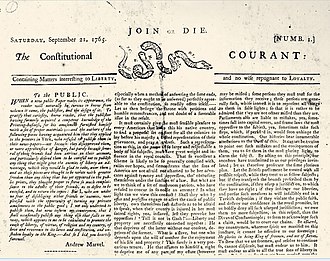 The Constitutional Courant
The Constitutional Courant was a single issue colonial American-newspaper published in response to the Stamp Act 1765. It was printed by William Goddard under an assumed name of Andrew Marvel. The newspaper vociferously attacked the Stamp Act in strong language, which caught the attention of colonial printers and royal colonial officials alike. The Courant a
How this market resolves
Resolution is handled by the UMA optimistic oracle on Polygon. A proposer submits the outcome, a two-hour dispute window opens, and if no one stakes a counter-claim the payout is final. Contested outcomes escalate to UMA token-holder voting. Payouts clear in USDC to the winning side.
How to trade this market step by step
The mechanics for trading "Thai Constitutional Court invalidates election?" are the same as any other PolyGram political event contract. Each YES share resolves to $1 if the event happens, or $0 if it doesn't. The current price between 0¢ and 100¢ is the market's probability estimate, set live by the order book.
- Sign in on polygram.ink with your email — no full KYC under $1,500 lifetime trading volume.
- Deposit USDC on Polygon (lowest fees, ~$0.01 per transaction) or Ethereum. Funds credit after 12 confirmations.
- Pick a side. Buy YES if you believe the event will happen; buy NO if you think it won't. The current YES price reflects the market's collective probability.
- Size your position. If you stake 100 USDC at 8% YES, you'll receive shares that pay $1250 if YES resolves true — a 1150% gross return. If NO resolves, your shares are worth $0.
- Set risk controls (optional). Stop-loss, take-profit, and limit-order types all supported. Use the trade ticket's slippage box to cap your maximum entry price.
- Wait for resolution. When the event resolves on-chain via the UMA optimistic oracle, the winning side settles to 100¢ automatically and USDC hits your balance within seconds. Withdrawable to any wallet you control.
How active is this market?
$29K in lifetime turnover and $11K of resting liquidity puts this market in the below the median by volume for politics contracts on PolyGram. Order-book depth is thin — large orders may need to be split across the book or executed as limit orders.
Last 24 hours alone saw $2K in turnover, well above the lifetime daily-average for this market — a clear sign of news catalysing trader activity right now.
The market has been open for around a month — fresh enough that information asymmetry remains a real factor.
Higher-volume markets tend to have tighter spreads and faster price discovery — meaning the displayed YES/NO percentages are more likely to reflect the true crowd-implied probability rather than a single trader's directional view.
Key terms
- YES / NO share
- A binary outcome token that pays $1.00 if the underlying claim resolves true (YES) or false (NO), and $0 otherwise. The market price between 0¢ and 100¢ is the implied probability.
- CLOB
- Central limit order book. The matching engine that pairs YES buyers with NO buyers (effectively the same trade). Polymarket's CLOB on Polygon executes trades on-chain via the conditional-tokens framework.
- Liquidity
- USDC capital sitting in resting limit orders inside the order book. Deeper liquidity means smaller slippage on large trades and a tighter bid-ask spread.
- UMA optimistic oracle
- The on-chain dispute system that settles each Polymarket market. A proposer submits the outcome, a two-hour challenge window opens, and unchallenged proposals finalise the resolution.
- Slippage
- The difference between the displayed mid-price and your fill price. Affects market orders most; limit orders avoid slippage but may take time to fill.
- Conditional token
- ERC-1155 outcome share issued by Gnosis Conditional Tokens on Polygon. The token type that resolves to $1.00 or $0.00 at settlement.
Frequently asked questions
What is the current probability for "Thai Constitutional Court invalidates election?"?
As of today, traders on Polymarket price this outcome at 8%. The number updates continuously as the order book clears. PolyGram mirrors the same live odds with locale-aware formatting and USDC settlement.
How does this market resolve?
Resolution is handled by the UMA optimistic oracle on Polygon. A proposer submits the outcome, a 2-hour dispute window opens, and if uncontested the payout is final. Contested outcomes escalate to UMA token holders.
When does this market close?
This prediction market is scheduled to close on 30 June 2026. After the resolving event occurs, settlement typically clears within 24 hours once the UMA optimistic oracle confirms the outcome. All payouts are in USDC on the Polygon network.
How can I trade on "Thai Constitutional Court invalidates election?"?
To trade on this prediction market, create a free PolyGram account at polygram.ink, deposit USDC via Polygon, and place a YES or NO order on the outcome you believe in. You can learn more on our how-it-works page. Your maximum loss is limited to your stake — there is no leverage or margin.
What happens when the market resolves?
When the outcome is determined, winning YES shares pay out $1.00 each in USDC, while losing shares pay $0. Settlement is handled by the UMA optimistic oracle on Polygon — a proposer submits the result, a two-hour dispute window opens, and if uncontested, payouts are distributed automatically. You can withdraw your winnings to any Polygon wallet.
Risk and regulatory note
Prediction-market positions can lose 100% of staked capital. Outcomes are uncertain by definition — historical accuracy of crowd-implied probabilities is high in aggregate but not for any single market. PolyGram does not provide investment advice. Trade only with capital you can afford to lose.
Regulatory status varies by jurisdiction. Germany, the United States, and most EU countries treat Polymarket-style event contracts under one of three frameworks: financial derivative, gambling product, or unregulated novel asset. Consult local counsel before trading.
Related prediction markets
Explore more prediction market odds and trading opportunities on PolyGram: