Trade: LA-03 House Election Winner
Resolution criteria on PolyGram: This market will resolve according to the party of the candidate who wins the LA-03 congressional district seat in the U.S. House of Representatives in the 2026 midterm elections. The midterm elections will take place on November 4, 2026. A candidate's party will be determined by their ballot-listed or otherwise identifiable affiliation with that party at the time all of the 2026 House elections are conclusively called by this market's resolution sources.
PolyGram is an on-chain prediction market where you trade YES or NO outcome shares with real USDC on Polygon. For this market, buy YES if you believe the event will happen, or NO if you think it won't. Your maximum loss is your stake — winning shares pay $1.00 each at resolution. Unlike sportsbooks, there is no house edge: prices are set by supply and demand from other traders and reflect the crowd's real-time probability.
- Liquidity
- $9K
- Total Volume
- $6K
- 24h Volume
- —
- Open Interest
- $453
Market outcomes
| Democratic Party | 11% YES | 90% NO |
| A | — | |
| Other | — | |
| B | — | |
| C | — | |
| E | — | |
| Republican Party | 88% YES | 12% NO |
| D | — | |
Market context
Louisiana's 3rd congressional district will elect a representative to the U.S. House in the 2026 midterm elections on 4 November. The current order book on Polymarket implies an 11% probability that a Democratic candidate wins the seat, with Republican candidates priced at the complementary probability. This pricing reflects the district's historical partisan lean and current political composition.
LA-03 has been represented by Republican Clay Higgins since 2016, and the district voted for Donald Trump by approximately 27 percentage points in 2020. Comparable Republican-held seats in similar electoral environments have rarely flipped to Democrats in midterm cycles without significant structural shifts in voter preference or candidate-specific dynamics. The 11% implied probability aligns with historical patterns where districts with such pronounced Republican advantages see Democratic victories only in exceptional circumstances—typically involving unpopular incumbents, strong Democratic recruitment, or substantial national headwinds favouring the opposition party.
Traders should monitor candidate announcements throughout 2025 and early 2026, particularly whether Higgins seeks re-election and the quality of Democratic recruitment efforts. National political conditions heading into the midterms will prove material; historical precedent suggests Democratic probability would rise materially only if national generic ballot polling shifts significantly or if local factors—such as an incumbent scandal or retirement—alter the competitive landscape. The settlement window closes on 3 November 2026, the day before the election.
Wikipedia Context
-
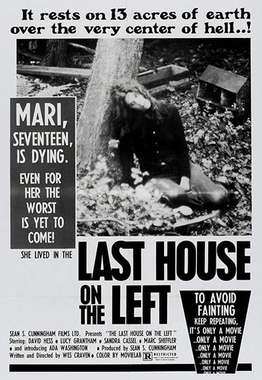 The Last House on the Left
The Last House on the Left is a 1972 American rape and revenge film written and directed by Wes Craven in his directorial debut, and produced by Sean S. Cunningham. The film stars Sandra Peabody, Lucy Grantham, David Hess, Fred J. Lincoln, Jeramie Rain, and Marc Sheffler. Additionally, Martin Kove appears in a supporting role. The plot follows Mari Collingwo
-
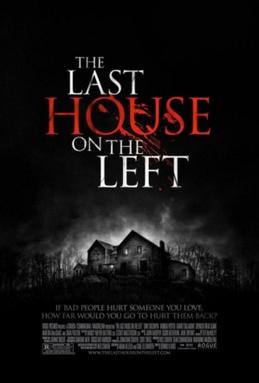 The Last House on the Left (2009 film)
The Last House on the Left is a 2009 rape and revenge film directed by Dennis Iliadis and written by Adam Alleca and Carl Ellsworth. A remake of the 1972 film of the same name, it stars Tony Goldwyn, Monica Potter, Garret Dillahunt, Aaron Paul, Spencer Treat Clark, Riki Lindhome, Martha MacIsaac, and Sara Paxton. The film follows Mari Collingwood, a teenager
-
 The Lake House (film)
The Lake House is a 2006 fantasy romance film directed by Alejandro Agresti and written by David Auburn. A remake of the 2000 South Korean film Il Mare, it stars Keanu Reeves and Sandra Bullock, who last appeared together in the 1994 action thriller film Speed. The film revolves around an architect (Reeves) living in 2004 and a doctor (Bullock) living in 200
-
 Last House on Dead End Street
Last House on Dead End Street, originally released as The Fun House, is a 1977 American exploitation horror film written, produced, and directed by Roger Watkins, under the pseudonym Victor Janos. The plot follows a disgruntled ex-convict who takes revenge on society by kidnapping four acquaintances and filming their murders in an abandoned building.
How this market resolves
Resolution is handled by the UMA optimistic oracle on Polygon. A proposer submits the outcome, a two-hour dispute window opens, and if no one stakes a counter-claim the payout is final. Contested outcomes escalate to UMA token-holder voting. Payouts clear in USDC to the winning side.
How to trade this market step by step
The mechanics for trading "LA-03 House Election Winner" are the same as any other PolyGram event contract. Each YES share resolves to $1 if the event happens, or $0 if it doesn't. The current price between 0¢ and 100¢ is the market's probability estimate, set live by the order book.
- Sign in on polygram.ink with your email — no full KYC under $1,500 lifetime trading volume.
- Deposit USDC on Polygon (lowest fees, ~$0.01 per transaction) or Ethereum. Funds credit after 12 confirmations.
- Pick a side. Buy YES if you believe the event will happen; buy NO if you think it won't. The current YES price reflects the market's collective probability.
- Size your position. If you stake 100 USDC at 50% YES, you'll receive shares that pay $200 if YES resolves true — a 100% gross return. If NO resolves, your shares are worth $0.
- Set risk controls (optional). Stop-loss, take-profit, and limit-order types all supported. Use the trade ticket's slippage box to cap your maximum entry price.
- Wait for resolution. When the event resolves on-chain via the UMA optimistic oracle, the winning side settles to 100¢ automatically and USDC hits your balance within seconds. Withdrawable to any wallet you control.
How active is this market?
$6K in lifetime turnover and $9K of resting liquidity puts this market in the below the median by volume for elections contracts on PolyGram. Order-book depth is modest — expect a couple of cents of slippage on $1k+ trades.
The market has been open for 3 months — the price has had time to stabilise as new information arrived.
Higher-volume markets tend to have tighter spreads and faster price discovery — meaning the displayed YES/NO percentages are more likely to reflect the true crowd-implied probability rather than a single trader's directional view.
Key terms
- YES / NO share
- A binary outcome token that pays $1.00 if the underlying claim resolves true (YES) or false (NO), and $0 otherwise. The market price between 0¢ and 100¢ is the implied probability.
- CLOB
- Central limit order book. The matching engine that pairs YES buyers with NO buyers (effectively the same trade). Polymarket's CLOB on Polygon executes trades on-chain via the conditional-tokens framework.
- Liquidity
- USDC capital sitting in resting limit orders inside the order book. Deeper liquidity means smaller slippage on large trades and a tighter bid-ask spread.
- UMA optimistic oracle
- The on-chain dispute system that settles each Polymarket market. A proposer submits the outcome, a two-hour challenge window opens, and unchallenged proposals finalise the resolution.
- Slippage
- The difference between the displayed mid-price and your fill price. Affects market orders most; limit orders avoid slippage but may take time to fill.
- Conditional token
- ERC-1155 outcome share issued by Gnosis Conditional Tokens on Polygon. The token type that resolves to $1.00 or $0.00 at settlement.
Frequently asked questions
How does this market resolve?
Resolution is handled by the UMA optimistic oracle on Polygon. A proposer submits the outcome, a 2-hour dispute window opens, and if uncontested the payout is final. Contested outcomes escalate to UMA token holders.
When does this market close?
This prediction market is scheduled to close on 3 November 2026. After the resolving event occurs, settlement typically clears within 24 hours once the UMA optimistic oracle confirms the outcome. All payouts are in USDC on the Polygon network.
How can I trade on "LA-03 House Election Winner"?
To trade on this prediction market, create a free PolyGram account at polygram.ink, deposit USDC via Polygon, and place a YES or NO order on the outcome you believe in. You can learn more on our how-it-works page. Your maximum loss is limited to your stake — there is no leverage or margin.
What happens when the market resolves?
When the outcome is determined, winning YES shares pay out $1.00 each in USDC, while losing shares pay $0. Settlement is handled by the UMA optimistic oracle on Polygon — a proposer submits the result, a two-hour dispute window opens, and if uncontested, payouts are distributed automatically. You can withdraw your winnings to any Polygon wallet.
Risk and regulatory note
Prediction-market positions can lose 100% of staked capital. Outcomes are uncertain by definition — historical accuracy of crowd-implied probabilities is high in aggregate but not for any single market. PolyGram does not provide investment advice. Trade only with capital you can afford to lose.
Regulatory status varies by jurisdiction. Germany, the United States, and most EU countries treat Polymarket-style event contracts under one of three frameworks: financial derivative, gambling product, or unregulated novel asset. Consult local counsel before trading.
Related prediction markets
Explore more prediction market odds and trading opportunities on PolyGram: