Trade: TIME Person of the Year 2026
Resolution criteria on PolyGram: This market will resolve to “Yes” if the listed person, group, entity, or thing is TIME Person of the Year for 2026. Otherwise, this market will resolve to “No”. A listed option will be considered TIME Person of the Year if they/it are explicitly named as Person of the Year. Additionally, the following rules apply: If multiple people are explicitly named person of the year, both people will be considered TIME Person of the Year.
PolyGram is an on-chain prediction market where you trade YES or NO outcome shares with real USDC on Polygon. For this market, buy YES if you believe the event will happen, or NO if you think it won't. Your maximum loss is your stake — winning shares pay $1.00 each at resolution. Unlike sportsbooks, there is no house edge: prices are set by supply and demand from other traders and reflect the crowd's real-time probability.
- Liquidity
- $261K
- Total Volume
- $593
- 24h Volume
- $95
- Open Interest
- $537
Market outcomes
| Jeremy Hansen | 34% YES | 67% NO |
| Benjamin Netanyahu | 11% YES | 89% NO |
| Alysa Liu | 20% YES | 81% NO |
| Dario Amodei | 28% YES | 73% NO |
| Shehbaz Sharif | 29% YES | 71% NO |
| Bad Bunny | 6% YES | 95% NO |
| Elon Musk | 16% YES | 84% NO |
| Jerome Powell | 13% YES | 88% NO |
Market context
TIME Magazine selects a Person of the Year annually, typically announced in early December, recognising an individual, group, or concept that has significantly shaped global events during that calendar year. The 2026 selection will reflect major geopolitical, technological, cultural, or humanitarian developments across the preceding twelve months. The current 37% implied probability on Polymarket's order book reflects substantial uncertainty about which figure or entity will ultimately receive the accolade, with multiple potential contenders across different domains competing for recognition.
Historical precedent shows TIME's selections span from political leaders and activists to scientists, business figures, and occasionally collective groups or abstract concepts. Recent years have included Volodymyr Zelenskyy (2022), Volodymyr Zelenskyy again (2024), and Greta Thunberg (2019), demonstrating the magazine's tendency to recognise figures at the centre of major global narratives. The 37% probability suggests the market views this particular option as a meaningful contender but not the frontrunner, consistent with typical distributions across multiple candidates in Person of the Year markets where no single figure dominates pre-announcement sentiment.
Traders should monitor developments throughout 2026 that could elevate this person's prominence: major policy announcements, significant achievements in their field, involvement in major world events, or media coverage intensity. TIME's editorial team typically considers global impact and newsworthiness in their December announcement. The resolution occurs at year-end, meaning the market will reflect evolving assessments of 2026's most consequential figures as the year progresses and the December announcement approaches.
Wikipedia Context
-
Time Person of the Year
Person of the Year, called Man of the Year or Woman of the Year until 1999, is an annual issue of the American news magazine and website Time featuring a person, group, idea, or object that "for better or for worse ... has done the most to influence the events of the year". The Time website or a partner organization also runs an annual online reader's poll t
-
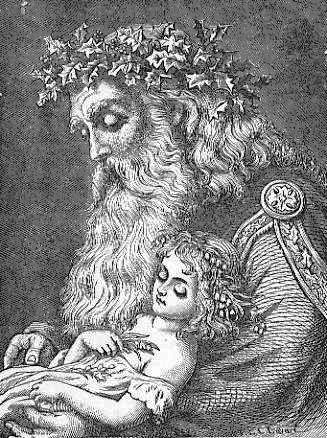 Father Time
Father Time is a personification of time, in particular the progression of history and the approach of death. In recent centuries, he is usually depicted as an elderly bearded man, sometimes with wings, dressed in a robe and carrying a scythe and an hourglass or other timekeeping device.
-
Time 100: The Most Important People of the Century
Time 100: The Most Important People of the Century is a compilation of the 20th century's 100 most influential people, published in Time magazine across five issues in 1998 and 1999.
-
 You (Time Person of the Year)
"You" was the official choice for Time's Person of the Year in 2006. The magazine set out to recognize the millions of people who anonymously contribute user-generated content to websites such as YouTube, MySpace, Facebook, Wikipedia and other wikis, and the multitudes of other websites featuring user contribution.
How this market resolves
Resolution is handled by the UMA optimistic oracle on Polygon. A proposer submits the outcome, a two-hour dispute window opens, and if no one stakes a counter-claim the payout is final. Contested outcomes escalate to UMA token-holder voting. Payouts clear in USDC to the winning side.
How to trade this market step by step
The mechanics for trading "TIME Person of the Year 2026" are the same as any other PolyGram event contract. Each YES share resolves to $1 if the event happens, or $0 if it doesn't. The current price between 0¢ and 100¢ is the market's probability estimate, set live by the order book.
- Sign in on polygram.ink with your email — no full KYC under $1,500 lifetime trading volume.
- Deposit USDC on Polygon (lowest fees, ~$0.01 per transaction) or Ethereum. Funds credit after 12 confirmations.
- Pick a side. Buy YES if you believe the event will happen; buy NO if you think it won't. The current YES price reflects the market's collective probability.
- Size your position. If you stake 100 USDC at 50% YES, you'll receive shares that pay $200 if YES resolves true — a 100% gross return. If NO resolves, your shares are worth $0.
- Set risk controls (optional). Stop-loss, take-profit, and limit-order types all supported. Use the trade ticket's slippage box to cap your maximum entry price.
- Wait for resolution. When the event resolves on-chain via the UMA optimistic oracle, the winning side settles to 100¢ automatically and USDC hits your balance within seconds. Withdrawable to any wallet you control.
How active is this market?
$593 in lifetime turnover and $261K of resting liquidity puts this market in the below the median by volume for magazine contracts on PolyGram. Order-book depth is exceptional — among the deepest order books in the category.
Last 24 hours alone saw $95 in turnover, well above the lifetime daily-average for this market — a clear sign of news catalysing trader activity right now.
The market has been open for under a month — fresh enough that information asymmetry remains a real factor.
Higher-volume markets tend to have tighter spreads and faster price discovery — meaning the displayed YES/NO percentages are more likely to reflect the true crowd-implied probability rather than a single trader's directional view.
Key terms
- YES / NO share
- A binary outcome token that pays $1.00 if the underlying claim resolves true (YES) or false (NO), and $0 otherwise. The market price between 0¢ and 100¢ is the implied probability.
- CLOB
- Central limit order book. The matching engine that pairs YES buyers with NO buyers (effectively the same trade). Polymarket's CLOB on Polygon executes trades on-chain via the conditional-tokens framework.
- Liquidity
- USDC capital sitting in resting limit orders inside the order book. Deeper liquidity means smaller slippage on large trades and a tighter bid-ask spread.
- UMA optimistic oracle
- The on-chain dispute system that settles each Polymarket market. A proposer submits the outcome, a two-hour challenge window opens, and unchallenged proposals finalise the resolution.
- Slippage
- The difference between the displayed mid-price and your fill price. Affects market orders most; limit orders avoid slippage but may take time to fill.
- Conditional token
- ERC-1155 outcome share issued by Gnosis Conditional Tokens on Polygon. The token type that resolves to $1.00 or $0.00 at settlement.
Frequently asked questions
How does this market resolve?
Resolution is handled by the UMA optimistic oracle on Polygon. A proposer submits the outcome, a 2-hour dispute window opens, and if uncontested the payout is final. Contested outcomes escalate to UMA token holders.
When does this market close?
This prediction market is scheduled to close on 31 December 2026. After the resolving event occurs, settlement typically clears within 24 hours once the UMA optimistic oracle confirms the outcome. All payouts are in USDC on the Polygon network.
How can I trade on "TIME Person of the Year 2026"?
To trade on this prediction market, create a free PolyGram account at polygram.ink, deposit USDC via Polygon, and place a YES or NO order on the outcome you believe in. You can learn more on our how-it-works page. Your maximum loss is limited to your stake — there is no leverage or margin.
What happens when the market resolves?
When the outcome is determined, winning YES shares pay out $1.00 each in USDC, while losing shares pay $0. Settlement is handled by the UMA optimistic oracle on Polygon — a proposer submits the result, a two-hour dispute window opens, and if uncontested, payouts are distributed automatically. You can withdraw your winnings to any Polygon wallet.
Risk and regulatory note
Prediction-market positions can lose 100% of staked capital. Outcomes are uncertain by definition — historical accuracy of crowd-implied probabilities is high in aggregate but not for any single market. PolyGram does not provide investment advice. Trade only with capital you can afford to lose.
Regulatory status varies by jurisdiction. Germany, the United States, and most EU countries treat Polymarket-style event contracts under one of three frameworks: financial derivative, gambling product, or unregulated novel asset. Consult local counsel before trading.
Related prediction markets
Explore more prediction market odds and trading opportunities on PolyGram: