Trade: Will s1mple retire by June 30?
Resolution criteria on PolyGram: This market will resolve to "Yes" if s1mple, the professional counter-strike player, announces his retirement from professional competitive esports by June 30, 2026, 11:59 PM ET. Otherwise, this market will resolve to "No". An announcement from s1mple that he is retiring will qualify even if his official retirement has not yet occurred. Breaks, periods of inactivity, transitions to another game, or transitions to streaming will not count unless s1mple explicitly announces his retirement from professional competitive esports. The resolution source will be official announcements from s1mple, however a consensus of credible reporting may also be used.
PolyGram is an on-chain prediction market where you trade YES or NO outcome shares with real USDC on Polygon. For this market, buy YES if you believe the event will happen, or NO if you think it won't. Your maximum loss is your stake — winning shares pay $1.00 each at resolution. Unlike sportsbooks, there is no house edge: prices are set by supply and demand from other traders and reflect the crowd's real-time probability.
- Liquidity
- $619
- Total Volume
- $678
- 24h Volume
- —
- Open Interest
- $292
Market outcomes
| Will s1mple retire by June 30? | 5% YES | 95% NO |
Market context
Oleksii Kostyliev, professionally known as s1mple, is a Ukrainian Counter-Strike player widely regarded as one of the discipline's greatest talents. The market assesses the probability that he will announce his retirement from professional competitive esports before 30 June 2026. Currently, Polymarket's order book implies a 6% chance of retirement within this timeframe, reflecting trader conviction that s1mple will remain active in competitive play through the settlement window.
Retirement announcements from elite esports professionals remain relatively uncommon, particularly among players in their prime earning years. Historical precedent suggests top-tier Counter-Strike players typically announce retirement only after significant career disruptions, organisational changes, or explicit statements about leaving the competitive scene. s1mple has maintained consistent professional engagement since joining Natus Vincere in 2013, with no sustained breaks from competition. Comparable cases—such as GeT_RiGhT's 2020 retirement or Potti's 2021 announcement—typically followed periods of reduced tournament participation or explicit public discussion about burnout, neither of which currently characterises s1mple's trajectory.
Traders should monitor Natus Vincere's roster announcements, major tournament outcomes, and any public statements from s1mple regarding his competitive future. The Counter-Strike 2 competitive calendar, including ESL Pro League and Intel Extreme Masters fixtures, will provide visibility into his continued participation. Recent reporting from HLTV and esports media outlets shows s1mple competing regularly through 2025, with no indication of imminent retirement plans. Significant organisational upheaval or explicit personal statements would represent the primary catalysts for material probability shifts.
Wikipedia Context
-
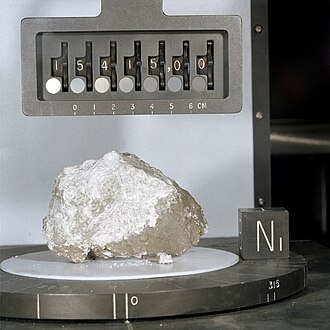 Sample-return mission
A sample-return mission is a spacecraft mission to collect and return samples from an extraterrestrial location to Earth for analysis. Sample-return missions may bring back merely atoms and molecules or a deposit of complex compounds such as loose material and rocks. These samples may be obtained in a number of ways, such as soil and rock excavation or a col
How this market resolves
Resolution is handled by the UMA optimistic oracle on Polygon. A proposer submits the outcome, a two-hour dispute window opens, and if no one stakes a counter-claim the payout is final. Contested outcomes escalate to UMA token-holder voting. Payouts clear in USDC to the winning side.
How to trade this market step by step
The mechanics for trading "Will s1mple retire by June 30?" are the same as any other PolyGram event contract. Each YES share resolves to $1 if the event happens, or $0 if it doesn't. The current price between 0¢ and 100¢ is the market's probability estimate, set live by the order book.
- Sign in on polygram.ink with your email — no full KYC under $1,500 lifetime trading volume.
- Deposit USDC on Polygon (lowest fees, ~$0.01 per transaction) or Ethereum. Funds credit after 12 confirmations.
- Pick a side. Buy YES if you believe the event will happen; buy NO if you think it won't. The current YES price reflects the market's collective probability.
- Size your position. If you stake 100 USDC at 5% YES, you'll receive shares that pay $2000 if YES resolves true — a 1900% gross return. If NO resolves, your shares are worth $0.
- Set risk controls (optional). Stop-loss, take-profit, and limit-order types all supported. Use the trade ticket's slippage box to cap your maximum entry price.
- Wait for resolution. When the event resolves on-chain via the UMA optimistic oracle, the winning side settles to 100¢ automatically and USDC hits your balance within seconds. Withdrawable to any wallet you control.
How active is this market?
$678 in lifetime turnover and $619 of resting liquidity puts this market in the below the median by volume for esports contracts on PolyGram. Order-book depth is thin — large orders may need to be split across the book or executed as limit orders.
The market has been open for 5 months — the price has had time to stabilise as new information arrived.
Higher-volume markets tend to have tighter spreads and faster price discovery — meaning the displayed YES/NO percentages are more likely to reflect the true crowd-implied probability rather than a single trader's directional view.
Key terms
- YES / NO share
- A binary outcome token that pays $1.00 if the underlying claim resolves true (YES) or false (NO), and $0 otherwise. The market price between 0¢ and 100¢ is the implied probability.
- CLOB
- Central limit order book. The matching engine that pairs YES buyers with NO buyers (effectively the same trade). Polymarket's CLOB on Polygon executes trades on-chain via the conditional-tokens framework.
- Liquidity
- USDC capital sitting in resting limit orders inside the order book. Deeper liquidity means smaller slippage on large trades and a tighter bid-ask spread.
- UMA optimistic oracle
- The on-chain dispute system that settles each Polymarket market. A proposer submits the outcome, a two-hour challenge window opens, and unchallenged proposals finalise the resolution.
- Slippage
- The difference between the displayed mid-price and your fill price. Affects market orders most; limit orders avoid slippage but may take time to fill.
- Conditional token
- ERC-1155 outcome share issued by Gnosis Conditional Tokens on Polygon. The token type that resolves to $1.00 or $0.00 at settlement.
Frequently asked questions
What is the current probability for "Will s1mple retire by June 30?"?
As of today, traders on Polymarket price this outcome at 5%. The number updates continuously as the order book clears. PolyGram mirrors the same live odds with locale-aware formatting and USDC settlement.
How does this market resolve?
Resolution is handled by the UMA optimistic oracle on Polygon. A proposer submits the outcome, a 2-hour dispute window opens, and if uncontested the payout is final. Contested outcomes escalate to UMA token holders.
When does this market close?
This prediction market is scheduled to close on 30 June 2026. After the resolving event occurs, settlement typically clears within 24 hours once the UMA optimistic oracle confirms the outcome. All payouts are in USDC on the Polygon network.
How can I trade on "Will s1mple retire by June 30?"?
To trade on this prediction market, create a free PolyGram account at polygram.ink, deposit USDC via Polygon, and place a YES or NO order on the outcome you believe in. You can learn more on our how-it-works page. Your maximum loss is limited to your stake — there is no leverage or margin.
What happens when the market resolves?
When the outcome is determined, winning YES shares pay out $1.00 each in USDC, while losing shares pay $0. Settlement is handled by the UMA optimistic oracle on Polygon — a proposer submits the result, a two-hour dispute window opens, and if uncontested, payouts are distributed automatically. You can withdraw your winnings to any Polygon wallet.
Risk and regulatory note
Prediction-market positions can lose 100% of staked capital. Outcomes are uncertain by definition — historical accuracy of crowd-implied probabilities is high in aggregate but not for any single market. PolyGram does not provide investment advice. Trade only with capital you can afford to lose.
Regulatory status varies by jurisdiction. Germany, the United States, and most EU countries treat Polymarket-style event contracts under one of three frameworks: financial derivative, gambling product, or unregulated novel asset. Consult local counsel before trading.
Related prediction markets
Explore more prediction market odds and trading opportunities on PolyGram: