Trade: U.S. enacts AI safety bill before 2027?
Resolution criteria on PolyGram: This market will resolve to "Yes" if a bill that includes at least one of the following provisions is signed into federal law in the United States by December 31, 2026, 11:59 PM ET. - Prohibition on Creation or Release: Forbids the creation or release of specific AI systems or models. - Training Restrictions: Sets limits on how AI systems can be trained, such as restricting access to previously available training data or imposing a maximum limit on the number of parameters used for training. - Usage Restrictions: Prevents AI systems from being used in certain applications, such as interacting with customers, interfacing with other applications, or performing actions on the web.
PolyGram is an on-chain prediction market where you trade YES or NO outcome shares with real USDC on Polygon. For this market, buy YES if you believe the event will happen, or NO if you think it won't. Your maximum loss is your stake — winning shares pay $1.00 each at resolution. Unlike sportsbooks, there is no house edge: prices are set by supply and demand from other traders and reflect the crowd's real-time probability.
- Liquidity
- $9K
- Total Volume
- $98K
- 24h Volume
- $25
- Open Interest
- $2K
Market outcomes
| U.S. enacts AI safety bill before 2027? | 28% YES | 73% NO |
Market context
The question concerns whether Congress will pass and the President will sign legislation imposing restrictions on artificial intelligence development, deployment, or training by the end of 2026. The bill must contain at least one substantive constraint—such as prohibiting certain systems, limiting training methodologies, or restricting specific applications—to qualify. The current order book on Polymarket implies a 27% probability of passage, reflecting scepticism about legislative momentum within the two-year window.
Historical precedent suggests federal technology regulation moves slowly. The Data Privacy Act discussions have spanned years without resolution; sectoral rules like those for algorithmic hiring have faced sustained industry opposition. The EU's AI Act took seven years from conception to implementation, though it operated under different legislative structures. Within the U.S. Congress, competing interests between Silicon Valley, national security hawks, and consumer advocates have fragmented support for unified AI governance. Previous attempts at comprehensive tech regulation—including social media liability reform and cryptocurrency frameworks—have stalled despite bipartisan concern, suggesting structural barriers to passage rather than mere lack of political will.
Near-term catalysts include the 2024 election outcome, which will determine both executive branch priorities and congressional composition. The National Institute of Standards and Technology's AI Risk Management Framework, released in January 2024, may inform legislative drafting. Senate Majority Leader Chuck Schumer's stated interest in AI governance and the Commerce Committee's ongoing hearings provide procedural entry points, though no bill has advanced to floor votes. Any major AI-related incident or international development could accelerate timelines, though the compressed legislative calendar before the 2026 deadline constrains opportunity for deliberation and amendment cycles typical of substantial regulatory bills.
Wikipedia Context
-
Enactivism
Enactivism is a position in cognitive science that argues that cognition arises through interaction between an acting organism and its environment. It claims that the environment of an organism is brought about, or enacted, by the active exercise of that organism's sensorimotor processes. "The key point, then, is that the species brings forth and specifies i
-
 Enactive interfaces
Enactive interfaces are interactive systems that allow organization and transmission of knowledge obtained through action. Examples are interfaces that couple a human with a machine to do things usually done unaided, such as shaping a three-dimensional object using multiple modality interactions with a database, or using interactive video to allow a student
-
 En Aasai Rasave
En Aasai Rasave is a 1998 Indian Tamil-language dance drama film directed by Kasthuri Raja. The film stars Sivaji Ganesan and Murali while Radhika, Roja and Suvalakshmi all play other supporting roles. The film, which focussed on the lives of karakattam dance artists, released on 28 August 1998.
-
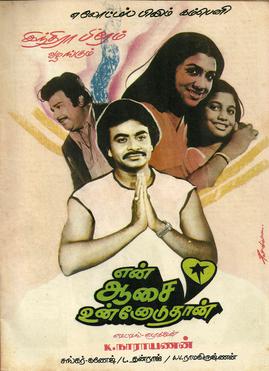 En Aasai Unnoduthan
En Aasai Unnoduthan is a 1983 Indian Tamil-language romance film edited and directed by K. Narayanan. The film stars Prem and Poornima Jayaram, with Thengai Srinivasan, Y. G. Mahendran, Rajini, Oru Viral Krishna Rao and Jaishankar in supporting roles. It was released on 30 September 1983.
How this market resolves
Resolution is handled by the UMA optimistic oracle on Polygon. A proposer submits the outcome, a two-hour dispute window opens, and if no one stakes a counter-claim the payout is final. Contested outcomes escalate to UMA token-holder voting. Payouts clear in USDC to the winning side.
How to trade this market step by step
The mechanics for trading "U.S. enacts AI safety bill before 2027?" are the same as any other PolyGram political event contract. Each YES share resolves to $1 if the event happens, or $0 if it doesn't. The current price between 0¢ and 100¢ is the market's probability estimate, set live by the order book.
- Sign in on polygram.ink with your email — no full KYC under $1,500 lifetime trading volume.
- Deposit USDC on Polygon (lowest fees, ~$0.01 per transaction) or Ethereum. Funds credit after 12 confirmations.
- Pick a side. Buy YES if you believe the event will happen; buy NO if you think it won't. The current YES price reflects the market's collective probability.
- Size your position. If you stake 100 USDC at 28% YES, you'll receive shares that pay $357 if YES resolves true — a 257% gross return. If NO resolves, your shares are worth $0.
- Set risk controls (optional). Stop-loss, take-profit, and limit-order types all supported. Use the trade ticket's slippage box to cap your maximum entry price.
- Wait for resolution. When the event resolves on-chain via the UMA optimistic oracle, the winning side settles to 100¢ automatically and USDC hits your balance within seconds. Withdrawable to any wallet you control.
How active is this market?
$98K in lifetime turnover and $9K of resting liquidity puts this market in the around the median by volume for politics contracts on PolyGram. Order-book depth is thin — large orders may need to be split across the book or executed as limit orders.
Last 24 hours alone saw $25 in turnover, consistent with the market's lifetime daily-average pace.
The market has been open for 6 months — the price has had time to stabilise as new information arrived.
Higher-volume markets tend to have tighter spreads and faster price discovery — meaning the displayed YES/NO percentages are more likely to reflect the true crowd-implied probability rather than a single trader's directional view.
Key terms
- YES / NO share
- A binary outcome token that pays $1.00 if the underlying claim resolves true (YES) or false (NO), and $0 otherwise. The market price between 0¢ and 100¢ is the implied probability.
- CLOB
- Central limit order book. The matching engine that pairs YES buyers with NO buyers (effectively the same trade). Polymarket's CLOB on Polygon executes trades on-chain via the conditional-tokens framework.
- Liquidity
- USDC capital sitting in resting limit orders inside the order book. Deeper liquidity means smaller slippage on large trades and a tighter bid-ask spread.
- UMA optimistic oracle
- The on-chain dispute system that settles each Polymarket market. A proposer submits the outcome, a two-hour challenge window opens, and unchallenged proposals finalise the resolution.
- Slippage
- The difference between the displayed mid-price and your fill price. Affects market orders most; limit orders avoid slippage but may take time to fill.
- Conditional token
- ERC-1155 outcome share issued by Gnosis Conditional Tokens on Polygon. The token type that resolves to $1.00 or $0.00 at settlement.
Frequently asked questions
What is the current probability for "U.S. enacts AI safety bill before 2027?"?
As of today, traders on Polymarket price this outcome at 28%. The number updates continuously as the order book clears. PolyGram mirrors the same live odds with locale-aware formatting and USDC settlement.
How does this market resolve?
Resolution is handled by the UMA optimistic oracle on Polygon. A proposer submits the outcome, a 2-hour dispute window opens, and if uncontested the payout is final. Contested outcomes escalate to UMA token holders.
When does this market close?
This prediction market is scheduled to close on 31 December 2026. After the resolving event occurs, settlement typically clears within 24 hours once the UMA optimistic oracle confirms the outcome. All payouts are in USDC on the Polygon network.
How can I trade on "U.S. enacts AI safety bill before 2027?"?
To trade on this prediction market, create a free PolyGram account at polygram.ink, deposit USDC via Polygon, and place a YES or NO order on the outcome you believe in. You can learn more on our how-it-works page. Your maximum loss is limited to your stake — there is no leverage or margin.
What happens when the market resolves?
When the outcome is determined, winning YES shares pay out $1.00 each in USDC, while losing shares pay $0. Settlement is handled by the UMA optimistic oracle on Polygon — a proposer submits the result, a two-hour dispute window opens, and if uncontested, payouts are distributed automatically. You can withdraw your winnings to any Polygon wallet.
Risk and regulatory note
Prediction-market positions can lose 100% of staked capital. Outcomes are uncertain by definition — historical accuracy of crowd-implied probabilities is high in aggregate but not for any single market. PolyGram does not provide investment advice. Trade only with capital you can afford to lose.
Regulatory status varies by jurisdiction. Germany, the United States, and most EU countries treat Polymarket-style event contracts under one of three frameworks: financial derivative, gambling product, or unregulated novel asset. Consult local counsel before trading.
Related prediction markets
Explore more prediction market odds and trading opportunities on PolyGram: