Trade: Who will advance from the California Governor primary?
Resolution criteria on PolyGram: The non-partisan primary election for Governor of California is scheduled to take place on June 2, 2026. The top two candidates in this election by number of votes won will advance to the general election for Governor of California. This market will resolve to “Yes” If the listed candidate advances from the primary to the general election for Governor of California. Otherwise this market will resolve to “No”. If no 2026 California gubernatorial primary takes place by December 31, 2026, this market will resolve to “No.” This market will resolve based on the results of the primary election for Governor of California as indicated by a consensus of credible reporting.
PolyGram is an on-chain prediction market where you trade YES or NO outcome shares with real USDC on Polygon. For this market, buy YES if you believe the event will happen, or NO if you think it won't. Your maximum loss is your stake — winning shares pay $1.00 each at resolution. Unlike sportsbooks, there is no house edge: prices are set by supply and demand from other traders and reflect the crowd's real-time probability.
- Liquidity
- $299K
- Total Volume
- $613K
- 24h Volume
- $22K
- Open Interest
- $83K
Market outcomes
| Derek Grasty | 1% YES | 99% NO |
| Xavier Becerra | 68% YES | 32% NO |
| Ian Calderon | 0% YES | 100% NO |
| Thunder Parley | 1% YES | 100% NO |
| Raji Rab | 1% YES | 99% NO |
| Eric Swalwell | 2% YES | 98% NO |
| Antonio Villaraigosa | 1% YES | 99% NO |
| Dylan Colbert | 1% YES | 99% NO |
Market context
California's non-partisan primary for Governor on 2 June 2026 will determine which two candidates proceed to the general election, regardless of party affiliation. The top two vote-getters advance under California's established primary system. This market resolves YES if the specified candidate finishes in the top two; otherwise it resolves NO. The settlement window closes at the primary election date, with a backstop resolution to NO if no primary occurs by 31 December 2026.
The 1% implied probability reflected on Polymarket's order book suggests minimal conviction that this particular candidate will finish in the top two. Historical California gubernatorial primaries have typically featured crowded fields where frontrunners emerge clearly, though surprises have occurred. The 2018 primary saw Lieutenant Governor Gavin Newsom and Republican John Cox advance despite a competitive field, whilst the 2014 race produced Governor Jerry Brown and Republican Neel Kashkari. Current probability formation likely reflects limited polling data at this early stage, candidate name recognition, fundraising capacity, and assessments of the broader field composition.
Key catalysts for traders include official candidate filings (typically closing months before the election), polling releases from credible firms, campaign funding disclosures, and major endorsements from established political figures. Media coverage of candidate viability will intensify as the primary approaches. Traders should monitor whether the candidate gains traction through earned media, donor support, or grassroots mobilisation—factors that could shift the probability materially from current levels. The crowded nature of California primaries means even modest vote share can determine advancement depending on field fragmentation.
Wikipedia Context
-
 Advanced Format
Advanced Format (AF) is any disk sector format used to store data in HDDs, SSDs and SSHDs that exceeds 528 bytes per sector, frequently 4096, 4112, 4160, or 4224-byte sectors. Larger sectors of an Advanced Format Drive (AFD) enable the integration of stronger error correction algorithms to maintain data integrity at higher storage densities.
-
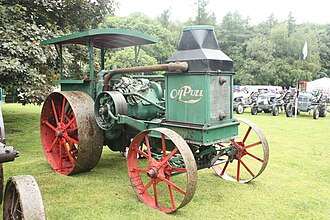 Advance-Rumely
The Advance-Rumely Company of La Porte, Indiana was an American pioneering producer of many types of agricultural machinery, most notably threshing machines and large tractors. Started in 1853 manufacturing threshers and later moved on to steam engines. Allis-Chalmers Manufacturing Co. purchased Advance-Rumley in 1931. The company's main works would become w
-
Advanced product quality planning
Advanced product quality planning (APQP) is a framework of procedures and techniques used to develop products in industry, particularly in the automotive industry. It differs from Six Sigma in that the goal of Six Sigma is to reduce variation but has similarities to Design for Six Sigma (DFSS).
-
Advance for Medical Laboratory Professionals
The biweekly trade journal Advance for Medical Laboratory Professionals started in 1991. During its time in circulation, it served an audience of bench technologists, chief technologists, cytotechnologists, generalists, histotechnologists, laboratory directors/managers, laboratory section heads, medical laboratory scientists, medical laboratory technicians,
How this market resolves
Resolution is handled by the UMA optimistic oracle on Polygon. A proposer submits the outcome, a two-hour dispute window opens, and if no one stakes a counter-claim the payout is final. Contested outcomes escalate to UMA token-holder voting. Payouts clear in USDC to the winning side.
How to trade this market step by step
The mechanics for trading "Who will advance from the California Governor primary?" are the same as any other PolyGram political event contract. Each YES share resolves to $1 if the event happens, or $0 if it doesn't. The current price between 0¢ and 100¢ is the market's probability estimate, set live by the order book.
- Sign in on polygram.ink with your email — no full KYC under $1,500 lifetime trading volume.
- Deposit USDC on Polygon (lowest fees, ~$0.01 per transaction) or Ethereum. Funds credit after 12 confirmations.
- Pick a side. Buy YES if you believe the event will happen; buy NO if you think it won't. The current YES price reflects the market's collective probability.
- Size your position. If you stake 100 USDC at 50% YES, you'll receive shares that pay $200 if YES resolves true — a 100% gross return. If NO resolves, your shares are worth $0.
- Set risk controls (optional). Stop-loss, take-profit, and limit-order types all supported. Use the trade ticket's slippage box to cap your maximum entry price.
- Wait for resolution. When the event resolves on-chain via the UMA optimistic oracle, the winning side settles to 100¢ automatically and USDC hits your balance within seconds. Withdrawable to any wallet you control.
How active is this market?
$613K in lifetime turnover and $299K of resting liquidity puts this market in the top 10% by volume for politics contracts on PolyGram. Order-book depth is exceptional — among the deepest order books in the category.
Last 24 hours alone saw $22K in turnover, consistent with the market's lifetime daily-average pace.
The market has been open for 5 months — the price has had time to stabilise as new information arrived.
Higher-volume markets tend to have tighter spreads and faster price discovery — meaning the displayed YES/NO percentages are more likely to reflect the true crowd-implied probability rather than a single trader's directional view.
Key terms
- YES / NO share
- A binary outcome token that pays $1.00 if the underlying claim resolves true (YES) or false (NO), and $0 otherwise. The market price between 0¢ and 100¢ is the implied probability.
- CLOB
- Central limit order book. The matching engine that pairs YES buyers with NO buyers (effectively the same trade). Polymarket's CLOB on Polygon executes trades on-chain via the conditional-tokens framework.
- Liquidity
- USDC capital sitting in resting limit orders inside the order book. Deeper liquidity means smaller slippage on large trades and a tighter bid-ask spread.
- UMA optimistic oracle
- The on-chain dispute system that settles each Polymarket market. A proposer submits the outcome, a two-hour challenge window opens, and unchallenged proposals finalise the resolution.
- Slippage
- The difference between the displayed mid-price and your fill price. Affects market orders most; limit orders avoid slippage but may take time to fill.
- Conditional token
- ERC-1155 outcome share issued by Gnosis Conditional Tokens on Polygon. The token type that resolves to $1.00 or $0.00 at settlement.
Frequently asked questions
How does this market resolve?
Resolution is handled by the UMA optimistic oracle on Polygon. A proposer submits the outcome, a 2-hour dispute window opens, and if uncontested the payout is final. Contested outcomes escalate to UMA token holders.
When does this market close?
This prediction market is scheduled to close on 2 June 2026. After the resolving event occurs, settlement typically clears within 24 hours once the UMA optimistic oracle confirms the outcome. All payouts are in USDC on the Polygon network.
How can I trade on "Who will advance from the California Governor primary?"?
To trade on this prediction market, create a free PolyGram account at polygram.ink, deposit USDC via Polygon, and place a YES or NO order on the outcome you believe in. You can learn more on our how-it-works page. Your maximum loss is limited to your stake — there is no leverage or margin.
What happens when the market resolves?
When the outcome is determined, winning YES shares pay out $1.00 each in USDC, while losing shares pay $0. Settlement is handled by the UMA optimistic oracle on Polygon — a proposer submits the result, a two-hour dispute window opens, and if uncontested, payouts are distributed automatically. You can withdraw your winnings to any Polygon wallet.
Risk and regulatory note
Prediction-market positions can lose 100% of staked capital. Outcomes are uncertain by definition — historical accuracy of crowd-implied probabilities is high in aggregate but not for any single market. PolyGram does not provide investment advice. Trade only with capital you can afford to lose.
Regulatory status varies by jurisdiction. Germany, the United States, and most EU countries treat Polymarket-style event contracts under one of three frameworks: financial derivative, gambling product, or unregulated novel asset. Consult local counsel before trading.
Related prediction markets
Explore more prediction market odds and trading opportunities on PolyGram: