Trade: Any EU nation's debt downgraded before 2027?
Resolution criteria on PolyGram: This market will resolve to "Yes" if the long-term sovereign credit letter rating of any European Union member country is downgraded by any of the three major credit rating agencies (S&P, Moody's, Fitch) at any point between the date of market creation and December 31, 2026 11:59pm ET. Otherwise, this market will resolve to "No". The resolution source for this market will be official information from Standard & Poor's, Moody's, or Fitch, however a consensus of credible reporting will also be used.
PolyGram is an on-chain prediction market where you trade YES or NO outcome shares with real USDC on Polygon. For this market, buy YES if you believe the event will happen, or NO if you think it won't. Your maximum loss is your stake — winning shares pay $1.00 each at resolution. Unlike sportsbooks, there is no house edge: prices are set by supply and demand from other traders and reflect the crowd's real-time probability.
- Liquidity
- —
- Total Volume
- $6K
- 24h Volume
- —
- Open Interest
- $4K
Market outcomes
| Any EU nation's debt downgraded before 2027? | 100% YES | 0% NO |
Market context
The question centres on whether at least one of the EU's 27 member states will receive a downgrade to its long-term sovereign credit rating from S&P, Moody's, or Fitch before the close of 2026. The current orderbook on Polymarket reflects near-certainty at 100% implied probability, suggesting traders assess a downgrade as virtually inevitable within this two-year window.
Historical precedent supports elevated downgrade risk. During the eurozone crisis (2010–2015), multiple EU nations experienced downgrades: Greece, Portugal, Ireland, Spain, and Cyprus all saw ratings cuts as fiscal pressures mounted. More recently, Moody's downgraded France's outlook to negative in September 2023, citing fiscal challenges, whilst Italy and Spain have faced rating pressure despite recent improvements. The agencies' forward-looking stance means downgrades often precede or accompany deteriorating fiscal metrics—debt-to-GDP ratios, budget deficits, or refinancing costs—rather than lagging them significantly.
Key catalysts to monitor include quarterly eurozone economic data releases, national budget announcements (typically autumn), and any geopolitical shocks affecting borrowing costs. The ECB's monetary policy trajectory matters substantially; tightening cycles historically correlate with sovereign stress. France's fiscal trajectory warrants particular attention given Moody's recent negative outlook, whilst Hungary and Poland face ongoing EU fund disputes that could strain their credit profiles. Rating agency commentary during their annual reviews—typically January through March—often signals imminent downgrades. Any significant recession, banking sector stress, or political instability in major economies could accelerate downgrade timelines.
Wikipedia Context
-
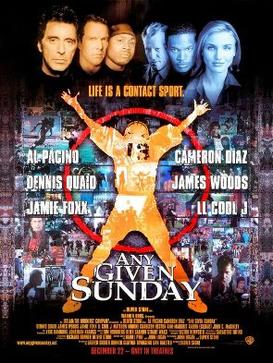 Any Given Sunday
Any Given Sunday is a 1999 American sports drama film directed by Oliver Stone and produced by Clayton Townsend, Dan Halsted, and Lauren Shuler Donner from a screenplay by Stone and John Logan based on a story written by Logan and Daniel Pyne, with Stone and Richard Donner additionally serving as executive producers. The film depicts a fictional professional
-
 Any Dream Will Do (TV series)
Any Dream Will Do, was a 2007 talent show-themed television series produced by the BBC in the United Kingdom. It searched for a new, unknown lead to play Joseph in a West End revival of the Andrew Lloyd Webber musical Joseph and the Amazing Technicolor Dreamcoat.
-
Any Day Now (TV series)
Any Day Now is an American drama television series that aired on the Lifetime network from 1998 to 2002. Set in Birmingham, Alabama, Any Day Now explored issues around race and friendship and how they affect the lives of two devoted lifelong friends over the years—from the 1960s to the current day. The show stars Annie Potts and Lorraine Toussaint, portrayin
-
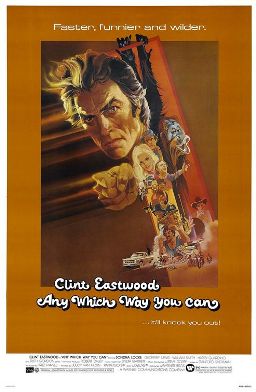 Any Which Way You Can
Any Which Way You Can is a 1980 American action comedy film directed by Buddy Van Horn and starring Clint Eastwood, with Sondra Locke, Geoffrey Lewis, William Smith, and Ruth Gordon in supporting roles. The film is the sequel to the 1978 hit comedy Every Which Way but Loose. The cast of the previous film return as Philo Beddoe (Eastwood) reluctantly comes ou
How this market resolves
Resolution is handled by the UMA optimistic oracle on Polygon. A proposer submits the outcome, a two-hour dispute window opens, and if no one stakes a counter-claim the payout is final. Contested outcomes escalate to UMA token-holder voting. Payouts clear in USDC to the winning side.
How to trade this market step by step
The mechanics for trading "Any EU nation's debt downgraded before 2027?" are the same as any other PolyGram political event contract. Each YES share resolves to $1 if the event happens, or $0 if it doesn't. The current price between 0¢ and 100¢ is the market's probability estimate, set live by the order book.
- Sign in on polygram.ink with your email — no full KYC under $1,500 lifetime trading volume.
- Deposit USDC on Polygon (lowest fees, ~$0.01 per transaction) or Ethereum. Funds credit after 12 confirmations.
- Pick a side. Buy YES if you believe the event will happen; buy NO if you think it won't. The current YES price reflects the market's collective probability.
- Size your position. If you stake 100 USDC at 100% YES, you'll receive shares that pay $100 if YES resolves true — a 0% gross return. If NO resolves, your shares are worth $0.
- Set risk controls (optional). Stop-loss, take-profit, and limit-order types all supported. Use the trade ticket's slippage box to cap your maximum entry price.
- Wait for resolution. When the event resolves on-chain via the UMA optimistic oracle, the winning side settles to 100¢ automatically and USDC hits your balance within seconds. Withdrawable to any wallet you control.
How active is this market?
$6K in lifetime turnover and $0 of resting liquidity puts this market in the below the median by volume for politics contracts on PolyGram. Order-book depth is thin — large orders may need to be split across the book or executed as limit orders.
The market has been open for 4 months — the price has had time to stabilise as new information arrived.
Higher-volume markets tend to have tighter spreads and faster price discovery — meaning the displayed YES/NO percentages are more likely to reflect the true crowd-implied probability rather than a single trader's directional view.
Key terms
- YES / NO share
- A binary outcome token that pays $1.00 if the underlying claim resolves true (YES) or false (NO), and $0 otherwise. The market price between 0¢ and 100¢ is the implied probability.
- CLOB
- Central limit order book. The matching engine that pairs YES buyers with NO buyers (effectively the same trade). Polymarket's CLOB on Polygon executes trades on-chain via the conditional-tokens framework.
- Liquidity
- USDC capital sitting in resting limit orders inside the order book. Deeper liquidity means smaller slippage on large trades and a tighter bid-ask spread.
- UMA optimistic oracle
- The on-chain dispute system that settles each Polymarket market. A proposer submits the outcome, a two-hour challenge window opens, and unchallenged proposals finalise the resolution.
- Slippage
- The difference between the displayed mid-price and your fill price. Affects market orders most; limit orders avoid slippage but may take time to fill.
- Conditional token
- ERC-1155 outcome share issued by Gnosis Conditional Tokens on Polygon. The token type that resolves to $1.00 or $0.00 at settlement.
Frequently asked questions
What is the current probability for "Any EU nation's debt downgraded before 2027?"?
As of today, traders on Polymarket price this outcome at 100%. The number updates continuously as the order book clears. PolyGram mirrors the same live odds with locale-aware formatting and USDC settlement.
How does this market resolve?
Resolution is handled by the UMA optimistic oracle on Polygon. A proposer submits the outcome, a 2-hour dispute window opens, and if uncontested the payout is final. Contested outcomes escalate to UMA token holders.
When does this market close?
This prediction market is scheduled to close on 31 December 2026. After the resolving event occurs, settlement typically clears within 24 hours once the UMA optimistic oracle confirms the outcome. All payouts are in USDC on the Polygon network.
How can I trade on "Any EU nation's debt downgraded before 2027?"?
To trade on this prediction market, create a free PolyGram account at polygram.ink, deposit USDC via Polygon, and place a YES or NO order on the outcome you believe in. You can learn more on our how-it-works page. Your maximum loss is limited to your stake — there is no leverage or margin.
What happens when the market resolves?
When the outcome is determined, winning YES shares pay out $1.00 each in USDC, while losing shares pay $0. Settlement is handled by the UMA optimistic oracle on Polygon — a proposer submits the result, a two-hour dispute window opens, and if uncontested, payouts are distributed automatically. You can withdraw your winnings to any Polygon wallet.
Risk and regulatory note
Prediction-market positions can lose 100% of staked capital. Outcomes are uncertain by definition — historical accuracy of crowd-implied probabilities is high in aggregate but not for any single market. PolyGram does not provide investment advice. Trade only with capital you can afford to lose.
Regulatory status varies by jurisdiction. Germany, the United States, and most EU countries treat Polymarket-style event contracts under one of three frameworks: financial derivative, gambling product, or unregulated novel asset. Consult local counsel before trading.
Related prediction markets
Explore more prediction market odds and trading opportunities on PolyGram: