Trade: Another US debt downgrade before 2027?
Resolution criteria on PolyGram: This market will resolve to "Yes" if the United States' long-term sovereign credit letter rating is downgraded by any of the three major credit rating agencies (S&P, Moody's, Fitch) at any point by December 31, 2026 11:59pm ET. Otherwise, this market will resolve to "No". The resolution source for this market will be official information from Standard & Poor's, Moody's, or Fitch, however a consensus of credible reporting will also be used.
PolyGram is an on-chain prediction market where you trade YES or NO outcome shares with real USDC on Polygon. For this market, buy YES if you believe the event will happen, or NO if you think it won't. Your maximum loss is your stake — winning shares pay $1.00 each at resolution. Unlike sportsbooks, there is no house edge: prices are set by supply and demand from other traders and reflect the crowd's real-time probability.
- Liquidity
- $4K
- Total Volume
- $10K
- 24h Volume
- —
- Open Interest
- $3K
Market outcomes
| Another US debt downgrade before 2027? | 20% YES | 81% NO |
Market context
The United States currently holds AAA ratings from all three major credit rating agencies, though S&P downgraded the nation's outlook to negative in 2023, citing fiscal deterioration and political polarisation. A further downgrade to AA+ or below would represent a significant market event, with potential implications for Treasury yields and broader financial conditions. The 21% implied probability on Polymarket's order book reflects trader assessment that such a downgrade remains unlikely within the next two years, though not negligible.
Historical precedent is limited but instructive. S&P downgraded US debt from AAA to AA+ in August 2011 following the debt ceiling crisis, the only downgrade of US long-term sovereign debt in the modern era. That downgrade occurred amid acute political brinkmanship and genuine uncertainty about payment capacity. Current fiscal metrics—including a federal debt-to-GDP ratio exceeding 120% and persistent deficits—are materially worse than in 2011, yet rating agencies have maintained AAA ratings, suggesting high tolerance for structural imbalances. Moody's and Fitch have not downgraded the US since the 1980s.
Key catalysts through end-2026 include Treasury market stress, debt ceiling negotiations (due again in 2025), and any significant deterioration in fiscal projections. The Congressional Budget Office's long-term outlook and rating agency commentary during scheduled reviews will signal shifting risk assessments. Market participants should monitor Treasury auction dynamics and credit default swap spreads on US debt as leading indicators of rating agency sentiment shifts.
Wikipedia Context
-
 Another Brick in the Wall
"Another Brick in the Wall" is a three-part composition on Pink Floyd's eleventh studio album The Wall (1979), written by the bassist, Roger Waters. "Part 2", a protest song against corporal punishment in schools and rigid and abusive schooling, features a children's choir. At the suggestion of the producer, Bob Ezrin, Pink Floyd incorporated elements of dis
-
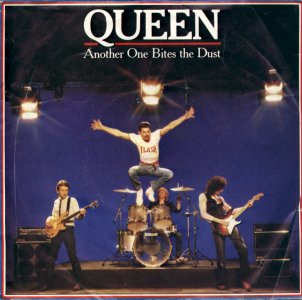 Another One Bites the Dust
"Another One Bites the Dust" is a song by the British rock band Queen. Written by bassist John Deacon, the song was featured on the group's eighth studio album, The Game (1980). It was a worldwide hit, charting at number one on the US Billboard Hot 100 for three weeks, from 4 October to 18 October. The song spent 15 weeks in the Billboard top 10, including 1
-
 Another Day in Paradise
"Another Day in Paradise" is a song written and recorded by the English drummer and singer Phil Collins. Produced by Collins along with Hugh Padgham, it was released as the first single from his number-one album ...But Seriously (1989). As with his song for Genesis, "Man on the Corner", the track has as its subject the issue of homelessness; as such, the son
-
 Another World (TV series)
Another World is an American television soap opera that aired on NBC from May 4, 1964, to June 25, 1999. It was created by Irna Phillips along with William J. Bell, and was produced by Procter & Gamble Productions at NBC Studios, 1268 East 14th Street in Brooklyn.
How this market resolves
Resolution is handled by the UMA optimistic oracle on Polygon. A proposer submits the outcome, a two-hour dispute window opens, and if no one stakes a counter-claim the payout is final. Contested outcomes escalate to UMA token-holder voting. Payouts clear in USDC to the winning side.
How to trade this market step by step
The mechanics for trading "Another US debt downgrade before 2027?" are the same as any other PolyGram event contract. Each YES share resolves to $1 if the event happens, or $0 if it doesn't. The current price between 0¢ and 100¢ is the market's probability estimate, set live by the order book.
- Sign in on polygram.ink with your email — no full KYC under $1,500 lifetime trading volume.
- Deposit USDC on Polygon (lowest fees, ~$0.01 per transaction) or Ethereum. Funds credit after 12 confirmations.
- Pick a side. Buy YES if you believe the event will happen; buy NO if you think it won't. The current YES price reflects the market's collective probability.
- Size your position. If you stake 100 USDC at 20% YES, you'll receive shares that pay $500 if YES resolves true — a 400% gross return. If NO resolves, your shares are worth $0.
- Set risk controls (optional). Stop-loss, take-profit, and limit-order types all supported. Use the trade ticket's slippage box to cap your maximum entry price.
- Wait for resolution. When the event resolves on-chain via the UMA optimistic oracle, the winning side settles to 100¢ automatically and USDC hits your balance within seconds. Withdrawable to any wallet you control.
How active is this market?
$10K in lifetime turnover and $4K of resting liquidity puts this market in the below the median by volume for economy contracts on PolyGram. Order-book depth is thin — large orders may need to be split across the book or executed as limit orders.
The market has been open for 6 months — long enough that the order book is mature and price is well-anchored to fundamentals.
Higher-volume markets tend to have tighter spreads and faster price discovery — meaning the displayed YES/NO percentages are more likely to reflect the true crowd-implied probability rather than a single trader's directional view.
Key terms
- YES / NO share
- A binary outcome token that pays $1.00 if the underlying claim resolves true (YES) or false (NO), and $0 otherwise. The market price between 0¢ and 100¢ is the implied probability.
- CLOB
- Central limit order book. The matching engine that pairs YES buyers with NO buyers (effectively the same trade). Polymarket's CLOB on Polygon executes trades on-chain via the conditional-tokens framework.
- Liquidity
- USDC capital sitting in resting limit orders inside the order book. Deeper liquidity means smaller slippage on large trades and a tighter bid-ask spread.
- UMA optimistic oracle
- The on-chain dispute system that settles each Polymarket market. A proposer submits the outcome, a two-hour challenge window opens, and unchallenged proposals finalise the resolution.
- Slippage
- The difference between the displayed mid-price and your fill price. Affects market orders most; limit orders avoid slippage but may take time to fill.
- Conditional token
- ERC-1155 outcome share issued by Gnosis Conditional Tokens on Polygon. The token type that resolves to $1.00 or $0.00 at settlement.
Frequently asked questions
What is the current probability for "Another US debt downgrade before 2027?"?
As of today, traders on Polymarket price this outcome at 20%. The number updates continuously as the order book clears. PolyGram mirrors the same live odds with locale-aware formatting and USDC settlement.
How does this market resolve?
Resolution is handled by the UMA optimistic oracle on Polygon. A proposer submits the outcome, a 2-hour dispute window opens, and if uncontested the payout is final. Contested outcomes escalate to UMA token holders.
When does this market close?
This prediction market is scheduled to close on 31 December 2026. After the resolving event occurs, settlement typically clears within 24 hours once the UMA optimistic oracle confirms the outcome. All payouts are in USDC on the Polygon network.
How can I trade on "Another US debt downgrade before 2027?"?
To trade on this prediction market, create a free PolyGram account at polygram.ink, deposit USDC via Polygon, and place a YES or NO order on the outcome you believe in. You can learn more on our how-it-works page. Your maximum loss is limited to your stake — there is no leverage or margin.
What happens when the market resolves?
When the outcome is determined, winning YES shares pay out $1.00 each in USDC, while losing shares pay $0. Settlement is handled by the UMA optimistic oracle on Polygon — a proposer submits the result, a two-hour dispute window opens, and if uncontested, payouts are distributed automatically. You can withdraw your winnings to any Polygon wallet.
Risk and regulatory note
Prediction-market positions can lose 100% of staked capital. Outcomes are uncertain by definition — historical accuracy of crowd-implied probabilities is high in aggregate but not for any single market. PolyGram does not provide investment advice. Trade only with capital you can afford to lose.
Regulatory status varies by jurisdiction. Germany, the United States, and most EU countries treat Polymarket-style event contracts under one of three frameworks: financial derivative, gambling product, or unregulated novel asset. Consult local counsel before trading.
Related prediction markets
Explore more prediction market odds and trading opportunities on PolyGram: