Trade: Will a new country join the Abraham Accords before 2027?
Resolution criteria on PolyGram: This market will resolve to "Yes" if any country not already a part of the Abraham Accords formally signs a normalization agreement with Israel under the framework of the Abraham Accords by December 31, 2026 11:59 PM ET. Otherwise, this market will resolve to "No". A formal signing refers to an official agreement between Israel and another country that is publicly acknowledged by both governments and clearly attributed to the Abraham Accords or their continuation. Countries already part of the Abraham Accords as of June 26, 2025—including the United Arab Emirates, Bahrain, Morocco, and Sudan—will not count.
PolyGram is an on-chain prediction market where you trade YES or NO outcome shares with real USDC on Polygon. For this market, buy YES if you believe the event will happen, or NO if you think it won't. Your maximum loss is your stake — winning shares pay $1.00 each at resolution. Unlike sportsbooks, there is no house edge: prices are set by supply and demand from other traders and reflect the crowd's real-time probability.
- Liquidity
- $15K
- Total Volume
- $113K
- 24h Volume
- $40
- Open Interest
- $11K
Market outcomes
| Will a new country join the Abraham Accords before 2027? | 33% YES | 67% NO |
Market context
The Abraham Accords, initiated in 2020, have brought four countries into formal normalisation agreements with Israel: the UAE, Bahrain, Morocco, and Sudan. The question is whether at least one additional nation will join this framework before the end of 2026. The current order book on Polymarket prices this outcome at 33% implied probability, reflecting moderate scepticism about near-term expansion despite initial momentum that saw four signatories within roughly two years of the framework's launch.
Historical precedent suggests both rapid clustering and prolonged stalling are plausible. The initial wave (2020–2021) demonstrated that geopolitical conditions and domestic political calculations could align quickly; however, the subsequent three years have produced no new signings despite speculation around Saudi Arabia, Oman, and several Gulf and North African states. The gap between initial enthusiasm and subsequent inertia reflects the reality that remaining candidate nations face distinct domestic constraints—whether Islamist opposition, Palestinian solidarity concerns, or strategic hedging between regional powers.
Near-term catalysts centre on potential Saudi engagement, which would represent the most consequential addition given Riyadh's regional weight. Any Israeli–Palestinian developments, shifts in Iranian regional influence, or changes to US Middle East policy under the incoming administration could alter calculations for fence-sitters. Formal announcements typically follow months of quiet diplomacy, meaning public signals may arrive with limited warning. Traders should monitor statements from Gulf Cooperation Council members and North African governments, particularly around multilateral forums where normalisation discussions sometimes surface.
Wikipedia Context
-
New Country Y-107
New Country Y-107 was a radio station simulcast on as many as four FM stations all on 107.1 MHz around New York City. Airing a country music format, the stations targeted a primarily suburban and exurban audience. Owned by Big City Radio, New Country Y-107 broadcast from 1996 to 2002; the simulcast then flipped to contemporary Spanish music as "Rumba 107"
-
New Country Rehab
New Country Rehab is a Canadian alternative country band. Based in Toronto, Ontario, the band consists of John Showman on vocals and fiddle, Anthony Da Costa on guitar, Ben Whiteley on bass, and Roman Tomé on drums. All four members are established session musicians in the Toronto area, who have played in supporting bands for artists including Basia Bulat, J
-
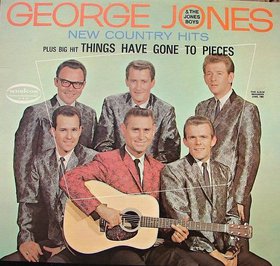 New Country Hits
New Country Hits is an album by American country music artist George Jones. It was released in 1965 on the Musicor Records label.
-
List of SiriusXM Radio channels
The following is a list of channels on both the American and Canadian versions of SiriusXM. It includes a live sports, news, entertainment, contemporary stars, rock icons, Rock, Country, and Hip Hop, and R&B.
How this market resolves
Resolution is handled by the UMA optimistic oracle on Polygon. A proposer submits the outcome, a two-hour dispute window opens, and if no one stakes a counter-claim the payout is final. Contested outcomes escalate to UMA token-holder voting. Payouts clear in USDC to the winning side.
How to trade this market step by step
The mechanics for trading "Will a new country join the Abraham Accords before 2027?" are the same as any other PolyGram event contract. Each YES share resolves to $1 if the event happens, or $0 if it doesn't. The current price between 0¢ and 100¢ is the market's probability estimate, set live by the order book.
- Sign in on polygram.ink with your email — no full KYC under $1,500 lifetime trading volume.
- Deposit USDC on Polygon (lowest fees, ~$0.01 per transaction) or Ethereum. Funds credit after 12 confirmations.
- Pick a side. Buy YES if you believe the event will happen; buy NO if you think it won't. The current YES price reflects the market's collective probability.
- Size your position. If you stake 100 USDC at 33% YES, you'll receive shares that pay $303 if YES resolves true — a 203% gross return. If NO resolves, your shares are worth $0.
- Set risk controls (optional). Stop-loss, take-profit, and limit-order types all supported. Use the trade ticket's slippage box to cap your maximum entry price.
- Wait for resolution. When the event resolves on-chain via the UMA optimistic oracle, the winning side settles to 100¢ automatically and USDC hits your balance within seconds. Withdrawable to any wallet you control.
How active is this market?
$113K in lifetime turnover and $15K of resting liquidity puts this market in the top 30% by volume for geopolitics contracts on PolyGram. Order-book depth is modest — expect a couple of cents of slippage on $1k+ trades.
Last 24 hours alone saw $40 in turnover, consistent with the market's lifetime daily-average pace.
The market has been open for 6 months — long enough that the order book is mature and price is well-anchored to fundamentals.
Higher-volume markets tend to have tighter spreads and faster price discovery — meaning the displayed YES/NO percentages are more likely to reflect the true crowd-implied probability rather than a single trader's directional view.
Key terms
- YES / NO share
- A binary outcome token that pays $1.00 if the underlying claim resolves true (YES) or false (NO), and $0 otherwise. The market price between 0¢ and 100¢ is the implied probability.
- CLOB
- Central limit order book. The matching engine that pairs YES buyers with NO buyers (effectively the same trade). Polymarket's CLOB on Polygon executes trades on-chain via the conditional-tokens framework.
- Liquidity
- USDC capital sitting in resting limit orders inside the order book. Deeper liquidity means smaller slippage on large trades and a tighter bid-ask spread.
- UMA optimistic oracle
- The on-chain dispute system that settles each Polymarket market. A proposer submits the outcome, a two-hour challenge window opens, and unchallenged proposals finalise the resolution.
- Slippage
- The difference between the displayed mid-price and your fill price. Affects market orders most; limit orders avoid slippage but may take time to fill.
- Conditional token
- ERC-1155 outcome share issued by Gnosis Conditional Tokens on Polygon. The token type that resolves to $1.00 or $0.00 at settlement.
Frequently asked questions
What is the current probability for "Will a new country join the Abraham Accords before 2027?"?
As of today, traders on Polymarket price this outcome at 33%. The number updates continuously as the order book clears. PolyGram mirrors the same live odds with locale-aware formatting and USDC settlement.
How does this market resolve?
Resolution is handled by the UMA optimistic oracle on Polygon. A proposer submits the outcome, a 2-hour dispute window opens, and if uncontested the payout is final. Contested outcomes escalate to UMA token holders.
When does this market close?
This prediction market is scheduled to close on 31 December 2026. After the resolving event occurs, settlement typically clears within 24 hours once the UMA optimistic oracle confirms the outcome. All payouts are in USDC on the Polygon network.
How can I trade on "Will a new country join the Abraham Accords before 2027?"?
To trade on this prediction market, create a free PolyGram account at polygram.ink, deposit USDC via Polygon, and place a YES or NO order on the outcome you believe in. You can learn more on our how-it-works page. Your maximum loss is limited to your stake — there is no leverage or margin.
What happens when the market resolves?
When the outcome is determined, winning YES shares pay out $1.00 each in USDC, while losing shares pay $0. Settlement is handled by the UMA optimistic oracle on Polygon — a proposer submits the result, a two-hour dispute window opens, and if uncontested, payouts are distributed automatically. You can withdraw your winnings to any Polygon wallet.
Risk and regulatory note
Prediction-market positions can lose 100% of staked capital. Outcomes are uncertain by definition — historical accuracy of crowd-implied probabilities is high in aggregate but not for any single market. PolyGram does not provide investment advice. Trade only with capital you can afford to lose.
Regulatory status varies by jurisdiction. Germany, the United States, and most EU countries treat Polymarket-style event contracts under one of three frameworks: financial derivative, gambling product, or unregulated novel asset. Consult local counsel before trading.
Related prediction markets
Explore more prediction market odds and trading opportunities on PolyGram: