Trade: MLB: Number of no-hitters thrown in 2026
Resolution criteria on PolyGram: This market will resolve to “Yes” if the total number of no-hitters thrown during the 2026 MLB season (including postseason) equals or exceeds the listed number. Otherwise, the market will resolve to “No” If no no-hitters are thrown during the 2026 MLB season (including postseason), the market will resolve to “No”. A ‘no-hitter’ is a complete game in which a pitcher(s) yields no hits to the opposing team. If the 2026 MLB season concludes early, is shortened, or is truncated for any reason, the outcome shall be determined using available MLB statistics for completed games.
PolyGram is an on-chain prediction market where you trade YES or NO outcome shares with real USDC on Polygon. For this market, buy YES if you believe the event will happen, or NO if you think it won't. Your maximum loss is your stake — winning shares pay $1.00 each at resolution. Unlike sportsbooks, there is no house edge: prices are set by supply and demand from other traders and reflect the crowd's real-time probability.
- Liquidity
- $962
- Total Volume
- $1K
- 24h Volume
- —
- Open Interest
- $51
Market outcomes
| 1+ | 81% YES | 19% NO |
| 2+ | 52% YES | 48% NO |
| 3+ | 50% YES | 50% NO |
| 4+ | 50% YES | 51% NO |
| 5+ | 50% YES | 51% NO |
| 6+ | 50% YES | 51% NO |
| 7+ | 50% YES | 51% NO |
| 8+ | 50% YES | 51% NO |
Market context
The 2026 MLB season will run from late March through September, with 30 teams playing 162 games each during the regular season, followed by postseason play. This market settles on whether at least one no-hitter occurs across all completed games during that period. The 79% implied probability on Polymarket's order book reflects trader conviction that the threshold will be met, with current liquidity pricing in expectations around historical frequency.
No-hitters have averaged roughly 0.7 to 1.2 per season over the past two decades, though annual variance is substantial. Between 2010 and 2024, MLB saw seasons ranging from zero no-hitters (2012, 2014) to four (2021). The 2023 season produced three no-hitters; 2024 saw two. This historical volatility means single-season outcomes cluster around one, but tail risks of zero or multiple occurrences remain material. The current 79% probability reflects a baseline expectation that one or more will occur, consistent with the longer-term trend.
Traders should monitor pitcher health and velocity trends as spring training approaches, particularly among young arms with high strikeout rates—the demographic most likely to achieve no-hitters. Rule changes affecting pitcher workload or mound visits could influence game dynamics. Weather patterns and ballpark dimensions also matter; certain stadiums and cooler climates historically correlate with fewer hits. Any significant changes to the 2026 schedule, such as early season cancellations or labour disruptions, would alter the sample size available for settlement.
Wikipedia Context
-
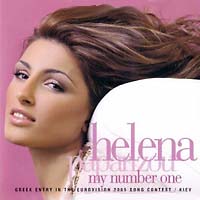 My Number One
"My Number One" is a song recorded by Greek-Swedish singer Helena Paparizou with music composed by Manolis Psaltakis and Christos Dantis, lyrics written by Dantis and Natalia Germanou, and produced by Dantis. It represented Greece in the Eurovision Song Contest 2005, held in Kyiv, resulting in the country's only ever victory in the contest.
-
 My Number Card
The My Number Card , officially Individual Number Card , is an identity document issued to citizens of Japan and foreign residents which contains a unique 12-digit Individual Number that serves as a national identification number in Japan. Unlike similar-looking identity cards in Europe, the My Number Card can be issued to both Japanese citizens and foreign
-
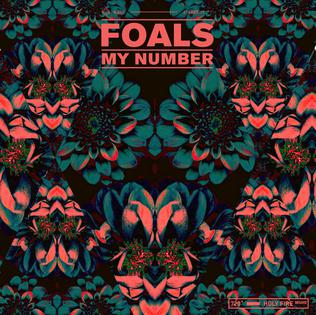 My Number (Foals song)
"My Number" is a song by British rock band Foals, released as the second single from their third studio album Holy Fire. The song debuted live on 13 November 2012 during the band's performance on Later... with Jools Holland. A month later to the date, they debuted the album version on Zane Lowe's BBC Radio 1 show on 13 December, then posted it via their YouT
-
 My Number One (Luv' song)
"My Number One" is the twelfth single by the Dutch girl group Luv', released in the autumn of 1980 by CNR/Carrere Records. The song appears on the Forever Yours album and was a chart success in Benelux and a minor hit in Germany. "My Number One" served as the official introduction to the public and the media of Luv's new member, Ria Thielsch.
How this market resolves
Resolution is handled by the UMA optimistic oracle on Polygon. A proposer submits the outcome, a two-hour dispute window opens, and if no one stakes a counter-claim the payout is final. Contested outcomes escalate to UMA token-holder voting. Payouts clear in USDC to the winning side.
How to trade this market step by step
The mechanics for trading "MLB: Number of no-hitters thrown in 2026" are the same as any other PolyGram event contract. Each YES share resolves to $1 if the event happens, or $0 if it doesn't. The current price between 0¢ and 100¢ is the market's probability estimate, set live by the order book.
- Sign in on polygram.ink with your email — no full KYC under $1,500 lifetime trading volume.
- Deposit USDC on Polygon (lowest fees, ~$0.01 per transaction) or Ethereum. Funds credit after 12 confirmations.
- Pick a side. Buy YES if you believe the event will happen; buy NO if you think it won't. The current YES price reflects the market's collective probability.
- Size your position. If you stake 100 USDC at 50% YES, you'll receive shares that pay $200 if YES resolves true — a 100% gross return. If NO resolves, your shares are worth $0.
- Set risk controls (optional). Stop-loss, take-profit, and limit-order types all supported. Use the trade ticket's slippage box to cap your maximum entry price.
- Wait for resolution. When the event resolves on-chain via the UMA optimistic oracle, the winning side settles to 100¢ automatically and USDC hits your balance within seconds. Withdrawable to any wallet you control.
How active is this market?
$1K in lifetime turnover and $962 of resting liquidity puts this market in the below the median by volume for mlb contracts on PolyGram. Order-book depth is thin — large orders may need to be split across the book or executed as limit orders.
The market has been open for around a month — fresh enough that information asymmetry remains a real factor.
Higher-volume markets tend to have tighter spreads and faster price discovery — meaning the displayed YES/NO percentages are more likely to reflect the true crowd-implied probability rather than a single trader's directional view.
Key terms
- YES / NO share
- A binary outcome token that pays $1.00 if the underlying claim resolves true (YES) or false (NO), and $0 otherwise. The market price between 0¢ and 100¢ is the implied probability.
- CLOB
- Central limit order book. The matching engine that pairs YES buyers with NO buyers (effectively the same trade). Polymarket's CLOB on Polygon executes trades on-chain via the conditional-tokens framework.
- Liquidity
- USDC capital sitting in resting limit orders inside the order book. Deeper liquidity means smaller slippage on large trades and a tighter bid-ask spread.
- UMA optimistic oracle
- The on-chain dispute system that settles each Polymarket market. A proposer submits the outcome, a two-hour challenge window opens, and unchallenged proposals finalise the resolution.
- Slippage
- The difference between the displayed mid-price and your fill price. Affects market orders most; limit orders avoid slippage but may take time to fill.
- Conditional token
- ERC-1155 outcome share issued by Gnosis Conditional Tokens on Polygon. The token type that resolves to $1.00 or $0.00 at settlement.
Frequently asked questions
How does this market resolve?
Resolution is handled by the UMA optimistic oracle on Polygon. A proposer submits the outcome, a 2-hour dispute window opens, and if uncontested the payout is final. Contested outcomes escalate to UMA token holders.
When does this market close?
This prediction market is scheduled to close on 28 September 2026. After the resolving event occurs, settlement typically clears within 24 hours once the UMA optimistic oracle confirms the outcome. All payouts are in USDC on the Polygon network.
How can I trade on "MLB: Number of no-hitters thrown in 2026"?
To trade on this prediction market, create a free PolyGram account at polygram.ink, deposit USDC via Polygon, and place a YES or NO order on the outcome you believe in. You can learn more on our how-it-works page. Your maximum loss is limited to your stake — there is no leverage or margin.
What happens when the market resolves?
When the outcome is determined, winning YES shares pay out $1.00 each in USDC, while losing shares pay $0. Settlement is handled by the UMA optimistic oracle on Polygon — a proposer submits the result, a two-hour dispute window opens, and if uncontested, payouts are distributed automatically. You can withdraw your winnings to any Polygon wallet.
Risk and regulatory note
Prediction-market positions can lose 100% of staked capital. Outcomes are uncertain by definition — historical accuracy of crowd-implied probabilities is high in aggregate but not for any single market. PolyGram does not provide investment advice. Trade only with capital you can afford to lose.
Regulatory status varies by jurisdiction. Germany, the United States, and most EU countries treat Polymarket-style event contracts under one of three frameworks: financial derivative, gambling product, or unregulated novel asset. Consult local counsel before trading.
Related prediction markets
Explore more prediction market odds and trading opportunities on PolyGram: