Trade: Israel x Lebanon diplomatic meeting by May 31?
Resolution criteria on PolyGram: This market will resolve to "Yes" if there is a diplomatic meeting between representatives of Israel and Lebanon by the listed date, 11:59 PM ET. Otherwise, this market will resolve to “No”. A diplomatic meeting refers to a deliberate meeting between representatives of the listed countries who are acting in an official capacity and are authorized to engage in negotiation or diplomacy regarding Israel-Lebanon relations on behalf of their governments. Meetings conducted indirectly, for example, through designated mediators, facilitators, or interlocutors acting with the knowledge and authorization of the relevant governments, will qualify.
PolyGram is an on-chain prediction market where you trade YES or NO outcome shares with real USDC on Polygon. For this market, buy YES if you believe the event will happen, or NO if you think it won't. Your maximum loss is your stake — winning shares pay $1.00 each at resolution. Unlike sportsbooks, there is no house edge: prices are set by supply and demand from other traders and reflect the crowd's real-time probability.
- Liquidity
- $6K
- Total Volume
- $127K
- 24h Volume
- $13K
- Open Interest
- $32K
Market outcomes
| Israel x Lebanon diplomatic meeting by May 31? | 85% YES | 15% NO |
Market context
Israel and Lebanon have maintained a ceasefire since November 2024 following intensive cross-border conflict, with UN-brokered arrangements governing the demilitarisation of southern Lebanon. A direct diplomatic meeting between Israeli and Lebanese officials would represent a significant escalation in normalisation efforts beyond the current military de-escalation framework. The market currently reflects 90% implied probability on Polymarket's order book, suggesting traders assess such a meeting as highly likely within the 18-month window through May 2026.
Historical precedent offers mixed signals for interpreting this probability. Israel and Lebanon last held substantive direct talks in the 1990s during the Oslo process, though subsequent decades saw primarily indirect negotiations through UN mediators and third parties. The 2006 ceasefire agreement was brokered without direct Israeli-Lebanese diplomatic engagement. However, the recent military de-escalation differs materially: it involved explicit coordination mechanisms and international oversight, creating institutional pathways that could facilitate formal diplomatic contact. Comparable regional developments—such as the 2020 UAE-Israel normalisation—occurred relatively rapidly once political conditions shifted.
Traders should monitor announcements from the Lebanese government regarding cabinet formation and international diplomatic initiatives, particularly statements from the US, France, or UN regarding mediation efforts. The implementation timeline for UN Resolution 1701 provisions, scheduled for completion by early 2026, represents a critical juncture. Any Israeli or Lebanese ministerial statements endorsing direct talks, or international pressure from the Biden or successor US administration, would signal material probability shifts. Regional escalations involving Hezbollah or Iranian-backed actors could conversely reduce the likelihood of formal diplomatic engagement.
Wikipedia Context
-
 2006 Lebanon War
The 2006 Lebanon War was a 34-day armed conflict in Lebanon, fought between Hezbollah and Israel. The war started on 12 July 2006, and continued until a United Nations-brokered ceasefire went into effect in the morning on 14 August 2006, though it formally ended on 8 September 2006 when Israel lifted its naval blockade of Lebanon. It marked the third Israeli
-
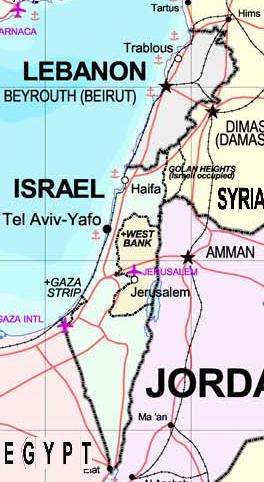 Israeli–Lebanese conflict
The Israeli–Lebanese conflict, or the South Lebanon conflict, is a long-running conflict involving Israel, Lebanon-based paramilitary groups, and sometimes Syria. The conflict peaked during the Lebanese Civil War. In response to Palestinian attacks from Lebanon, Israel invaded the country in 1978 and again in 1982. After this it occupied southern Lebanon unt
-
 2024 Lebanon war
A war between Israel and Hezbollah took place in Lebanon during 2024 amid the Middle Eastern crisis. The war began in September 2024 following nearly 12 months of conflict between Israel and Hezbollah, when the former initiated major attacks in Lebanon including an attack on pagers and electronic devices, the assassination of Hezbollah leader Hassan Nasralla
-
 Israel–Lebanon relations
Israel–Lebanon relations have experienced ups and downs since their establishment in the 1940s.
How this market resolves
Resolution is handled by the UMA optimistic oracle on Polygon. A proposer submits the outcome, a two-hour dispute window opens, and if no one stakes a counter-claim the payout is final. Contested outcomes escalate to UMA token-holder voting. Payouts clear in USDC to the winning side.
How to trade this market step by step
The mechanics for trading "Israel x Lebanon diplomatic meeting by May 31?" are the same as any other PolyGram event contract. Each YES share resolves to $1 if the event happens, or $0 if it doesn't. The current price between 0¢ and 100¢ is the market's probability estimate, set live by the order book.
- Sign in on polygram.ink with your email — no full KYC under $1,500 lifetime trading volume.
- Deposit USDC on Polygon (lowest fees, ~$0.01 per transaction) or Ethereum. Funds credit after 12 confirmations.
- Pick a side. Buy YES if you believe the event will happen; buy NO if you think it won't. The current YES price reflects the market's collective probability.
- Size your position. If you stake 100 USDC at 85% YES, you'll receive shares that pay $118 if YES resolves true — a 18% gross return. If NO resolves, your shares are worth $0.
- Set risk controls (optional). Stop-loss, take-profit, and limit-order types all supported. Use the trade ticket's slippage box to cap your maximum entry price.
- Wait for resolution. When the event resolves on-chain via the UMA optimistic oracle, the winning side settles to 100¢ automatically and USDC hits your balance within seconds. Withdrawable to any wallet you control.
How active is this market?
$127K in lifetime turnover and $6K of resting liquidity puts this market in the top 30% by volume for iran contracts on PolyGram. Order-book depth is thin — large orders may need to be split across the book or executed as limit orders.
Last 24 hours alone saw $13K in turnover, well above the lifetime daily-average for this market — a clear sign of news catalysing trader activity right now.
The market has been open for under a month — fresh enough that information asymmetry remains a real factor.
Higher-volume markets tend to have tighter spreads and faster price discovery — meaning the displayed YES/NO percentages are more likely to reflect the true crowd-implied probability rather than a single trader's directional view.
Key terms
- YES / NO share
- A binary outcome token that pays $1.00 if the underlying claim resolves true (YES) or false (NO), and $0 otherwise. The market price between 0¢ and 100¢ is the implied probability.
- CLOB
- Central limit order book. The matching engine that pairs YES buyers with NO buyers (effectively the same trade). Polymarket's CLOB on Polygon executes trades on-chain via the conditional-tokens framework.
- Liquidity
- USDC capital sitting in resting limit orders inside the order book. Deeper liquidity means smaller slippage on large trades and a tighter bid-ask spread.
- UMA optimistic oracle
- The on-chain dispute system that settles each Polymarket market. A proposer submits the outcome, a two-hour challenge window opens, and unchallenged proposals finalise the resolution.
- Slippage
- The difference between the displayed mid-price and your fill price. Affects market orders most; limit orders avoid slippage but may take time to fill.
- Conditional token
- ERC-1155 outcome share issued by Gnosis Conditional Tokens on Polygon. The token type that resolves to $1.00 or $0.00 at settlement.
Frequently asked questions
What is the current probability for "Israel x Lebanon diplomatic meeting by May 31?"?
As of today, traders on Polymarket price this outcome at 85%. The number updates continuously as the order book clears. PolyGram mirrors the same live odds with locale-aware formatting and USDC settlement.
How does this market resolve?
Resolution is handled by the UMA optimistic oracle on Polygon. A proposer submits the outcome, a 2-hour dispute window opens, and if uncontested the payout is final. Contested outcomes escalate to UMA token holders.
When does this market close?
This prediction market is scheduled to close on 31 May 2026. After the resolving event occurs, settlement typically clears within 24 hours once the UMA optimistic oracle confirms the outcome. All payouts are in USDC on the Polygon network.
How can I trade on "Israel x Lebanon diplomatic meeting by May 31?"?
To trade on this prediction market, create a free PolyGram account at polygram.ink, deposit USDC via Polygon, and place a YES or NO order on the outcome you believe in. You can learn more on our how-it-works page. Your maximum loss is limited to your stake — there is no leverage or margin.
What happens when the market resolves?
When the outcome is determined, winning YES shares pay out $1.00 each in USDC, while losing shares pay $0. Settlement is handled by the UMA optimistic oracle on Polygon — a proposer submits the result, a two-hour dispute window opens, and if uncontested, payouts are distributed automatically. You can withdraw your winnings to any Polygon wallet.
Risk and regulatory note
Prediction-market positions can lose 100% of staked capital. Outcomes are uncertain by definition — historical accuracy of crowd-implied probabilities is high in aggregate but not for any single market. PolyGram does not provide investment advice. Trade only with capital you can afford to lose.
Regulatory status varies by jurisdiction. Germany, the United States, and most EU countries treat Polymarket-style event contracts under one of three frameworks: financial derivative, gambling product, or unregulated novel asset. Consult local counsel before trading.
Related prediction markets
Explore more prediction market odds and trading opportunities on PolyGram: