Trade: Which NFL players will be traded?
Resolution criteria on PolyGram: This market will resolve to "Yes" if the listed NFL player is traded by July 22, 2026, 11:59PM ET. Otherwise, this market will resolve to "No". The resolution source for this market will be official information from the NFL; however a consensus of credible reporting may also be used.
PolyGram is an on-chain prediction market where you trade YES or NO outcome shares with real USDC on Polygon. For this market, buy YES if you believe the event will happen, or NO if you think it won't. Your maximum loss is your stake — winning shares pay $1.00 each at resolution. Unlike sportsbooks, there is no house edge: prices are set by supply and demand from other traders and reflect the crowd's real-time probability.
- Liquidity
- $6K
- Total Volume
- $109K
- 24h Volume
- $692
- Open Interest
- $22K
Market outcomes
| Breece Hall | 1% YES | 99% NO |
| Alec Pierce | 21% YES | 79% NO |
| Mike Evans | 2% YES | 98% NO |
| Travis Etienne | 0% YES | 100% NO |
| George Pickens | 50% YES | 50% NO |
| Trey Hendrickson | 24% YES | 76% NO |
| AJ Brown | 96% YES | 4% NO |
| D.K. Metcalf | 0% YES | 100% NO |
Market context
The market concerns whether a specific NFL player will be traded before the 22 July 2026 deadline. Trades occur throughout the year but concentrate during the offseason (March–April) and the trade deadline (late October). The 1% implied probability on Polymarket's order book reflects the base rate that any individual player faces trade risk in a given season, weighted against the specific player's contract status, age, performance, and team circumstances.
Historical context shows that roughly 20–30 players change teams via trade annually across the entire league, though the distribution is heavily skewed towards younger players on rookie contracts or veterans with expiring deals. Comparable markets on individual player trades typically price at 2–5% for mid-tier starters and 5–15% for players in flux (those with injury concerns, declining production, or teams in rebuilds). The 1% floor here suggests either a player with strong job security, a no-trade clause, or a long-term contract alignment with their current franchise.
Traders should monitor offseason roster moves, coaching changes, and injury reports from now through April 2026, when most trades occur. Contract restructuring announcements or front-office statements about direction can shift expectations. The trade deadline in late October 2025 will provide a test case for whether the player's team views them as core or expendable. Recent reporting from ESPN and NFL.com on roster construction and cap situations will inform whether circumstances change materially between now and the settlement window.
Wikipedia Context
-
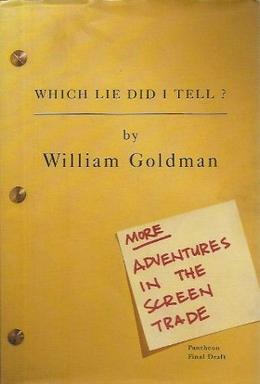 Which Lie Did I Tell?
Which Lie Did I Tell?: More Adventures in the Screen Trade is a work of non-fiction first published in 2000 by novelist and screenwriter William Goldman. It is the follow-up to his 1982 book Adventures in the Screen Trade.
-
 Pink Moon
Pink Moon is the third and final studio album by the English musician Nick Drake, released in the UK by Island Records on 25 February 1972. It was the only one of Drake's studio albums to be released in North America during his lifetime. Pink Moon differs from Drake's previous albums in that it was recorded without a backing band, featuring just Drake on voc
-
Human rights reports on the 2011 Bahraini uprising
Many human rights reports were published about the Bahraini uprising of 2011, a campaign of protests, and civil disobedience in the Persian Gulf state of Bahrain that is considered part of the revolutionary wave of protests dubbed the Arab Spring. At least 14 human rights reports were issued by 18 different parties: Amnesty International, International Crisi
-
Which Face Should I Put On Tonight
"Which Face Should I Put On Tonight" is a song recorded by Canadian country music artist Cassandra Vasik. It was released in 1992 as the third single from her debut album, Wildflowers. It peaked at number 5 on the RPM Country Tracks chart in April 1992.
How this market resolves
Resolution is handled by the UMA optimistic oracle on Polygon. A proposer submits the outcome, a two-hour dispute window opens, and if no one stakes a counter-claim the payout is final. Contested outcomes escalate to UMA token-holder voting. Payouts clear in USDC to the winning side.
How to trade this market step by step
The mechanics for trading "Which NFL players will be traded?" are the same as any other PolyGram event contract. Each YES share resolves to $1 if the event happens, or $0 if it doesn't. The current price between 0¢ and 100¢ is the market's probability estimate, set live by the order book.
- Sign in on polygram.ink with your email — no full KYC under $1,500 lifetime trading volume.
- Deposit USDC on Polygon (lowest fees, ~$0.01 per transaction) or Ethereum. Funds credit after 12 confirmations.
- Pick a side. Buy YES if you believe the event will happen; buy NO if you think it won't. The current YES price reflects the market's collective probability.
- Size your position. If you stake 100 USDC at 50% YES, you'll receive shares that pay $200 if YES resolves true — a 100% gross return. If NO resolves, your shares are worth $0.
- Set risk controls (optional). Stop-loss, take-profit, and limit-order types all supported. Use the trade ticket's slippage box to cap your maximum entry price.
- Wait for resolution. When the event resolves on-chain via the UMA optimistic oracle, the winning side settles to 100¢ automatically and USDC hits your balance within seconds. Withdrawable to any wallet you control.
How active is this market?
$109K in lifetime turnover and $6K of resting liquidity puts this market in the top 30% by volume for nfl contracts on PolyGram. Order-book depth is thin — large orders may need to be split across the book or executed as limit orders.
Last 24 hours alone saw $692 in turnover, consistent with the market's lifetime daily-average pace.
The market has been open for 3 months — the price has had time to stabilise as new information arrived.
Higher-volume markets tend to have tighter spreads and faster price discovery — meaning the displayed YES/NO percentages are more likely to reflect the true crowd-implied probability rather than a single trader's directional view.
Key terms
- YES / NO share
- A binary outcome token that pays $1.00 if the underlying claim resolves true (YES) or false (NO), and $0 otherwise. The market price between 0¢ and 100¢ is the implied probability.
- CLOB
- Central limit order book. The matching engine that pairs YES buyers with NO buyers (effectively the same trade). Polymarket's CLOB on Polygon executes trades on-chain via the conditional-tokens framework.
- Liquidity
- USDC capital sitting in resting limit orders inside the order book. Deeper liquidity means smaller slippage on large trades and a tighter bid-ask spread.
- UMA optimistic oracle
- The on-chain dispute system that settles each Polymarket market. A proposer submits the outcome, a two-hour challenge window opens, and unchallenged proposals finalise the resolution.
- Slippage
- The difference between the displayed mid-price and your fill price. Affects market orders most; limit orders avoid slippage but may take time to fill.
- Conditional token
- ERC-1155 outcome share issued by Gnosis Conditional Tokens on Polygon. The token type that resolves to $1.00 or $0.00 at settlement.
Frequently asked questions
How does this market resolve?
Resolution is handled by the UMA optimistic oracle on Polygon. A proposer submits the outcome, a 2-hour dispute window opens, and if uncontested the payout is final. Contested outcomes escalate to UMA token holders.
When does this market close?
This prediction market is scheduled to close on 22 July 2026. After the resolving event occurs, settlement typically clears within 24 hours once the UMA optimistic oracle confirms the outcome. All payouts are in USDC on the Polygon network.
How can I trade on "Which NFL players will be traded?"?
To trade on this prediction market, create a free PolyGram account at polygram.ink, deposit USDC via Polygon, and place a YES or NO order on the outcome you believe in. You can learn more on our how-it-works page. Your maximum loss is limited to your stake — there is no leverage or margin.
What happens when the market resolves?
When the outcome is determined, winning YES shares pay out $1.00 each in USDC, while losing shares pay $0. Settlement is handled by the UMA optimistic oracle on Polygon — a proposer submits the result, a two-hour dispute window opens, and if uncontested, payouts are distributed automatically. You can withdraw your winnings to any Polygon wallet.
Risk and regulatory note
Prediction-market positions can lose 100% of staked capital. Outcomes are uncertain by definition — historical accuracy of crowd-implied probabilities is high in aggregate but not for any single market. PolyGram does not provide investment advice. Trade only with capital you can afford to lose.
Regulatory status varies by jurisdiction. Germany, the United States, and most EU countries treat Polymarket-style event contracts under one of three frameworks: financial derivative, gambling product, or unregulated novel asset. Consult local counsel before trading.
Related prediction markets
Explore more prediction market odds and trading opportunities on PolyGram: