Trade: Which KPop groups will release songs in 2026?
Resolution criteria on PolyGram: This market will resolve to “Yes” if the listed group officially releases a new song between market creation and December 31, 2026, 11:59 PM PT (Los Angeles time). Otherwise, this market will resolve to “No”. Officially released means that a newly released song is officially available for download or streaming (not including live events) by the resolution date. Songs released by individual members, subgroups, or any other configuration not under the listed group name will not qualify. If a song is released jointly by multiple groups credited equally as primary artists, the song will count for all of them. Re-releases, deluxe editions, compilations, or remixes will not count.
PolyGram is an on-chain prediction market where you trade YES or NO outcome shares with real USDC on Polygon. For this market, buy YES if you believe the event will happen, or NO if you think it won't. Your maximum loss is your stake — winning shares pay $1.00 each at resolution. Unlike sportsbooks, there is no house edge: prices are set by supply and demand from other traders and reflect the crowd's real-time probability.
- Liquidity
- $962
- Total Volume
- $120K
- 24h Volume
- —
- Open Interest
- $30K
Market outcomes
| Babymonster | 100% YES | 0% NO |
| I-dle | 100% YES | 0% NO |
| Itzy | 100% YES | 0% NO |
| IVE | 100% YES | 0% NO |
| Aespa | 100% YES | 0% NO |
| Blackpink | 100% YES | 0% NO |
| Illit | 100% YES | 0% NO |
| Le Sserafim | 100% YES | 0% NO |
Market context
The market tests whether major K-pop groups will release new songs during 2026. The 100% implied probability reflects the near-certainty that established groups in the industry will produce official releases within a calendar year, given the commercial pressures and contractual obligations that govern the sector. The Polymarket order book is currently pricing this outcome with minimal uncertainty, suggesting traders view group inactivity across an entire year as an exceptionally unlikely scenario.
Historical precedent supports this assessment. Across the past decade, virtually every active K-pop group—whether from the "Big 3" agencies (SM Entertainment, YG Entertainment, JYP Entertainment) or independent labels—has maintained annual release schedules. Groups like BTS, BLACKPINK, Stray Kids and NewJeans have released multiple projects yearly, whilst even groups in hiatus or transition periods typically return with official material within 24-month windows. The only exceptions involve groups that formally disband or enter extended legal disputes, which remain statistically rare events.
Traders should monitor agency announcements regarding comeback schedules, which typically emerge three to six months before release dates. Contract renewals and member military service obligations—particularly relevant for groups with members approaching mandatory enlistment—represent key variables. Recent reports from industry sources including Soompi and Allkpop indicate that most major groups have already scheduled or hinted at 2026 releases. The resolution hinges on whether "listed group" definitions remain sufficiently broad to capture joint releases and whether groups maintain standard release cadences without unprecedented disbandments or extended hiatuses.
Wikipedia Context
-
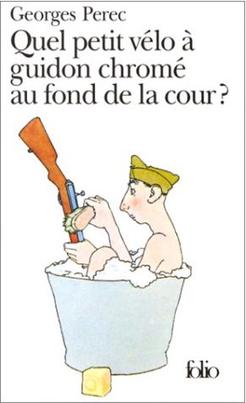 Which Moped with Chrome-plated Handlebars at the Back of the Yard?
Which Moped with Chrome-plated Handlebars at the Back of the Yard? is a comic novella by Georges Perec. Perec's second published work, it was originally published in 1966 in French as Quel petit vélo à guidon chromé au fond de la cour? The English translation by Ian Monk was published in Three by Perec by David R. Godine, Publisher in 2004. The Review of Con
-
 Private Practice season 1
The first season of Private Practice, an American television series created by Shonda Rhimes, consisted of nine episodes that ran from September 26 to December 5, 2007. A spin-off of Grey's Anatomy, the series tells the story of Addison Montgomery, a world-class neonatal surgeon, as she adjusts to her move from Seattle to Los Angeles and a new job at Oceansi
-
Philip Whichelo
Philip Whichelo (1905–1989) was a British painter and set designer. He lived in Putney, a district in south-west London, England, located in the London Borough of Wandsworth. He was the maternal cousin of the renowned English writer and librettist, Edward Morgan Forster. Letters between Philip Whichelo and E. M. Forster survive in ‘’The Papers of Edward Mor
How this market resolves
Resolution is handled by the UMA optimistic oracle on Polygon. A proposer submits the outcome, a two-hour dispute window opens, and if no one stakes a counter-claim the payout is final. Contested outcomes escalate to UMA token-holder voting. Payouts clear in USDC to the winning side.
How to trade this market step by step
The mechanics for trading "Which KPop groups will release songs in 2026?" are the same as any other PolyGram event contract. Each YES share resolves to $1 if the event happens, or $0 if it doesn't. The current price between 0¢ and 100¢ is the market's probability estimate, set live by the order book.
- Sign in on polygram.ink with your email — no full KYC under $1,500 lifetime trading volume.
- Deposit USDC on Polygon (lowest fees, ~$0.01 per transaction) or Ethereum. Funds credit after 12 confirmations.
- Pick a side. Buy YES if you believe the event will happen; buy NO if you think it won't. The current YES price reflects the market's collective probability.
- Size your position. If you stake 100 USDC at 50% YES, you'll receive shares that pay $200 if YES resolves true — a 100% gross return. If NO resolves, your shares are worth $0.
- Set risk controls (optional). Stop-loss, take-profit, and limit-order types all supported. Use the trade ticket's slippage box to cap your maximum entry price.
- Wait for resolution. When the event resolves on-chain via the UMA optimistic oracle, the winning side settles to 100¢ automatically and USDC hits your balance within seconds. Withdrawable to any wallet you control.
How active is this market?
$120K in lifetime turnover and $962 of resting liquidity puts this market in the top 30% by volume for pop culture contracts on PolyGram. Order-book depth is thin — large orders may need to be split across the book or executed as limit orders.
The market has been open for 3 months — the price has had time to stabilise as new information arrived.
Higher-volume markets tend to have tighter spreads and faster price discovery — meaning the displayed YES/NO percentages are more likely to reflect the true crowd-implied probability rather than a single trader's directional view.
Key terms
- YES / NO share
- A binary outcome token that pays $1.00 if the underlying claim resolves true (YES) or false (NO), and $0 otherwise. The market price between 0¢ and 100¢ is the implied probability.
- CLOB
- Central limit order book. The matching engine that pairs YES buyers with NO buyers (effectively the same trade). Polymarket's CLOB on Polygon executes trades on-chain via the conditional-tokens framework.
- Liquidity
- USDC capital sitting in resting limit orders inside the order book. Deeper liquidity means smaller slippage on large trades and a tighter bid-ask spread.
- UMA optimistic oracle
- The on-chain dispute system that settles each Polymarket market. A proposer submits the outcome, a two-hour challenge window opens, and unchallenged proposals finalise the resolution.
- Slippage
- The difference between the displayed mid-price and your fill price. Affects market orders most; limit orders avoid slippage but may take time to fill.
- Conditional token
- ERC-1155 outcome share issued by Gnosis Conditional Tokens on Polygon. The token type that resolves to $1.00 or $0.00 at settlement.
Frequently asked questions
How does this market resolve?
Resolution is handled by the UMA optimistic oracle on Polygon. A proposer submits the outcome, a 2-hour dispute window opens, and if uncontested the payout is final. Contested outcomes escalate to UMA token holders.
When does this market close?
This prediction market is scheduled to close on 31 December 2026. After the resolving event occurs, settlement typically clears within 24 hours once the UMA optimistic oracle confirms the outcome. All payouts are in USDC on the Polygon network.
How can I trade on "Which KPop groups will release songs in 2026?"?
To trade on this prediction market, create a free PolyGram account at polygram.ink, deposit USDC via Polygon, and place a YES or NO order on the outcome you believe in. You can learn more on our how-it-works page. Your maximum loss is limited to your stake — there is no leverage or margin.
What happens when the market resolves?
When the outcome is determined, winning YES shares pay out $1.00 each in USDC, while losing shares pay $0. Settlement is handled by the UMA optimistic oracle on Polygon — a proposer submits the result, a two-hour dispute window opens, and if uncontested, payouts are distributed automatically. You can withdraw your winnings to any Polygon wallet.
Risk and regulatory note
Prediction-market positions can lose 100% of staked capital. Outcomes are uncertain by definition — historical accuracy of crowd-implied probabilities is high in aggregate but not for any single market. PolyGram does not provide investment advice. Trade only with capital you can afford to lose.
Regulatory status varies by jurisdiction. Germany, the United States, and most EU countries treat Polymarket-style event contracts under one of three frameworks: financial derivative, gambling product, or unregulated novel asset. Consult local counsel before trading.
Related prediction markets
Explore more prediction market odds and trading opportunities on PolyGram: