Trade: "Mortal Kombat II" Rotten Tomatoes score?
Resolution criteria on PolyGram: This market will resolve to “Yes” if the displayed Rotten Tomatoes “All Critics” Tomatometer score for Mortal Kombat II (2026) is at least equal to the specified number at 10:00 AM ET on May 11, 2026. Otherwise, this market will resolve to "No". If, for any reason, the resolution data is unavailable at this market's specified end time, the resolution source will be checked until the relevant data is available. This market will resolve to “No” if no data is available by May 15, 2026, 11:59 PM ET.
PolyGram is an on-chain prediction market where you trade YES or NO outcome shares with real USDC on Polygon. For this market, buy YES if you believe the event will happen, or NO if you think it won't. Your maximum loss is your stake — winning shares pay $1.00 each at resolution. Unlike sportsbooks, there is no house edge: prices are set by supply and demand from other traders and reflect the crowd's real-time probability.
- Liquidity
- —
- Total Volume
- $12K
- 24h Volume
- $2K
- Open Interest
- $9K
Market outcomes
| 60+ | 100% YES | 0% NO |
| 70+ | 0% YES | 100% NO |
| 80+ | 0% YES | 100% NO |
| 55+ | 100% YES | 0% NO |
| 65+ | 100% YES | 0% NO |
| 75+ | 0% YES | 100% NO |
Market context
Mortal Kombat II is scheduled for theatrical release in 2026, with the film's critical reception to be measured by the Rotten Tomatoes Tomatometer score from professional critics. The current order book on Polymarket reflects a 100% implied probability, suggesting traders are pricing in near-certainty that the film will achieve whatever threshold this market specifies. This extreme confidence warrants scrutiny, as it typically emerges only when settlement terms are perceived as highly probable or when liquidity is thin.
Historical precedent from video game adaptations offers limited guidance. The original Mortal Kombat (1995) scored 52% on Rotten Tomatoes, whilst Mortal Kombat Legends animated films have ranged from 60–75%. Recent live-action video game films show volatility: Sonic the Hedgehog 2 (2022) achieved 68%, whilst The Super Mario Bros. Movie (2023) reached 59%. Critical reception for franchise sequels often depends heavily on directorial choices, casting decisions and whether the film prioritises spectacle or narrative coherence—variables that remain largely unknown at this stage.
Key catalysts include the film's official trailer release, casting announcements and production updates from Warner Bros. The director's previous work and any reported script revisions will shape critical expectations. Industry tracking from outlets like Deadline and Variety typically begins months before release, offering early signals about critical sentiment. Traders should monitor whether the film receives festival premieres or early screenings, which often precede broader critical consensus. The settlement window closes 11 May 2026, allowing approximately two weeks post-release for Rotten Tomatoes aggregation.
Wikipedia Context
-
 Mortal Kombat
Mortal Kombat is an American media franchise centered on a series of fighting video games originally developed by Midway Games in 1992.
-
 Mortal Kombat II (film)
Mortal Kombat II is a 2026 American martial arts fantasy film based on the video-game series created by Ed Boon and John Tobias. It is a sequel to Mortal Kombat (2021) and is the fourth installment in the Mortal Kombat film series. Directed by Simon McQuoid and written by Jeremy Slater, it stars returning cast members Jessica McNamee, Josh Lawson, Ludi Lin,
-
 Mortal Kombat (2021 film)
Mortal Kombat is a 2021 American martial arts fantasy film based on the video-game series created by Ed Boon and John Tobias. The film serves as a reboot and is the third installment in the Mortal Kombat film series. Directed by Simon McQuoid from a screenplay by Greg Russo and Dave Callaham, it stars Lewis Tan, Jessica McNamee, Josh Lawson, Tadanobu Asano,
-
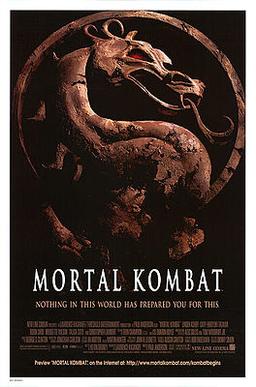 Mortal Kombat (1995 film)
Mortal Kombat is a 1995 American martial arts fantasy film based on the video game franchise by Ed Boon and John Tobias. It is the first installment in the Mortal Kombat film series. It was directed by Paul Anderson and stars Linden Ashby, Cary-Hiroyuki Tagawa, Robin Shou, Bridgette Wilson, Talisa Soto, and Christopher Lambert. The film follows a group of he
How this market resolves
Resolution is handled by the UMA optimistic oracle on Polygon. A proposer submits the outcome, a two-hour dispute window opens, and if no one stakes a counter-claim the payout is final. Contested outcomes escalate to UMA token-holder voting. Payouts clear in USDC to the winning side.
How to trade this market step by step
The mechanics for trading ""Mortal Kombat II" Rotten Tomatoes score?" are the same as any other PolyGram event contract. Each YES share resolves to $1 if the event happens, or $0 if it doesn't. The current price between 0¢ and 100¢ is the market's probability estimate, set live by the order book.
- Sign in on polygram.ink with your email — no full KYC under $1,500 lifetime trading volume.
- Deposit USDC on Polygon (lowest fees, ~$0.01 per transaction) or Ethereum. Funds credit after 12 confirmations.
- Pick a side. Buy YES if you believe the event will happen; buy NO if you think it won't. The current YES price reflects the market's collective probability.
- Size your position. If you stake 100 USDC at 50% YES, you'll receive shares that pay $200 if YES resolves true — a 100% gross return. If NO resolves, your shares are worth $0.
- Set risk controls (optional). Stop-loss, take-profit, and limit-order types all supported. Use the trade ticket's slippage box to cap your maximum entry price.
- Wait for resolution. When the event resolves on-chain via the UMA optimistic oracle, the winning side settles to 100¢ automatically and USDC hits your balance within seconds. Withdrawable to any wallet you control.
How active is this market?
$12K in lifetime turnover and $0 of resting liquidity puts this market in the below the median by volume for movies contracts on PolyGram. Order-book depth is thin — large orders may need to be split across the book or executed as limit orders.
Last 24 hours alone saw $2K in turnover, well above the lifetime daily-average for this market — a clear sign of news catalysing trader activity right now.
The market has been open for under a month — fresh enough that information asymmetry remains a real factor.
Higher-volume markets tend to have tighter spreads and faster price discovery — meaning the displayed YES/NO percentages are more likely to reflect the true crowd-implied probability rather than a single trader's directional view.
Key terms
- YES / NO share
- A binary outcome token that pays $1.00 if the underlying claim resolves true (YES) or false (NO), and $0 otherwise. The market price between 0¢ and 100¢ is the implied probability.
- CLOB
- Central limit order book. The matching engine that pairs YES buyers with NO buyers (effectively the same trade). Polymarket's CLOB on Polygon executes trades on-chain via the conditional-tokens framework.
- Liquidity
- USDC capital sitting in resting limit orders inside the order book. Deeper liquidity means smaller slippage on large trades and a tighter bid-ask spread.
- UMA optimistic oracle
- The on-chain dispute system that settles each Polymarket market. A proposer submits the outcome, a two-hour challenge window opens, and unchallenged proposals finalise the resolution.
- Slippage
- The difference between the displayed mid-price and your fill price. Affects market orders most; limit orders avoid slippage but may take time to fill.
- Conditional token
- ERC-1155 outcome share issued by Gnosis Conditional Tokens on Polygon. The token type that resolves to $1.00 or $0.00 at settlement.
Frequently asked questions
How does this market resolve?
Resolution is handled by the UMA optimistic oracle on Polygon. A proposer submits the outcome, a 2-hour dispute window opens, and if uncontested the payout is final. Contested outcomes escalate to UMA token holders.
When does this market close?
This prediction market is scheduled to close on 11 May 2026. After the resolving event occurs, settlement typically clears within 24 hours once the UMA optimistic oracle confirms the outcome. All payouts are in USDC on the Polygon network.
How can I trade on ""Mortal Kombat II" Rotten Tomatoes score?"?
To trade on this prediction market, create a free PolyGram account at polygram.ink, deposit USDC via Polygon, and place a YES or NO order on the outcome you believe in. You can learn more on our how-it-works page. Your maximum loss is limited to your stake — there is no leverage or margin.
What happens when the market resolves?
When the outcome is determined, winning YES shares pay out $1.00 each in USDC, while losing shares pay $0. Settlement is handled by the UMA optimistic oracle on Polygon — a proposer submits the result, a two-hour dispute window opens, and if uncontested, payouts are distributed automatically. You can withdraw your winnings to any Polygon wallet.
Risk and regulatory note
Prediction-market positions can lose 100% of staked capital. Outcomes are uncertain by definition — historical accuracy of crowd-implied probabilities is high in aggregate but not for any single market. PolyGram does not provide investment advice. Trade only with capital you can afford to lose.
Regulatory status varies by jurisdiction. Germany, the United States, and most EU countries treat Polymarket-style event contracts under one of three frameworks: financial derivative, gambling product, or unregulated novel asset. Consult local counsel before trading.
Related prediction markets
Explore more prediction market odds and trading opportunities on PolyGram: