Trade: What will Amazon.com, Inc. (AMZN) hit Week of May 11 2026?
Resolution criteria on PolyGram: What will Amazon.com, Inc. (AMZN) hit Week of May 11 2026?
PolyGram is an on-chain prediction market where you trade YES or NO outcome shares with real USDC on Polygon. For this market, buy YES if you believe the event will happen, or NO if you think it won't. Your maximum loss is your stake — winning shares pay $1.00 each at resolution. Unlike sportsbooks, there is no house edge: prices are set by supply and demand from other traders and reflect the crowd's real-time probability.
- Liquidity
- $8K
- Total Volume
- $829
- 24h Volume
- $819
- Open Interest
- $639
Market outcomes
| ↑ $300 | 2% YES | 98% NO |
| ↑ $296 | 3% YES | 98% NO |
| ↑ $292 | 9% YES | 91% NO |
| ↑ $288 | 13% YES | 87% NO |
| ↑ $284 | 19% YES | 81% NO |
| ↑ $280 | 30% YES | 70% NO |
| ↑ $276 | 32% YES | 68% NO |
| ↓ $272 | 100% YES | 0% NO |
Market context
Amazon's share price will either reach or exceed a specific threshold during the week commencing 11 May 2026. The settlement window closes on 15 May at 20:00 UTC, giving traders a five-day observation period. Current order book activity on Polymarket reflects a 2% implied probability, suggesting the crowd assesses this price target as unlikely within the specified timeframe.
Historical precedent shows that single-week price movements of the magnitude implied by this market's strike level occur rarely for mega-cap equities. Amazon's realised volatility over recent years has typically produced weekly moves in the 3–5% range under normal conditions, though earnings announcements or macroeconomic shocks can expand that range substantially. The 2% probability pricing aligns with tail-event expectations rather than baseline scenarios, indicating traders view the target as requiring either an exceptional catalyst or a confluence of favourable conditions.
Traders should monitor earnings releases, cloud division guidance updates, or broader equity market dislocations scheduled near the settlement window. Regulatory developments affecting Amazon's advertising or logistics operations, or shifts in Federal Reserve policy signalling, could alter volatility expectations. Recent market structure changes have increased intraday amplitude for large-cap tech stocks, though week-long directional conviction remains constrained by institutional positioning and index rebalancing flows. The order book's current depth at extreme strikes typically reflects limited conviction, making execution costs material for any position adjustment.
Wikipedia Context
-
 Amazon (company)
Amazon.com, Inc. is an American multinational technology company engaged in e-commerce, cloud computing, online advertising, digital streaming, and artificial intelligence. Founded in 1994 by Jeff Bezos in Bellevue, Washington, the company originally started as an online marketplace for books but gradually expanded its offerings to include a wide range of pr
-
 Amazon Elastic Compute Cloud
Amazon Elastic Compute Cloud (EC2) is a part of Amazon's cloud-computing platform, Amazon Web Services (AWS), that allows users to rent virtual computers on which to run their own computer applications. EC2 encourages scalable deployment of applications by providing a web service through which a user can boot an Amazon Machine Image (AMI) to configure a virt
-
List of Amalgam Comics publications
Near the end of the DC vs. Marvel crossover in 1996, Amalgam Comics released a series of one-shot comic book issues combining characters from the DC Universe with characters from the Marvel Universe. The first 12 Amalgam titles were released in a single week, temporarily replacing both publishers' regular releases. Half the comics in the event were publishe
-
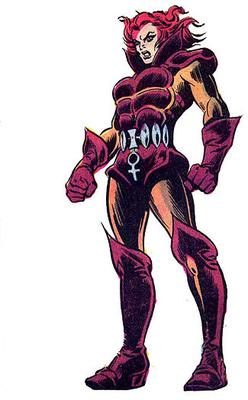 Man-Killer
Man-Killer is a name used by two supervillains appearing in American comic books published by Marvel Comics. The second version Katrina Luisa Van Horn has been viewed by critics as a "caricature of feminists, who despised all men."
Resolution source
This market settles from the official outcome published at https://pythdata.app/explore/Equity.US.AMZN%2FUSD. A proposer submits the final result to the UMA optimistic oracle on Polygon; the two-hour dispute window closes and payouts clear in USDC.
How to trade this market step by step
The mechanics for trading "What will Amazon.com, Inc. (AMZN) hit Week of May 11 2026?" are the same as any other PolyGram event contract. Each YES share resolves to $1 if the event happens, or $0 if it doesn't. The current price between 0¢ and 100¢ is the market's probability estimate, set live by the order book.
- Sign in on polygram.ink with your email — no full KYC under $1,500 lifetime trading volume.
- Deposit USDC on Polygon (lowest fees, ~$0.01 per transaction) or Ethereum. Funds credit after 12 confirmations.
- Pick a side. Buy YES if you believe the event will happen; buy NO if you think it won't. The current YES price reflects the market's collective probability.
- Size your position. If you stake 100 USDC at 50% YES, you'll receive shares that pay $200 if YES resolves true — a 100% gross return. If NO resolves, your shares are worth $0.
- Set risk controls (optional). Stop-loss, take-profit, and limit-order types all supported. Use the trade ticket's slippage box to cap your maximum entry price.
- Wait for resolution. When the event resolves on-chain via the UMA optimistic oracle, the winning side settles to 100¢ automatically and USDC hits your balance within seconds. Withdrawable to any wallet you control.
How active is this market?
$829 in lifetime turnover and $8K of resting liquidity puts this market in the below the median by volume for finance contracts on PolyGram. Order-book depth is thin — large orders may need to be split across the book or executed as limit orders.
Last 24 hours alone saw $819 in turnover, well above the lifetime daily-average for this market — a clear sign of news catalysing trader activity right now.
The market has been open for under a month — fresh enough that information asymmetry remains a real factor.
Higher-volume markets tend to have tighter spreads and faster price discovery — meaning the displayed YES/NO percentages are more likely to reflect the true crowd-implied probability rather than a single trader's directional view.
Key terms
- YES / NO share
- A binary outcome token that pays $1.00 if the underlying claim resolves true (YES) or false (NO), and $0 otherwise. The market price between 0¢ and 100¢ is the implied probability.
- CLOB
- Central limit order book. The matching engine that pairs YES buyers with NO buyers (effectively the same trade). Polymarket's CLOB on Polygon executes trades on-chain via the conditional-tokens framework.
- Liquidity
- USDC capital sitting in resting limit orders inside the order book. Deeper liquidity means smaller slippage on large trades and a tighter bid-ask spread.
- UMA optimistic oracle
- The on-chain dispute system that settles each Polymarket market. A proposer submits the outcome, a two-hour challenge window opens, and unchallenged proposals finalise the resolution.
- Slippage
- The difference between the displayed mid-price and your fill price. Affects market orders most; limit orders avoid slippage but may take time to fill.
- Conditional token
- ERC-1155 outcome share issued by Gnosis Conditional Tokens on Polygon. The token type that resolves to $1.00 or $0.00 at settlement.
Frequently asked questions
How does this market resolve?
Resolution is sourced from https://pythdata.app/explore/Equity.US.AMZN%2FUSD. Settlement is executed by the UMA optimistic oracle on Polygon, with a 2-hour dispute window before payouts clear.
When does this market close?
This prediction market is scheduled to close on 15 May 2026. After the resolving event occurs, settlement typically clears within 24 hours once the UMA optimistic oracle confirms the outcome. All payouts are in USDC on the Polygon network.
How can I trade on "What will Amazon.com, Inc. (AMZN) hit Week of May 11 2026?"?
To trade on this prediction market, create a free PolyGram account at polygram.ink, deposit USDC via Polygon, and place a YES or NO order on the outcome you believe in. You can learn more on our how-it-works page. Your maximum loss is limited to your stake — there is no leverage or margin.
What happens when the market resolves?
When the outcome is determined, winning YES shares pay out $1.00 each in USDC, while losing shares pay $0. Settlement is handled by the UMA optimistic oracle on Polygon — a proposer submits the result, a two-hour dispute window opens, and if uncontested, payouts are distributed automatically. You can withdraw your winnings to any Polygon wallet.
Risk and regulatory note
Prediction-market positions can lose 100% of staked capital. Outcomes are uncertain by definition — historical accuracy of crowd-implied probabilities is high in aggregate but not for any single market. PolyGram does not provide investment advice. Trade only with capital you can afford to lose.
Regulatory status varies by jurisdiction. Germany, the United States, and most EU countries treat Polymarket-style event contracts under one of three frameworks: financial derivative, gambling product, or unregulated novel asset. Consult local counsel before trading.
Related prediction markets
Explore more prediction market odds and trading opportunities on PolyGram: