Trade: Eli Lilly licenses Peptron’s SmartDepot by October 7?
Resolution criteria on PolyGram: This market will resolve to “Yes” if Eli Lilly signs a commercial licensing agreement, technology transfer agreement, or equivalent binding agreement with Peptron that grants Eli Lilly commercial rights to Peptron’s SmartDepot technology by the specified date, 11:59 PM Korea Standard Time. Otherwise, this market will resolve to “No”. Only commercial licensing agreements, technology transfer agreements, or equivalent binding agreements that grant Eli Lilly direct commercial rights to develop, manufacture, sell, or otherwise commercialize Peptron’s SmartDepot technology will qualify. Co-development agreements will not qualify.
PolyGram is an on-chain prediction market where you trade YES or NO outcome shares with real USDC on Polygon. For this market, buy YES if you believe the event will happen, or NO if you think it won't. Your maximum loss is your stake — winning shares pay $1.00 each at resolution. Unlike sportsbooks, there is no house edge: prices are set by supply and demand from other traders and reflect the crowd's real-time probability.
- Liquidity
- $1K
- Total Volume
- $8K
- 24h Volume
- $379
- Open Interest
- $2K
Market outcomes
| Eli Lilly licenses Peptron’s SmartDepot by October 7? | 49% YES | 52% NO |
Market context
Eli Lilly's potential acquisition of commercial rights to Peptron's SmartDepot technology—a drug delivery platform developed by the South Korean biotech firm—represents a strategic bet on next-generation formulation capabilities. SmartDepot is designed to enable extended-release delivery of biologics and small molecules, addressing a significant gap in pharmaceutical manufacturing. The 50% implied probability on Polymarket's order book reflects genuine uncertainty about whether Eli Lilly will formalise such an agreement within the 18-month window through October 2026.
Comparable licensing deals in the pharmaceutical sector suggest the current probability is reasonable given typical timelines. Eli Lilly's previous technology partnerships—including its 2023 acquisition of Akcea Therapeutics and various licensing arrangements with smaller biotech firms—typically required 12–24 months from initial interest to formal agreement. However, Peptron's SmartDepot has attracted interest from multiple large pharma players, which could accelerate negotiations or create competitive pressure. The technology's applicability across Eli Lilly's GLP-1 receptor agonist portfolio and oncology pipeline makes strategic sense.
Traders should monitor announcements from Peptron's investor relations channels and Eli Lilly's quarterly earnings calls for mentions of the partnership. Recent biotech conference presentations and patent filings may signal progress. The resolution hinges on whether a binding commercial licensing or technology transfer agreement is publicly disclosed or announced by 11:59 PM KST on 7 October 2026. Regulatory approvals or clinical trial initiations involving SmartDepot formulations would strengthen the case for a deal having been struck.
Wikipedia Context
-
 Eli Lilly
Eli Lilly was an American Union Army officer, pharmacist, chemist, and businessman who founded Eli Lilly and Company.
-
 Eli Lilly and Company
Eli Lilly and Company, doing business as Lilly, is an American multinational pharmaceutical company headquartered in Indianapolis, Indiana, with offices in 18 countries. Its products are sold in approximately 125 countries. The company was founded in 1876 by Eli Lilly, a pharmaceutical chemist and Union army veteran during the American Civil War for whom the
-
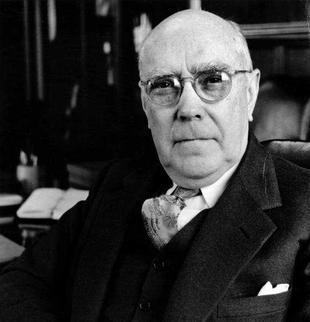 Eli Lilly (industrialist, born 1885)
Eli Lilly, sometimes referred to as Eli Lilly Jr. to distinguish him from his grandfather of the same name, was an American pharmaceutical industrialist and philanthropist from Indianapolis, Indiana. During his tenure as head of Eli Lilly and Company, which was founded by his grandfather, the company grew from a successful, family-owned business into a moder
-
Eli Lilly & Co. v. Medtronic, Inc.
Eli Lilly and Company v. Medtronic, Inc., 496 U.S. 661 (1990), is a United States Supreme Court case related to patent infringement in the medical device industry. It held that 35 U.S.C. § 271(e)(1) of United States patent law exempted premarketing activity conducted to gain approval of a device under the Federal Food, Drug, and Cosmetic Act from a finding o
How this market resolves
Resolution is handled by the UMA optimistic oracle on Polygon. A proposer submits the outcome, a two-hour dispute window opens, and if no one stakes a counter-claim the payout is final. Contested outcomes escalate to UMA token-holder voting. Payouts clear in USDC to the winning side.
How to trade this market step by step
The mechanics for trading "Eli Lilly licenses Peptron’s SmartDepot by October 7?" are the same as any other PolyGram event contract. Each YES share resolves to $1 if the event happens, or $0 if it doesn't. The current price between 0¢ and 100¢ is the market's probability estimate, set live by the order book.
- Sign in on polygram.ink with your email — no full KYC under $1,500 lifetime trading volume.
- Deposit USDC on Polygon (lowest fees, ~$0.01 per transaction) or Ethereum. Funds credit after 12 confirmations.
- Pick a side. Buy YES if you believe the event will happen; buy NO if you think it won't. The current YES price reflects the market's collective probability.
- Size your position. If you stake 100 USDC at 49% YES, you'll receive shares that pay $204 if YES resolves true — a 104% gross return. If NO resolves, your shares are worth $0.
- Set risk controls (optional). Stop-loss, take-profit, and limit-order types all supported. Use the trade ticket's slippage box to cap your maximum entry price.
- Wait for resolution. When the event resolves on-chain via the UMA optimistic oracle, the winning side settles to 100¢ automatically and USDC hits your balance within seconds. Withdrawable to any wallet you control.
How active is this market?
$8K in lifetime turnover and $1K of resting liquidity puts this market in the below the median by volume for eli lilly contracts on PolyGram. Order-book depth is thin — large orders may need to be split across the book or executed as limit orders.
Last 24 hours alone saw $379 in turnover, consistent with the market's lifetime daily-average pace.
The market has been open for under a month — fresh enough that information asymmetry remains a real factor.
Higher-volume markets tend to have tighter spreads and faster price discovery — meaning the displayed YES/NO percentages are more likely to reflect the true crowd-implied probability rather than a single trader's directional view.
Key terms
- YES / NO share
- A binary outcome token that pays $1.00 if the underlying claim resolves true (YES) or false (NO), and $0 otherwise. The market price between 0¢ and 100¢ is the implied probability.
- CLOB
- Central limit order book. The matching engine that pairs YES buyers with NO buyers (effectively the same trade). Polymarket's CLOB on Polygon executes trades on-chain via the conditional-tokens framework.
- Liquidity
- USDC capital sitting in resting limit orders inside the order book. Deeper liquidity means smaller slippage on large trades and a tighter bid-ask spread.
- UMA optimistic oracle
- The on-chain dispute system that settles each Polymarket market. A proposer submits the outcome, a two-hour challenge window opens, and unchallenged proposals finalise the resolution.
- Slippage
- The difference between the displayed mid-price and your fill price. Affects market orders most; limit orders avoid slippage but may take time to fill.
- Conditional token
- ERC-1155 outcome share issued by Gnosis Conditional Tokens on Polygon. The token type that resolves to $1.00 or $0.00 at settlement.
Frequently asked questions
What is the current probability for "Eli Lilly licenses Peptron’s SmartDepot by October 7?"?
As of today, traders on Polymarket price this outcome at 49%. The number updates continuously as the order book clears. PolyGram mirrors the same live odds with locale-aware formatting and USDC settlement.
How does this market resolve?
Resolution is handled by the UMA optimistic oracle on Polygon. A proposer submits the outcome, a 2-hour dispute window opens, and if uncontested the payout is final. Contested outcomes escalate to UMA token holders.
When does this market close?
This prediction market is scheduled to close on 7 October 2026. After the resolving event occurs, settlement typically clears within 24 hours once the UMA optimistic oracle confirms the outcome. All payouts are in USDC on the Polygon network.
How can I trade on "Eli Lilly licenses Peptron’s SmartDepot by October 7?"?
To trade on this prediction market, create a free PolyGram account at polygram.ink, deposit USDC via Polygon, and place a YES or NO order on the outcome you believe in. You can learn more on our how-it-works page. Your maximum loss is limited to your stake — there is no leverage or margin.
What happens when the market resolves?
When the outcome is determined, winning YES shares pay out $1.00 each in USDC, while losing shares pay $0. Settlement is handled by the UMA optimistic oracle on Polygon — a proposer submits the result, a two-hour dispute window opens, and if uncontested, payouts are distributed automatically. You can withdraw your winnings to any Polygon wallet.
Risk and regulatory note
Prediction-market positions can lose 100% of staked capital. Outcomes are uncertain by definition — historical accuracy of crowd-implied probabilities is high in aggregate but not for any single market. PolyGram does not provide investment advice. Trade only with capital you can afford to lose.
Regulatory status varies by jurisdiction. Germany, the United States, and most EU countries treat Polymarket-style event contracts under one of three frameworks: financial derivative, gambling product, or unregulated novel asset. Consult local counsel before trading.
Related prediction markets
Explore more prediction market odds and trading opportunities on PolyGram: