Trade: Who will meet with Iran by May 31?
Resolution criteria on PolyGram: This market will resolve to "Yes" if there is a diplomatic meeting between the listed individual, acting as a representative of the United States, and representatives of Iran by May 31, 2026, 11:59 PM ET. Otherwise, this market will resolve to “No”. To qualify, the listed individual must be physically present at the meeting and actively participate as a negotiator representing the United States. A diplomatic meeting refers to a deliberate meeting between representatives of the listed countries who are acting in an official capacity and are authorized to engage in negotiation or diplomacy regarding US-Iranian relations on behalf of their governments.
PolyGram is an on-chain prediction market where you trade YES or NO outcome shares with real USDC on Polygon. For this market, buy YES if you believe the event will happen, or NO if you think it won't. Your maximum loss is your stake — winning shares pay $1.00 each at resolution. Unlike sportsbooks, there is no house edge: prices are set by supply and demand from other traders and reflect the crowd's real-time probability.
- Liquidity
- $68K
- Total Volume
- $74K
- 24h Volume
- $7K
- Open Interest
- $27K
Market outcomes
| J.D. Vance | 18% YES | 83% NO |
| Jared Kushner | 28% YES | 73% NO |
| Donald Trump | 3% YES | 97% NO |
| Marco Rubio | 5% YES | 96% NO |
| Steve Witkoff | 28% YES | 73% NO |
Market context
The question centres on whether J.D. Vance, currently Vice President-elect under Donald Trump, will conduct an in-person diplomatic meeting with Iranian representatives by the end of May 2026, acting in an official US capacity. The settlement criteria require physical presence and active participation as a negotiator. Polymarket's order book is currently pricing this scenario at 18% implied probability, reflecting substantial scepticism among traders that such a meeting will occur within the timeframe.
Historical precedent offers mixed signals. The Trump administration's first term (2017–2021) saw maximum pressure on Iran, including withdrawal from the JCPOA and targeted sanctions, with no high-level direct talks. However, the Biden administration pursued indirect negotiations through Oman and other intermediaries, though these did not materialise into formal meetings. Vance himself has expressed hawkish positions on Iran policy, which traders appear to be weighting as a headwind against diplomatic engagement. The 18% probability reflects a baseline expectation that Republican administrations favour containment over dialogue, though not zero chance of a strategic shift.
Key catalysts include any public statements from the Trump transition team on Iran policy (expected in early 2025), Iranian domestic political developments following their February 2024 elections, and unforeseen regional escalations that might force diplomatic channels open. The timeframe is tight: May 2026 allows roughly 16 months from Trump's inauguration. Traders should monitor announcements regarding special envoys, UN General Assembly meetings, or third-party mediation attempts, as these could signal movement towards direct engagement.
Wikipedia Context
-
Meet-in-the-middle attack
The meet-in-the-middle attack (MITM), a known-plaintext attack, is a generic space–time tradeoff cryptographic attack against encryption schemes that rely on performing multiple encryption operations in sequence. The MITM attack is the primary reason why Double DES is not used and why a Triple DES key (168-bit) can be brute-forced by an attacker with 256 spa
-
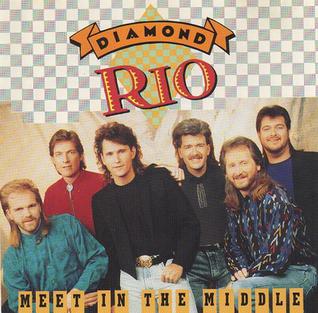 Meet in the Middle
"Meet in the Middle" is a song recorded by American country music band Diamond Rio. It was released in February 1991 as their debut single, and served as the first single in the album Diamond Rio. The single reached number one on the U.S. Billboard Hot Country Singles & Tracks charts, making Diamond Rio the first country music band in history to have its deb
-
 Meet Danny Wilson (album)
Meet Danny Wilson is the debut album by Scottish pop group Danny Wilson. It became a significant hit in America on the strength of the summer of 1987 hit single "Mary's Prayer". In Canada, it spent 3 weeks at number 88.
-
 Meet Danny Wilson (film)
Meet Danny Wilson is a 1952 American drama musical film starring Frank Sinatra, Shelley Winters and Alex Nicol. Directed by Joseph Pevney, the picture captures Sinatra during his career slump between his bobby-soxer heyday and From Here to Eternity (1953) resurrection. He plays a small-time singer who vaults to the top of his profession, only to be threatene
How this market resolves
Resolution is handled by the UMA optimistic oracle on Polygon. A proposer submits the outcome, a two-hour dispute window opens, and if no one stakes a counter-claim the payout is final. Contested outcomes escalate to UMA token-holder voting. Payouts clear in USDC to the winning side.
How to trade this market step by step
The mechanics for trading "Who will meet with Iran by May 31?" are the same as any other PolyGram event contract. Each YES share resolves to $1 if the event happens, or $0 if it doesn't. The current price between 0¢ and 100¢ is the market's probability estimate, set live by the order book.
- Sign in on polygram.ink with your email — no full KYC under $1,500 lifetime trading volume.
- Deposit USDC on Polygon (lowest fees, ~$0.01 per transaction) or Ethereum. Funds credit after 12 confirmations.
- Pick a side. Buy YES if you believe the event will happen; buy NO if you think it won't. The current YES price reflects the market's collective probability.
- Size your position. If you stake 100 USDC at 50% YES, you'll receive shares that pay $200 if YES resolves true — a 100% gross return. If NO resolves, your shares are worth $0.
- Set risk controls (optional). Stop-loss, take-profit, and limit-order types all supported. Use the trade ticket's slippage box to cap your maximum entry price.
- Wait for resolution. When the event resolves on-chain via the UMA optimistic oracle, the winning side settles to 100¢ automatically and USDC hits your balance within seconds. Withdrawable to any wallet you control.
How active is this market?
$74K in lifetime turnover and $68K of resting liquidity puts this market in the above the median by volume for vance contracts on PolyGram. Order-book depth is exceptional — among the deepest order books in the category.
Last 24 hours alone saw $7K in turnover, well above the lifetime daily-average for this market — a clear sign of news catalysing trader activity right now.
The market has been open for under a month — fresh enough that information asymmetry remains a real factor.
Higher-volume markets tend to have tighter spreads and faster price discovery — meaning the displayed YES/NO percentages are more likely to reflect the true crowd-implied probability rather than a single trader's directional view.
Key terms
- YES / NO share
- A binary outcome token that pays $1.00 if the underlying claim resolves true (YES) or false (NO), and $0 otherwise. The market price between 0¢ and 100¢ is the implied probability.
- CLOB
- Central limit order book. The matching engine that pairs YES buyers with NO buyers (effectively the same trade). Polymarket's CLOB on Polygon executes trades on-chain via the conditional-tokens framework.
- Liquidity
- USDC capital sitting in resting limit orders inside the order book. Deeper liquidity means smaller slippage on large trades and a tighter bid-ask spread.
- UMA optimistic oracle
- The on-chain dispute system that settles each Polymarket market. A proposer submits the outcome, a two-hour challenge window opens, and unchallenged proposals finalise the resolution.
- Slippage
- The difference between the displayed mid-price and your fill price. Affects market orders most; limit orders avoid slippage but may take time to fill.
- Conditional token
- ERC-1155 outcome share issued by Gnosis Conditional Tokens on Polygon. The token type that resolves to $1.00 or $0.00 at settlement.
Frequently asked questions
How does this market resolve?
Resolution is handled by the UMA optimistic oracle on Polygon. A proposer submits the outcome, a 2-hour dispute window opens, and if uncontested the payout is final. Contested outcomes escalate to UMA token holders.
When does this market close?
This prediction market is scheduled to close on 31 May 2026. After the resolving event occurs, settlement typically clears within 24 hours once the UMA optimistic oracle confirms the outcome. All payouts are in USDC on the Polygon network.
How can I trade on "Who will meet with Iran by May 31?"?
To trade on this prediction market, create a free PolyGram account at polygram.ink, deposit USDC via Polygon, and place a YES or NO order on the outcome you believe in. You can learn more on our how-it-works page. Your maximum loss is limited to your stake — there is no leverage or margin.
What happens when the market resolves?
When the outcome is determined, winning YES shares pay out $1.00 each in USDC, while losing shares pay $0. Settlement is handled by the UMA optimistic oracle on Polygon — a proposer submits the result, a two-hour dispute window opens, and if uncontested, payouts are distributed automatically. You can withdraw your winnings to any Polygon wallet.
Risk and regulatory note
Prediction-market positions can lose 100% of staked capital. Outcomes are uncertain by definition — historical accuracy of crowd-implied probabilities is high in aggregate but not for any single market. PolyGram does not provide investment advice. Trade only with capital you can afford to lose.
Regulatory status varies by jurisdiction. Germany, the United States, and most EU countries treat Polymarket-style event contracts under one of three frameworks: financial derivative, gambling product, or unregulated novel asset. Consult local counsel before trading.
Related prediction markets
Explore more prediction market odds and trading opportunities on PolyGram: