Trade: o1 FDV above ___ one day after launch?
Resolution criteria on PolyGram: This market will resolve to "Yes" if the Fully Diluted Valuation of o1's governance token is greater than the value specified in the title 1 day after launch. Otherwise, the market will resolve to "No." The token must be actively, publicly transferable and tradable to be considered a launch. The FDV will be determined using the total token supply multiplied by the token price. "1 day after launch" is defined as 4:00 PM ET on the calendar day following launch. The resolution source for this market is the most liquid price source available. If o1 (https://x.com/o1_exchange) doesn't launch a token by December 31, 2027, 11:59 PM ET, this market will resolve to "No".
PolyGram is an on-chain prediction market where you trade YES or NO outcome shares with real USDC on Polygon. For this market, buy YES if you believe the event will happen, or NO if you think it won't. Your maximum loss is your stake — winning shares pay $1.00 each at resolution. Unlike sportsbooks, there is no house edge: prices are set by supply and demand from other traders and reflect the crowd's real-time probability.
- Liquidity
- $31K
- Total Volume
- $75K
- 24h Volume
- $32
- Open Interest
- $42K
Market outcomes
| $100M | 77% YES | 24% NO |
| $300M | 43% YES | 57% NO |
| $500M | 27% YES | 73% NO |
| $1B | 3% YES | 97% NO |
| $200M | 46% YES | 55% NO |
| $400M | 32% YES | 68% NO |
| $700M | 10% YES | 90% NO |
Market context
o1 is preparing to launch a governance token with public trading and transferability. The market is pricing the probability that this token's fully diluted valuation will exceed a specified threshold within 24 hours of launch, measured at 4:00 PM ET on the day following the token becoming actively tradable. FDV is calculated by multiplying total token supply by the token's price on the most liquid available exchange. Polymarket's order book currently implies a 77% probability of this outcome, reflecting trader expectations around initial valuation momentum and market reception.
Token launches in the crypto sector have historically shown wide variance in opening valuations depending on pre-launch sentiment, allocation structure, and exchange listing strategy. Projects with substantial pre-launch community engagement and clear tokenomics have frequently achieved high initial FDVs, though the relationship between launch hype and sustained valuation remains volatile. Comparable governance token launches have often seen significant price discovery within the first 24 hours, with outcomes heavily influenced by the proportion of tokens in circulation versus locked allocations and the credibility of backing investors or protocols.
Key variables affecting settlement include the precise launch date and exchange listing sequence, which determine the measurement window. Traders should monitor o1's official announcements regarding token distribution, initial liquidity provisions, and any major exchange partnerships that could affect price discovery mechanisms. The proximity of the settlement deadline to end-2028 provides substantial time for launch execution, though regulatory developments affecting token trading or exchange operations could alter the conditions under which FDV is measured.
Wikipedia Context
-
O visa
An O visa is a classification of non-immigrant temporary worker visa granted by the United States to an alien "who possesses extraordinary ability in the sciences, arts, education, business, or athletics, or who has a demonstrated record of extraordinary achievement in the motion picture or television industry and has been recognized nationally or internatio
-
 The Old Vic
The Old Vic is a 1,000-seat, nonprofit producing theatre in Waterloo, London, England. It was established in 1818 as the Royal Coburg Theatre, and renamed in 1833 the Royal Victoria Theatre. In 1871 it was rebuilt and reopened as the Royal Victoria Palace. It was taken over by Emma Cons in 1880 and formally named the Royal Victoria Hall, although by that tim
-
 Q fever
Q fever or query fever is a disease caused by infection with Coxiella burnetii, a bacterium that affects humans and other animals. This organism is uncommon, but may be found in cattle, sheep, goats, and other domestic mammals, including cats and dogs. The infection results from inhalation of a spore-like small-cell variant, and from contact with the milk, u
-
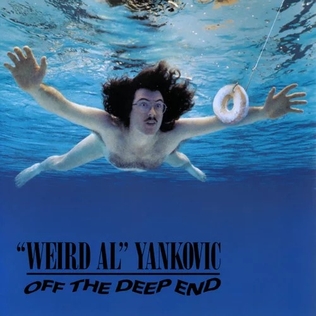 Off the Deep End
Off the Deep End is the seventh studio album by the American parody musician "Weird Al" Yankovic, released in 1992. This album was the first album self-produced by Yankovic, after six albums with Rick Derringer. Recorded between June 1990 and January 1992, the album was a follow-up to the unsuccessful soundtrack to Yankovic's 1989 film UHF. Off the Deep End
How this market resolves
Resolution is handled by the UMA optimistic oracle on Polygon. A proposer submits the outcome, a two-hour dispute window opens, and if no one stakes a counter-claim the payout is final. Contested outcomes escalate to UMA token-holder voting. Payouts clear in USDC to the winning side.
How to trade this market step by step
The mechanics for trading "o1 FDV above ___ one day after launch?" are the same as any other PolyGram crypto-price event contract. Each YES share resolves to $1 if the event happens, or $0 if it doesn't. The current price between 0¢ and 100¢ is the market's probability estimate, set live by the order book.
- Sign in on polygram.ink with your email — no full KYC under $1,500 lifetime trading volume.
- Deposit USDC on Polygon (lowest fees, ~$0.01 per transaction) or Ethereum. Funds credit after 12 confirmations.
- Pick a side. Buy YES if you believe the event will happen; buy NO if you think it won't. The current YES price reflects the market's collective probability.
- Size your position. If you stake 100 USDC at 50% YES, you'll receive shares that pay $200 if YES resolves true — a 100% gross return. If NO resolves, your shares are worth $0.
- Set risk controls (optional). Stop-loss, take-profit, and limit-order types all supported. Use the trade ticket's slippage box to cap your maximum entry price.
- Wait for resolution. When the event resolves on-chain via the UMA optimistic oracle, the winning side settles to 100¢ automatically and USDC hits your balance within seconds. Withdrawable to any wallet you control.
How active is this market?
$75K in lifetime turnover and $31K of resting liquidity puts this market in the around the median by volume for crypto contracts on PolyGram. Order-book depth is modest — expect a couple of cents of slippage on $1k+ trades.
Last 24 hours alone saw $32 in turnover, consistent with the market's lifetime daily-average pace.
The market has been open for 2 months — the price has had time to stabilise as new information arrived.
Higher-volume markets tend to have tighter spreads and faster price discovery — meaning the displayed YES/NO percentages are more likely to reflect the true crowd-implied probability rather than a single trader's directional view.
Key terms
- YES / NO share
- A binary outcome token that pays $1.00 if the underlying claim resolves true (YES) or false (NO), and $0 otherwise. The market price between 0¢ and 100¢ is the implied probability.
- CLOB
- Central limit order book. The matching engine that pairs YES buyers with NO buyers (effectively the same trade). Polymarket's CLOB on Polygon executes trades on-chain via the conditional-tokens framework.
- Liquidity
- USDC capital sitting in resting limit orders inside the order book. Deeper liquidity means smaller slippage on large trades and a tighter bid-ask spread.
- UMA optimistic oracle
- The on-chain dispute system that settles each Polymarket market. A proposer submits the outcome, a two-hour challenge window opens, and unchallenged proposals finalise the resolution.
- Slippage
- The difference between the displayed mid-price and your fill price. Affects market orders most; limit orders avoid slippage but may take time to fill.
- Conditional token
- ERC-1155 outcome share issued by Gnosis Conditional Tokens on Polygon. The token type that resolves to $1.00 or $0.00 at settlement.
Frequently asked questions
How does this market resolve?
Resolution is handled by the UMA optimistic oracle on Polygon. A proposer submits the outcome, a 2-hour dispute window opens, and if uncontested the payout is final. Contested outcomes escalate to UMA token holders.
When does this market close?
This prediction market is scheduled to close on 1 January 2028. After the resolving event occurs, settlement typically clears within 24 hours once the UMA optimistic oracle confirms the outcome. All payouts are in USDC on the Polygon network.
How can I trade on "o1 FDV above ___ one day after launch?"?
To trade on this prediction market, create a free PolyGram account at polygram.ink, deposit USDC via Polygon, and place a YES or NO order on the outcome you believe in. You can learn more on our how-it-works page. Your maximum loss is limited to your stake — there is no leverage or margin.
What happens when the market resolves?
When the outcome is determined, winning YES shares pay out $1.00 each in USDC, while losing shares pay $0. Settlement is handled by the UMA optimistic oracle on Polygon — a proposer submits the result, a two-hour dispute window opens, and if uncontested, payouts are distributed automatically. You can withdraw your winnings to any Polygon wallet.
Risk and regulatory note
Prediction-market positions can lose 100% of staked capital. Outcomes are uncertain by definition — historical accuracy of crowd-implied probabilities is high in aggregate but not for any single market. PolyGram does not provide investment advice. Trade only with capital you can afford to lose.
Regulatory status varies by jurisdiction. Germany, the United States, and most EU countries treat Polymarket-style event contracts under one of three frameworks: financial derivative, gambling product, or unregulated novel asset. Consult local counsel before trading.
Related prediction markets
Explore more prediction market odds and trading opportunities on PolyGram: