Trade: What price will Lighter hit in 2026?
Resolution criteria on PolyGram: What price will Lighter hit before 2027?
PolyGram is an on-chain prediction market where you trade YES or NO outcome shares with real USDC on Polygon. For this market, buy YES if you believe the event will happen, or NO if you think it won't. Your maximum loss is your stake — winning shares pay $1.00 each at resolution. Unlike sportsbooks, there is no house edge: prices are set by supply and demand from other traders and reflect the crowd's real-time probability.
- Liquidity
- $25K
- Total Volume
- $638K
- 24h Volume
- $2K
- Open Interest
- $95K
Market outcomes
| ↑ $10 | 5% YES | 95% NO |
| ↑ $8 | 8% YES | 93% NO |
| ↑ $6 | 8% YES | 92% NO |
| ↑ $4 | 14% YES | 86% NO |
| ↓ $2 | 100% YES | 0% NO |
| ↓ $1.5 | 100% YES | 0% NO |
| ↓ $1 | 100% YES | 0% NO |
| ↑ $3 | 19% YES | 81% NO |
Market context
Lighter, a cryptocurrency or digital asset, is being priced by traders on Polymarket's order book with a 5% implied probability of reaching a specific price target before the end of 2026. The current crowd assessment reflects scepticism about such a move within the settlement window, with the order book pricing in roughly a one-in-twenty chance of the event occurring.
Historical precedent for similar assets shows that low-probability price targets often depend on sustained momentum or external validation. Assets with comparable market capitalisation and trading volumes have typically required either significant protocol upgrades, institutional adoption announcements, or broader market rallies to achieve 5x-plus moves within a single calendar year. The current probability weighting suggests traders view the baseline scenario as consolidation or modest appreciation rather than explosive growth.
Key catalysts to monitor include any announcements regarding Lighter's development roadmap, exchange listings on major platforms, or integration into decentralised finance protocols. Regulatory clarity around the asset's classification could also shift sentiment materially. Market-wide conditions—particularly Bitcoin and Ethereum price action—typically correlate with altcoin performance, so macroeconomic developments and Federal Reserve policy shifts remain indirect but material dependencies. Traders should track Lighter's GitHub activity, community governance votes, and any partnerships that might signal institutional interest, as these have historically preceded significant price movements in comparable projects.
Wikipedia Context
-
The Price Is Right (British game show)
The Price Is Right is a British television game show based on the American version of the same name. It originally aired on ITV from 24 March 1984 to 8 April 1988 and was hosted by Leslie Crowther. The show later briefly moved to Sky One for one series as The New Price Is Right from 4 September 1989 to 31 August 1990 with Bob Warman as the host.
-
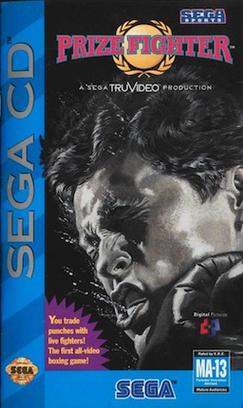 Prize Fighter (video game)
Prize Fighter is a boxing video game developed by Digital Pictures and released by Sega for its Sega CD in 1993. Like other Digital Pictures titles, it is an interactive movie utilizing full motion video. All video footage during gameplay is in black and white. The game was directed by Ron Stein, who had previously worked as a fight coordinator for various f
-
 The Price Is Right (franchise)
The Price Is Right is a television game show franchise created by Bob Stewart, originally produced by Mark Goodson and Bill Todman; currently it is produced and owned by Fremantle. The franchise centers on television game shows, but also includes merchandise such as video games, printed media, and board games. The franchise began in 1956 as a television game
-
 Professional boxing
Professional boxing, or prizefighting, is regulated, sanctioned boxing. Professional boxing bouts are fought for a purse that is divided between the boxers as determined by the contract. Most professional fights are supervised by a regulatory authority to guarantee the fighters' safety. Most high-profile bouts obtain the endorsement of a sanctioning body, wh
How this market resolves
Resolution is handled by the UMA optimistic oracle on Polygon. A proposer submits the outcome, a two-hour dispute window opens, and if no one stakes a counter-claim the payout is final. Contested outcomes escalate to UMA token-holder voting. Payouts clear in USDC to the winning side.
How to trade this market step by step
The mechanics for trading "What price will Lighter hit in 2026?" are the same as any other PolyGram event contract. Each YES share resolves to $1 if the event happens, or $0 if it doesn't. The current price between 0¢ and 100¢ is the market's probability estimate, set live by the order book.
- Sign in on polygram.ink with your email — no full KYC under $1,500 lifetime trading volume.
- Deposit USDC on Polygon (lowest fees, ~$0.01 per transaction) or Ethereum. Funds credit after 12 confirmations.
- Pick a side. Buy YES if you believe the event will happen; buy NO if you think it won't. The current YES price reflects the market's collective probability.
- Size your position. If you stake 100 USDC at 50% YES, you'll receive shares that pay $200 if YES resolves true — a 100% gross return. If NO resolves, your shares are worth $0.
- Set risk controls (optional). Stop-loss, take-profit, and limit-order types all supported. Use the trade ticket's slippage box to cap your maximum entry price.
- Wait for resolution. When the event resolves on-chain via the UMA optimistic oracle, the winning side settles to 100¢ automatically and USDC hits your balance within seconds. Withdrawable to any wallet you control.
How active is this market?
$638K in lifetime turnover and $25K of resting liquidity puts this market in the top 2% by volume for lighter contracts on PolyGram. Order-book depth is modest — expect a couple of cents of slippage on $1k+ trades.
Last 24 hours alone saw $2K in turnover, consistent with the market's lifetime daily-average pace.
The market has been open for 4 months — the price has had time to stabilise as new information arrived.
Higher-volume markets tend to have tighter spreads and faster price discovery — meaning the displayed YES/NO percentages are more likely to reflect the true crowd-implied probability rather than a single trader's directional view.
Key terms
- YES / NO share
- A binary outcome token that pays $1.00 if the underlying claim resolves true (YES) or false (NO), and $0 otherwise. The market price between 0¢ and 100¢ is the implied probability.
- CLOB
- Central limit order book. The matching engine that pairs YES buyers with NO buyers (effectively the same trade). Polymarket's CLOB on Polygon executes trades on-chain via the conditional-tokens framework.
- Liquidity
- USDC capital sitting in resting limit orders inside the order book. Deeper liquidity means smaller slippage on large trades and a tighter bid-ask spread.
- UMA optimistic oracle
- The on-chain dispute system that settles each Polymarket market. A proposer submits the outcome, a two-hour challenge window opens, and unchallenged proposals finalise the resolution.
- Slippage
- The difference between the displayed mid-price and your fill price. Affects market orders most; limit orders avoid slippage but may take time to fill.
- Conditional token
- ERC-1155 outcome share issued by Gnosis Conditional Tokens on Polygon. The token type that resolves to $1.00 or $0.00 at settlement.
Frequently asked questions
How does this market resolve?
Resolution is handled by the UMA optimistic oracle on Polygon. A proposer submits the outcome, a 2-hour dispute window opens, and if uncontested the payout is final. Contested outcomes escalate to UMA token holders.
When does this market close?
This prediction market is scheduled to close on 1 January 2027. After the resolving event occurs, settlement typically clears within 24 hours once the UMA optimistic oracle confirms the outcome. All payouts are in USDC on the Polygon network.
How can I trade on "What price will Lighter hit in 2026?"?
To trade on this prediction market, create a free PolyGram account at polygram.ink, deposit USDC via Polygon, and place a YES or NO order on the outcome you believe in. You can learn more on our how-it-works page. Your maximum loss is limited to your stake — there is no leverage or margin.
What happens when the market resolves?
When the outcome is determined, winning YES shares pay out $1.00 each in USDC, while losing shares pay $0. Settlement is handled by the UMA optimistic oracle on Polygon — a proposer submits the result, a two-hour dispute window opens, and if uncontested, payouts are distributed automatically. You can withdraw your winnings to any Polygon wallet.
Risk and regulatory note
Prediction-market positions can lose 100% of staked capital. Outcomes are uncertain by definition — historical accuracy of crowd-implied probabilities is high in aggregate but not for any single market. PolyGram does not provide investment advice. Trade only with capital you can afford to lose.
Regulatory status varies by jurisdiction. Germany, the United States, and most EU countries treat Polymarket-style event contracts under one of three frameworks: financial derivative, gambling product, or unregulated novel asset. Consult local counsel before trading.
Related prediction markets
Explore more prediction market odds and trading opportunities on PolyGram: