Trade: Fed rate hike in 2026?
Resolution criteria on PolyGram: This market will resolve to “Yes” if the upper bound of the target federal funds rate is increased at any point between January 1, 2026 and the Fed's December 2026 meeting, currently scheduled for December 8-9, 2026. Otherwise, this market will resolve to “No”. This market may not resolve to "No" until the Fed has released its rate change decision following its December meeting. The primary resolution source for this market will be the official website of the Federal Reserve (https://www.federalreserve.gov/monetarypolicy/openmarket.htm), however a consensus of credible reporting may also be used.
PolyGram is an on-chain prediction market where you trade YES or NO outcome shares with real USDC on Polygon. For this market, buy YES if you believe the event will happen, or NO if you think it won't. Your maximum loss is your stake — winning shares pay $1.00 each at resolution. Unlike sportsbooks, there is no house edge: prices are set by supply and demand from other traders and reflect the crowd's real-time probability.
- Liquidity
- $50K
- Total Volume
- $1.1M
- 24h Volume
- $575
- Open Interest
- $229K
Market outcomes
| Fed rate hike in 2026? | 19% YES | 82% NO |
Market context
The Federal Reserve would need to raise its benchmark interest rate at some point during 2026 for this market to resolve affirmatively. The current 19% implied probability on Polymarket's order book reflects trader expectations that rates will remain on hold or potentially decline through the Fed's December meeting. This assessment comes after the Fed cut rates by 100 basis points across 2024, establishing a more accommodative monetary stance than prevailed in 2023.
Historical context suggests rate hikes mid-cycle are uncommon absent significant economic shocks. The Fed typically maintains steady policy once a cutting cycle begins, unless inflation resurges materially or labour markets tighten unexpectedly. The 2022–2023 hiking cycle saw the Fed raise rates aggressively from near-zero to 5.25–5.50%, then pause and begin cutting. A reversal to hiking in 2026 would require a substantial shift in economic conditions—notably a return of inflation pressures or overheating demand—that current consensus does not anticipate.
Traders should monitor inflation data releases throughout 2026, particularly the Consumer Price Index and Personal Consumption Expenditures reports, alongside employment figures and Fed communications. The Fed's quarterly Summary of Economic Projections, released at select meetings, will signal officials' rate expectations. Recent commentary from Fed officials has emphasised data dependency rather than a pre-set path, meaning persistent inflation surprises or wage growth acceleration could alter the calculus. The December 2026 meeting represents the final opportunity for a hike within the settlement window, making late-year economic data particularly consequential.
Wikipedia Context
-
 Federal funds rate
The federal funds rate is the interest rate at which depository institutions lend reserve balances to other depository institutions overnight on an uncollateralized basis. Reserve balances are amounts held at the Federal Reserve. Institutions with surplus balances in their accounts lend those balances to institutions in need of larger balances. The federal f
-
 Federated States of Micronesia
The Federated States of Micronesia, or simply Micronesia, is an island country in Micronesia, a region of Oceania. The federation encompasses the majority of the Caroline Islands and consists of four states—from west to east: Yap, Chuuk, Pohnpei, and Kosrae—that span the western Pacific just north of the equator for a longitudinal distance of almost 2,700 km
-
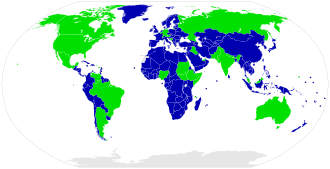 Federation
A federation is an entity characterized by a union of partially self-governing provinces, states, or other regions under a federal government (federalism). In a federation, the self-governing status of the component states, as well as the division of power between them and the central government, is constitutionally entrenched and may not be altered by a uni
-
Fed-batch culture
A fed‑batch culture is, in the broadest sense, defined as a bioprocessing operation in which one or more nutrients (substrates) are supplied to the bioreactor during cultivation of microorganisms or animal cells, while no culture broth is taken out until the final harvest. An alternative description of the method is that of a culture in which "a base medium
How this market resolves
Resolution is handled by the UMA optimistic oracle on Polygon. A proposer submits the outcome, a two-hour dispute window opens, and if no one stakes a counter-claim the payout is final. Contested outcomes escalate to UMA token-holder voting. Payouts clear in USDC to the winning side.
How to trade this market step by step
The mechanics for trading "Fed rate hike in 2026?" are the same as any other PolyGram event contract. Each YES share resolves to $1 if the event happens, or $0 if it doesn't. The current price between 0¢ and 100¢ is the market's probability estimate, set live by the order book.
- Sign in on polygram.ink with your email — no full KYC under $1,500 lifetime trading volume.
- Deposit USDC on Polygon (lowest fees, ~$0.01 per transaction) or Ethereum. Funds credit after 12 confirmations.
- Pick a side. Buy YES if you believe the event will happen; buy NO if you think it won't. The current YES price reflects the market's collective probability.
- Size your position. If you stake 100 USDC at 19% YES, you'll receive shares that pay $526 if YES resolves true — a 426% gross return. If NO resolves, your shares are worth $0.
- Set risk controls (optional). Stop-loss, take-profit, and limit-order types all supported. Use the trade ticket's slippage box to cap your maximum entry price.
- Wait for resolution. When the event resolves on-chain via the UMA optimistic oracle, the winning side settles to 100¢ automatically and USDC hits your balance within seconds. Withdrawable to any wallet you control.
How active is this market?
$1.1M in lifetime turnover and $50K of resting liquidity puts this market in the top 2% by volume for fed contracts on PolyGram. Order-book depth is strong — order books support five-figure trades with single-cent slippage.
Last 24 hours alone saw $575 in turnover, consistent with the market's lifetime daily-average pace.
The market has been open for 5 months — the price has had time to stabilise as new information arrived.
Higher-volume markets tend to have tighter spreads and faster price discovery — meaning the displayed YES/NO percentages are more likely to reflect the true crowd-implied probability rather than a single trader's directional view.
Key terms
- YES / NO share
- A binary outcome token that pays $1.00 if the underlying claim resolves true (YES) or false (NO), and $0 otherwise. The market price between 0¢ and 100¢ is the implied probability.
- CLOB
- Central limit order book. The matching engine that pairs YES buyers with NO buyers (effectively the same trade). Polymarket's CLOB on Polygon executes trades on-chain via the conditional-tokens framework.
- Liquidity
- USDC capital sitting in resting limit orders inside the order book. Deeper liquidity means smaller slippage on large trades and a tighter bid-ask spread.
- UMA optimistic oracle
- The on-chain dispute system that settles each Polymarket market. A proposer submits the outcome, a two-hour challenge window opens, and unchallenged proposals finalise the resolution.
- Slippage
- The difference between the displayed mid-price and your fill price. Affects market orders most; limit orders avoid slippage but may take time to fill.
- Conditional token
- ERC-1155 outcome share issued by Gnosis Conditional Tokens on Polygon. The token type that resolves to $1.00 or $0.00 at settlement.
Frequently asked questions
What is the current probability for "Fed rate hike in 2026?"?
As of today, traders on Polymarket price this outcome at 19%. The number updates continuously as the order book clears. PolyGram mirrors the same live odds with locale-aware formatting and USDC settlement.
How does this market resolve?
Resolution is handled by the UMA optimistic oracle on Polygon. A proposer submits the outcome, a 2-hour dispute window opens, and if uncontested the payout is final. Contested outcomes escalate to UMA token holders.
When does this market close?
This prediction market is scheduled to close on 9 December 2026. After the resolving event occurs, settlement typically clears within 24 hours once the UMA optimistic oracle confirms the outcome. All payouts are in USDC on the Polygon network.
How can I trade on "Fed rate hike in 2026?"?
To trade on this prediction market, create a free PolyGram account at polygram.ink, deposit USDC via Polygon, and place a YES or NO order on the outcome you believe in. You can learn more on our how-it-works page. Your maximum loss is limited to your stake — there is no leverage or margin.
What happens when the market resolves?
When the outcome is determined, winning YES shares pay out $1.00 each in USDC, while losing shares pay $0. Settlement is handled by the UMA optimistic oracle on Polygon — a proposer submits the result, a two-hour dispute window opens, and if uncontested, payouts are distributed automatically. You can withdraw your winnings to any Polygon wallet.
Risk and regulatory note
Prediction-market positions can lose 100% of staked capital. Outcomes are uncertain by definition — historical accuracy of crowd-implied probabilities is high in aggregate but not for any single market. PolyGram does not provide investment advice. Trade only with capital you can afford to lose.
Regulatory status varies by jurisdiction. Germany, the United States, and most EU countries treat Polymarket-style event contracts under one of three frameworks: financial derivative, gambling product, or unregulated novel asset. Consult local counsel before trading.
Related prediction markets
Explore more prediction market odds and trading opportunities on PolyGram: