Trade: VOOI FDV above ___ one day after launch?
Resolution criteria on PolyGram: This market will resolve to "Yes" if the Fully Diluted Valuation of VOOI's token is greater than the value specified in the title 1 day after launch. Otherwise, the market will resolve to "No." The token must be actively, publicly transferable and tradable to be considered a launch. "1 day after launch" is defined as 4:00 PM ET on the calendar day following launch. The resolution source for this market is the most liquid price source available. If VOOI (https://vooi.io/) doesn't launch a token by December 31, 2026, 11:59 PM ET, this market will resolve to "No".
PolyGram is an on-chain prediction market where you trade YES or NO outcome shares with real USDC on Polygon. For this market, buy YES if you believe the event will happen, or NO if you think it won't. Your maximum loss is your stake — winning shares pay $1.00 each at resolution. Unlike sportsbooks, there is no house edge: prices are set by supply and demand from other traders and reflect the crowd's real-time probability.
- Liquidity
- —
- Total Volume
- $727K
- 24h Volume
- —
- Open Interest
- $0
Market outcomes
| $800M | 0% YES | 100% NO |
| $1.5B | 0% YES | 100% NO |
| $500M | 0% YES | 100% NO |
| $1B | 0% YES | 100% NO |
| $2B | 0% YES | 100% NO |
| $300M | 0% YES | 100% NO |
| $100M | 0% YES | 100% NO |
| $200M | 0% YES | 100% NO |
Market context
VOOI, a decentralised finance protocol, is expected to launch a native token at some point before the end of 2026. This market tests whether the token's fully diluted valuation will exceed a specified threshold within 24 hours of becoming publicly tradable. The settlement hinges on the most liquid price source available at 4:00 PM ET on the day following launch, with the deadline for any launch set at 31 December 2026, 23:59 PM ET.
The 0% implied probability on Polymarket's order book reflects substantial uncertainty around both token launch timing and post-launch valuation dynamics. Historical precedent from recent DeFi token launches shows highly variable first-day valuations, with some projects trading well below initial expectations whilst others spike significantly. The absence of a confirmed launch date, tokenomics disclosure, or public roadmap contributes to the current pricing. Comparable launches by established protocols have typically seen FDV calculations stabilise only after initial volatility settles, making day-one predictions inherently difficult.
Traders monitoring this market should track VOOI's official communications for concrete launch announcements, tokenomics details, and any regulatory filings. The protocol's development progress, team announcements, and competitive positioning within the DeFi landscape will inform whether launch occurs before year-end. Market participants should also note that illiquidity in early trading could create substantial spreads between theoretical valuations and actual transaction prices, potentially affecting how the resolution source is determined.
Wikipedia Context
-
 Void of Vision
Void of Vision were an Australian metalcore band from Melbourne, formed in 2013. The band's final lineup consisted of vocalist Jack Bergin, guitarists James McKendrick and Mitch Fairlie and drummer George Pfaendner. Void of Vision have released four studio albums: Children of Chrome (2016), Hyperdaze (2019), Chronicles (2023), and What I'll Leave Behind (202
-
 The Void (virtual reality)
The Void was a franchise of virtual reality entertainment attractions. Co-founded by Ken Bretschneider, James Jensen, and Curtis Hickman as a re-focusing of a plan to build an attraction at Evermore Park in Pleasant Grove, Utah, and described by some as being a virtual reality "theme park", these facilities feature virtual reality experiences leveraging a co
-
 The Void (video game)
The Void, also known as Tension, is a 2008 Russian first-person adventure video game developed by the Russian studio Ice-Pick Lodge and published in Russia, other CIS-countries, and Poland by ND Games on 17 April 2008. It won the "Most Original Game" award at the Russian Game Developers Conference, KRI in 2007. The game was released in English-speaking regio
-
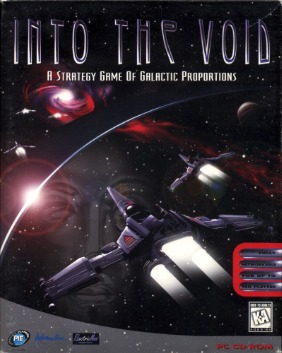 Into the Void (video game)
Into the Void is a video game developed by American studio Adrenalin Entertainment and published by Playmates Interactive Entertainment for DOS in 1997.
How this market resolves
Resolution is handled by the UMA optimistic oracle on Polygon. A proposer submits the outcome, a two-hour dispute window opens, and if no one stakes a counter-claim the payout is final. Contested outcomes escalate to UMA token-holder voting. Payouts clear in USDC to the winning side.
How to trade this market step by step
The mechanics for trading "VOOI FDV above ___ one day after launch?" are the same as any other PolyGram crypto-price event contract. Each YES share resolves to $1 if the event happens, or $0 if it doesn't. The current price between 0¢ and 100¢ is the market's probability estimate, set live by the order book.
- Sign in on polygram.ink with your email — no full KYC under $1,500 lifetime trading volume.
- Deposit USDC on Polygon (lowest fees, ~$0.01 per transaction) or Ethereum. Funds credit after 12 confirmations.
- Pick a side. Buy YES if you believe the event will happen; buy NO if you think it won't. The current YES price reflects the market's collective probability.
- Size your position. If you stake 100 USDC at 50% YES, you'll receive shares that pay $200 if YES resolves true — a 100% gross return. If NO resolves, your shares are worth $0.
- Set risk controls (optional). Stop-loss, take-profit, and limit-order types all supported. Use the trade ticket's slippage box to cap your maximum entry price.
- Wait for resolution. When the event resolves on-chain via the UMA optimistic oracle, the winning side settles to 100¢ automatically and USDC hits your balance within seconds. Withdrawable to any wallet you control.
How active is this market?
$727K in lifetime turnover and $0 of resting liquidity puts this market in the top 10% by volume for crypto contracts on PolyGram. Order-book depth is thin — large orders may need to be split across the book or executed as limit orders.
The market has been open for 6 months — the price has had time to stabilise as new information arrived.
Higher-volume markets tend to have tighter spreads and faster price discovery — meaning the displayed YES/NO percentages are more likely to reflect the true crowd-implied probability rather than a single trader's directional view.
Key terms
- YES / NO share
- A binary outcome token that pays $1.00 if the underlying claim resolves true (YES) or false (NO), and $0 otherwise. The market price between 0¢ and 100¢ is the implied probability.
- CLOB
- Central limit order book. The matching engine that pairs YES buyers with NO buyers (effectively the same trade). Polymarket's CLOB on Polygon executes trades on-chain via the conditional-tokens framework.
- Liquidity
- USDC capital sitting in resting limit orders inside the order book. Deeper liquidity means smaller slippage on large trades and a tighter bid-ask spread.
- UMA optimistic oracle
- The on-chain dispute system that settles each Polymarket market. A proposer submits the outcome, a two-hour challenge window opens, and unchallenged proposals finalise the resolution.
- Slippage
- The difference between the displayed mid-price and your fill price. Affects market orders most; limit orders avoid slippage but may take time to fill.
- Conditional token
- ERC-1155 outcome share issued by Gnosis Conditional Tokens on Polygon. The token type that resolves to $1.00 or $0.00 at settlement.
Frequently asked questions
How does this market resolve?
Resolution is handled by the UMA optimistic oracle on Polygon. A proposer submits the outcome, a 2-hour dispute window opens, and if uncontested the payout is final. Contested outcomes escalate to UMA token holders.
When does this market close?
This prediction market is scheduled to close on 1 January 2027. After the resolving event occurs, settlement typically clears within 24 hours once the UMA optimistic oracle confirms the outcome. All payouts are in USDC on the Polygon network.
How can I trade on "VOOI FDV above ___ one day after launch?"?
To trade on this prediction market, create a free PolyGram account at polygram.ink, deposit USDC via Polygon, and place a YES or NO order on the outcome you believe in. You can learn more on our how-it-works page. Your maximum loss is limited to your stake — there is no leverage or margin.
What happens when the market resolves?
When the outcome is determined, winning YES shares pay out $1.00 each in USDC, while losing shares pay $0. Settlement is handled by the UMA optimistic oracle on Polygon — a proposer submits the result, a two-hour dispute window opens, and if uncontested, payouts are distributed automatically. You can withdraw your winnings to any Polygon wallet.
Risk and regulatory note
Prediction-market positions can lose 100% of staked capital. Outcomes are uncertain by definition — historical accuracy of crowd-implied probabilities is high in aggregate but not for any single market. PolyGram does not provide investment advice. Trade only with capital you can afford to lose.
Regulatory status varies by jurisdiction. Germany, the United States, and most EU countries treat Polymarket-style event contracts under one of three frameworks: financial derivative, gambling product, or unregulated novel asset. Consult local counsel before trading.
Related prediction markets
Explore more prediction market odds and trading opportunities on PolyGram: