Trade: What caused the Blue Origin New Glenn Explosion?
Resolution criteria on PolyGram: On May 28, 2026, a Blue Origin New Glenn rocket exploded on its launch pad during a hot-fire test (see: https://www.cbsnews.com/news/blue-origin-new-glenn-rocket-explodes-launchpad-florida/). This market will resolve according to the listed category that most directly aligns with the technical failure publicly identified by Blue Origin as the cause of this explosion. If Blue Origin identifies multiple contributing causes, this market will resolve based on the cause Blue Origin describes as the primary cause of the explosion. If Blue Origin does not designate a primary cause, this market will resolve based on the cause most prominently featured in their official disclosure.
PolyGram is an on-chain prediction market where you trade YES or NO outcome shares with real USDC on Polygon. For this market, buy YES if you believe the event will happen, or NO if you think it won't. Your maximum loss is your stake — winning shares pay $1.00 each at resolution. Unlike sportsbooks, there is no house edge: prices are set by supply and demand from other traders and reflect the crowd's real-time probability.
- Liquidity
- $1K
- Total Volume
- $104
- 24h Volume
- —
- Open Interest
- $94
Market outcomes
| Engine Failure | 41% YES | 59% NO |
| Propellant Leak | 35% YES | 65% NO |
| Software or Control System Failure | 31% YES | 70% NO |
| Valve or Plumbing Failure | 39% YES | 61% NO |
| Ground Support Equipment Failure | 31% YES | 70% NO |
| Other | 31% YES | 70% NO |
| No Cause Announced By December 31 | 32% YES | 68% NO |
Market context
Blue Origin's New Glenn heavy-lift rocket experienced a catastrophic failure during a hot-fire test at its Florida launch facility on 28 May 2026. The explosion occurred whilst the vehicle was secured to the pad, destroying the test article and delaying the programme's maiden orbital flight. Blue Origin has initiated a formal investigation into the root cause, with findings expected to determine which technical failure category—whether propulsion system, structural integrity, avionics, ground support equipment, or other mechanical fault—precipitated the incident.
Historical precedent suggests investigation timelines for comparable pad explosions range from three to nine months. SpaceX's AMOS-6 incident in 2016 took approximately four months to conclude; Blue Origin's own New Shepard anomaly in 2022 required roughly six months of analysis. The 38% crowd probability currently reflected in Polymarket's order book indicates meaningful uncertainty about whether the failure will be attributed to a primary technical cause versus multiple contributing factors that resist singular categorisation. This probability formation suggests traders are pricing in both the possibility of a clear root cause determination and the risk that Blue Origin's public findings remain ambiguous or multi-factorial.
Key catalysts include Blue Origin's formal accident investigation report, expected sometime in late 2026 or early 2027, and any interim statements the company makes regarding preliminary findings. The settlement window closes 31 December 2026, creating time pressure for resolution. Traders should monitor Blue Origin's official communications and statements to the Federal Aviation Administration, which typically receives detailed technical findings before public disclosure. Any delay in investigation completion or ambiguity in the company's causal attribution would likely shift probabilities substantially.
Wikipedia Context
-
 Case Blue
Case Blue was the Wehrmacht's plan for the 1942 strategic summer offensive in southern Russia between 28 June and 24 November 1942, during World War II. The objective was to capture the oil fields of Baku, Grozny and Maikop for two purposes: to enable the Germans to re-supply their low fuel stock and also to deny their use to the Soviet Union, thereby bringi
-
 Battle of Kalach
The Battle of Kalach took place between the German Sixth Army and elements of the Soviet Stalingrad Front between July 25 and August 11, 1942. The Soviets deployed the 62nd and 64th Armies in a Don River bridgehead west of Kalach with the intent of impeding the German advance on Stalingrad. In the initial period of the battle, the Germans attacked and manage
-
 Bleeding
Bleeding, hemorrhage, haemorrhage or blood loss, is blood escaping from the circulatory system from damaged blood vessels. Bleeding can occur internally, or externally either through a natural opening such as the mouth, nose, ear, urethra, vagina, or anus, or through a puncture in the skin. Hypovolemia is a massive decrease in blood volume, and death by exce
-
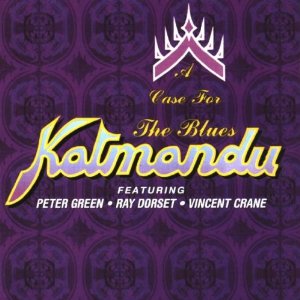 A Case for the Blues
A Case for the Blues is a blues album by Katmandu, a British band made up of successful musicians from differing musical backgrounds, including Peter Green of Fleetwood Mac, Ray Dorset of Mungo Jerry and Vincent Crane of Atomic Rooster. Released in 1985, this was the only album by the band.
How this market resolves
Resolution is handled by the UMA optimistic oracle on Polygon. A proposer submits the outcome, a two-hour dispute window opens, and if no one stakes a counter-claim the payout is final. Contested outcomes escalate to UMA token-holder voting. Payouts clear in USDC to the winning side.
How to trade this market step by step
The mechanics for trading "What caused the Blue Origin New Glenn Explosion?" are the same as any other PolyGram event contract. Each YES share resolves to $1 if the event happens, or $0 if it doesn't. The current price between 0¢ and 100¢ is the market's probability estimate, set live by the order book.
- Sign in on polygram.ink with your email — no full KYC under $1,500 lifetime trading volume.
- Deposit USDC on Polygon (lowest fees, ~$0.01 per transaction) or Ethereum. Funds credit after 12 confirmations.
- Pick a side. Buy YES if you believe the event will happen; buy NO if you think it won't. The current YES price reflects the market's collective probability.
- Size your position. If you stake 100 USDC at 50% YES, you'll receive shares that pay $200 if YES resolves true — a 100% gross return. If NO resolves, your shares are worth $0.
- Set risk controls (optional). Stop-loss, take-profit, and limit-order types all supported. Use the trade ticket's slippage box to cap your maximum entry price.
- Wait for resolution. When the event resolves on-chain via the UMA optimistic oracle, the winning side settles to 100¢ automatically and USDC hits your balance within seconds. Withdrawable to any wallet you control.
How active is this market?
$104 in lifetime turnover and $1K of resting liquidity puts this market in the below the median by volume for tech contracts on PolyGram. Order-book depth is thin — large orders may need to be split across the book or executed as limit orders.
The market has been open for under a month — fresh enough that information asymmetry remains a real factor.
Higher-volume markets tend to have tighter spreads and faster price discovery — meaning the displayed YES/NO percentages are more likely to reflect the true crowd-implied probability rather than a single trader's directional view.
Key terms
- YES / NO share
- A binary outcome token that pays $1.00 if the underlying claim resolves true (YES) or false (NO), and $0 otherwise. The market price between 0¢ and 100¢ is the implied probability.
- CLOB
- Central limit order book. The matching engine that pairs YES buyers with NO buyers (effectively the same trade). Polymarket's CLOB on Polygon executes trades on-chain via the conditional-tokens framework.
- Liquidity
- USDC capital sitting in resting limit orders inside the order book. Deeper liquidity means smaller slippage on large trades and a tighter bid-ask spread.
- UMA optimistic oracle
- The on-chain dispute system that settles each Polymarket market. A proposer submits the outcome, a two-hour challenge window opens, and unchallenged proposals finalise the resolution.
- Slippage
- The difference between the displayed mid-price and your fill price. Affects market orders most; limit orders avoid slippage but may take time to fill.
- Conditional token
- ERC-1155 outcome share issued by Gnosis Conditional Tokens on Polygon. The token type that resolves to $1.00 or $0.00 at settlement.
Frequently asked questions
How does this market resolve?
Resolution is handled by the UMA optimistic oracle on Polygon. A proposer submits the outcome, a 2-hour dispute window opens, and if uncontested the payout is final. Contested outcomes escalate to UMA token holders.
When does this market close?
This prediction market is scheduled to close on 31 December 2026. After the resolving event occurs, settlement typically clears within 24 hours once the UMA optimistic oracle confirms the outcome. All payouts are in USDC on the Polygon network.
How can I trade on "What caused the Blue Origin New Glenn Explosion?"?
To trade on this prediction market, create a free PolyGram account at polygram.ink, deposit USDC via Polygon, and place a YES or NO order on the outcome you believe in. You can learn more on our how-it-works page. Your maximum loss is limited to your stake — there is no leverage or margin.
What happens when the market resolves?
When the outcome is determined, winning YES shares pay out $1.00 each in USDC, while losing shares pay $0. Settlement is handled by the UMA optimistic oracle on Polygon — a proposer submits the result, a two-hour dispute window opens, and if uncontested, payouts are distributed automatically. You can withdraw your winnings to any Polygon wallet.
Risk and regulatory note
Prediction-market positions can lose 100% of staked capital. Outcomes are uncertain by definition — historical accuracy of crowd-implied probabilities is high in aggregate but not for any single market. PolyGram does not provide investment advice. Trade only with capital you can afford to lose.
Regulatory status varies by jurisdiction. Germany, the United States, and most EU countries treat Polymarket-style event contracts under one of three frameworks: financial derivative, gambling product, or unregulated novel asset. Consult local counsel before trading.
Related prediction markets
Explore more prediction market odds and trading opportunities on PolyGram: