Trade: Avalanche vs. Wild
Resolution criteria on PolyGram: In the upcoming NHL game, scheduled for May 11 at 8:00PM ET: If the Avalanche win, the market will resolve to "Avalanche". If the Wild win, the market will resolve to "Wild". If the game is postponed, this market will remain open until the game has been completed. If the game is canceled entirely, with no make-up game, this market will resolve 50-50. The result will be determined based on the final score including any overtime periods and shootouts. In the event of a shootout, one goal will be added to the winning team's score for the purpose of resolution.
PolyGram is an on-chain prediction market where you trade YES or NO outcome shares with real USDC on Polygon. For this market, buy YES if you believe the event will happen, or NO if you think it won't. Your maximum loss is your stake — winning shares pay $1.00 each at resolution. Unlike sportsbooks, there is no house edge: prices are set by supply and demand from other traders and reflect the crowd's real-time probability.
- Liquidity
- $493K
- Total Volume
- $513K
- 24h Volume
- $512K
- Open Interest
- $412K
Market outcomes
| Avalanche vs. Wild | 56% YES | 44% NO |
| Spread -1.5 | 35% YES | 66% NO |
| O/U 6.5 | 48% YES | 53% NO |
| O/U 4.5 | 80% YES | 21% NO |
| O/U 5.5 | 60% YES | 41% NO |
| O/U 7.5 | 28% YES | 73% NO |
Market context
The Colorado Avalanche face the Minnesota Wild in an NHL matchup scheduled for 11 May at 8:00PM ET, with settlement occurring the following day. The current order book on Polymarket reflects a 56% implied probability for an Avalanche victory, suggesting moderate confidence in Colorado whilst acknowledging meaningful uncertainty around the outcome.
Historically, regular-season matchups between these franchises have shown relatively balanced results, though contextual factors—playoff positioning, injury status, and recent form—substantially influence individual game probabilities. The Avalanche's recent performance trajectory and roster depth typically command a modest probability premium in neutral venues, yet the Wild have demonstrated capacity to compete effectively in head-to-head contests. Comparable games involving these teams over the past two seasons have resolved across a fairly wide range of outcomes, indicating that neither side possesses overwhelming structural advantages that would justify probabilities significantly beyond the current 56% mark.
Key variables for traders to monitor include official roster confirmations and injury reports released in the 48 hours preceding the match, particularly regarding either team's top-line contributors. Recent NHL scheduling patterns and travel logistics can affect performance, though both franchises operate from established home bases. The settlement window closes at midnight UTC on 12 May, allowing approximately 16 hours post-game for final score confirmation and market resolution. Any postponement would extend the market's open status until completion; cancellation without rescheduling would trigger a 50-50 split resolution.
Wikipedia Context
-
Avalanche diode
In electronics, an avalanche diode is a diode that is designed to experience avalanche breakdown at a specified reverse bias voltage. The junction of an avalanche diode is designed to prevent current concentration and resulting hot spots, so that the diode is undamaged by the breakdown. The avalanche breakdown is due to minority carriers accelerated enough t
-
Jones Mountains
The Jones Mountains are an isolated group of mountains, trending generally east–west for 27 nautical miles, situated on the Eights Coast, Ellsworth Land, Antarctica, about 50 nautical miles south of Dustin Island.
-
 Avalanche, Wisconsin
Avalanche is an unincorporated community in the town of Webster, Vernon County, Wisconsin, United States. The community took its name from a geographic feature east of the village that looked like an avalanche.
-
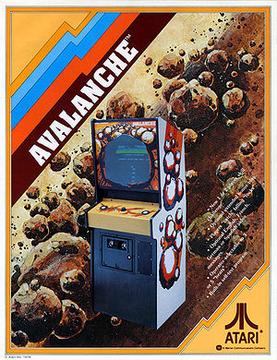 Avalanche (video game)
Avalanche is a 1978 arcade video game designed by Dennis Koble and released by Atari, Inc.. The object is to catch falling rocks with a controllable set of paddles that diminish in number and size as the rocks fall faster and faster.
Resolution source
This market settles from the official outcome published at https://www.nhl.com/scores. A proposer submits the final result to the UMA optimistic oracle on Polygon; the two-hour dispute window closes and payouts clear in USDC.
How to trade this market step by step
The mechanics for trading "Avalanche vs. Wild" are the same as any other PolyGram sporting event contract. Each YES share resolves to $1 if the event happens, or $0 if it doesn't. The current price between 0¢ and 100¢ is the market's probability estimate, set live by the order book.
- Sign in on polygram.ink with your email — no full KYC under $1,500 lifetime trading volume.
- Deposit USDC on Polygon (lowest fees, ~$0.01 per transaction) or Ethereum. Funds credit after 12 confirmations.
- Pick a side. Buy YES if you believe the event will happen; buy NO if you think it won't. The current YES price reflects the market's collective probability.
- Size your position. If you stake 100 USDC at 50% YES, you'll receive shares that pay $200 if YES resolves true — a 100% gross return. If NO resolves, your shares are worth $0.
- Set risk controls (optional). Stop-loss, take-profit, and limit-order types all supported. Use the trade ticket's slippage box to cap your maximum entry price.
- Wait for resolution. When the event resolves on-chain via the UMA optimistic oracle, the winning side settles to 100¢ automatically and USDC hits your balance within seconds. Withdrawable to any wallet you control.
How active is this market?
$513K in lifetime turnover and $493K of resting liquidity puts this market in the top 2% by volume for sports contracts on PolyGram. Order-book depth is exceptional — among the deepest order books in the category.
Last 24 hours alone saw $512K in turnover, well above the lifetime daily-average for this market — a clear sign of news catalysing trader activity right now.
The market has been open for under a month — fresh enough that information asymmetry remains a real factor.
Higher-volume markets tend to have tighter spreads and faster price discovery — meaning the displayed YES/NO percentages are more likely to reflect the true crowd-implied probability rather than a single trader's directional view.
Key terms
- YES / NO share
- A binary outcome token that pays $1.00 if the underlying claim resolves true (YES) or false (NO), and $0 otherwise. The market price between 0¢ and 100¢ is the implied probability.
- CLOB
- Central limit order book. The matching engine that pairs YES buyers with NO buyers (effectively the same trade). Polymarket's CLOB on Polygon executes trades on-chain via the conditional-tokens framework.
- Liquidity
- USDC capital sitting in resting limit orders inside the order book. Deeper liquidity means smaller slippage on large trades and a tighter bid-ask spread.
- UMA optimistic oracle
- The on-chain dispute system that settles each Polymarket market. A proposer submits the outcome, a two-hour challenge window opens, and unchallenged proposals finalise the resolution.
- Slippage
- The difference between the displayed mid-price and your fill price. Affects market orders most; limit orders avoid slippage but may take time to fill.
- Conditional token
- ERC-1155 outcome share issued by Gnosis Conditional Tokens on Polygon. The token type that resolves to $1.00 or $0.00 at settlement.
Frequently asked questions
How does this market resolve?
Resolution is sourced from https://www.nhl.com/scores. Settlement is executed by the UMA optimistic oracle on Polygon, with a 2-hour dispute window before payouts clear.
When does this market close?
This prediction market is scheduled to close on 12 May 2026. After the resolving event occurs, settlement typically clears within 24 hours once the UMA optimistic oracle confirms the outcome. All payouts are in USDC on the Polygon network.
How can I trade on "Avalanche vs. Wild"?
To trade on this prediction market, create a free PolyGram account at polygram.ink, deposit USDC via Polygon, and place a YES or NO order on the outcome you believe in. You can learn more on our how-it-works page. Your maximum loss is limited to your stake — there is no leverage or margin.
What happens when the market resolves?
When the outcome is determined, winning YES shares pay out $1.00 each in USDC, while losing shares pay $0. Settlement is handled by the UMA optimistic oracle on Polygon — a proposer submits the result, a two-hour dispute window opens, and if uncontested, payouts are distributed automatically. You can withdraw your winnings to any Polygon wallet.
Risk and regulatory note
Prediction-market positions can lose 100% of staked capital. Outcomes are uncertain by definition — historical accuracy of crowd-implied probabilities is high in aggregate but not for any single market. PolyGram does not provide investment advice. Trade only with capital you can afford to lose.
Regulatory status varies by jurisdiction. Germany, the United States, and most EU countries treat Polymarket-style event contracts under one of three frameworks: financial derivative, gambling product, or unregulated novel asset. Consult local counsel before trading.
Related prediction markets
Explore more prediction market odds and trading opportunities on PolyGram: