Trade: Producer Price Index (PPI) YoY - May 2026
Resolution criteria on PolyGram: This is a market about the Producer Price Index (PPI) for final demand over the 12-month period ending May 2026, before seasonal adjustment, as reported by the Bureau of Labor Statistics. This market will resolve to the percentage change in the Producer Price Index (PPI) for final demand over the 12-month period ending in May 2026, before seasonal adjustment, according to the monthly Bureau of Labor Statistics (BLS) report. The resolution source for this market will be the BLS Producer Price Index report released for May 2026 (https://www.bls.gov/ppi/), currently scheduled to be released on June 11, 2026, at 8:30 AM ET.
PolyGram is an on-chain prediction market where you trade YES or NO outcome shares with real USDC on Polygon. For this market, buy YES if you believe the event will happen, or NO if you think it won't. Your maximum loss is your stake — winning shares pay $1.00 each at resolution. Unlike sportsbooks, there is no house edge: prices are set by supply and demand from other traders and reflect the crowd's real-time probability.
- Liquidity
- $36K
- Total Volume
- $2K
- 24h Volume
- $489
- Open Interest
- $587
Market outcomes
| <3.0% | 2% YES | 98% NO |
| 4.0%–4.9% | 2% YES | 98% NO |
| 6.0%–6.9% | 42% YES | 59% NO |
| 8.0%+ | 4% YES | 96% NO |
| 3.0%–3.9% | 2% YES | 99% NO |
| 5.0%–5.9% | 49% YES | 52% NO |
| 7.0%–7.9% | 8% YES | 93% NO |
Market context
The Bureau of Labour Statistics will release its Producer Price Index report for May 2026 in June, measuring the 12-month change in prices paid by producers for final demand goods and services before seasonal adjustment. The current order book on Polymarket implies just a 2% probability that this year-on-year figure will reach 4.5% or higher. This low probability reflects market expectations that producer-level inflation will remain subdued through spring 2026, consistent with broader disinflation trends observed since 2022.
Historical context matters here: PPI year-on-year readings have typically moderated from their 2021–2022 peaks, when supply-chain disruptions and fiscal stimulus drove readings above 10%. The comparable May 2025 reading and the trajectory of monthly PPI changes through early 2026 will anchor trader expectations. If core goods prices and energy costs remain stable, the 4.5% threshold becomes increasingly difficult to breach. Conversely, any unexpected surge in commodity prices or labour costs in the months preceding May would shift the probability materially.
Traders should monitor Federal Reserve communications regarding interest-rate policy, crude oil price movements, and any significant shifts in shipping costs or industrial input prices through April and May 2026. The employment cost index and wage growth data released in the first half of 2026 will also signal whether producer cost pressures are building. The BLS report itself, scheduled for release in mid-June, will settle the market definitively against the unadjusted headline PPI figure.
Wikipedia Context
-
 Producer price index
A producer price index (PPI) is a price index that measures the average changes in prices received by domestic producers for their output. Formerly known as the wholesale price index between 1902 and 1978, the index is made up of over 16,000 establishments providing approximately 64,000 price quotations that the U.S. Bureau of Labor Statistics (BLS) compiles
-
Producer Price Index (India)
The Indian Wholesale Price Index was first published in 1902 in India. The Producer Price Index hasn't been in use in India yet, but Niti Aayog has created a roadmap to introduce it soon.
-
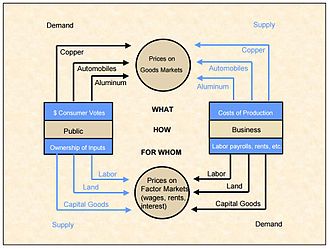 Price
PriceA price is the quantity of payment or compensation expected, required, or given by one party to another in return for goods or services. In some situations, especially when the product is a service rather than a physical good, the price for the service may be called something else such as "rent" or "tuition". Prices are influenced by production costs, supply
-
 Glossary of professional wrestling terms
Professional wrestling has accrued a considerable amount of jargon throughout its existence. Much of it stems from the industry's origins in the days of carnivals and circuses. In the past, professional wrestlers used such terms in the presence of fans so as not to reveal the worked nature of the business. Into the 21st century, widespread discussion on the
How this market resolves
Resolution is handled by the UMA optimistic oracle on Polygon. A proposer submits the outcome, a two-hour dispute window opens, and if no one stakes a counter-claim the payout is final. Contested outcomes escalate to UMA token-holder voting. Payouts clear in USDC to the winning side.
How to trade this market step by step
The mechanics for trading "Producer Price Index (PPI) YoY - May 2026" are the same as any other PolyGram event contract. Each YES share resolves to $1 if the event happens, or $0 if it doesn't. The current price between 0¢ and 100¢ is the market's probability estimate, set live by the order book.
- Sign in on polygram.ink with your email — no full KYC under $1,500 lifetime trading volume.
- Deposit USDC on Polygon (lowest fees, ~$0.01 per transaction) or Ethereum. Funds credit after 12 confirmations.
- Pick a side. Buy YES if you believe the event will happen; buy NO if you think it won't. The current YES price reflects the market's collective probability.
- Size your position. If you stake 100 USDC at 50% YES, you'll receive shares that pay $200 if YES resolves true — a 100% gross return. If NO resolves, your shares are worth $0.
- Set risk controls (optional). Stop-loss, take-profit, and limit-order types all supported. Use the trade ticket's slippage box to cap your maximum entry price.
- Wait for resolution. When the event resolves on-chain via the UMA optimistic oracle, the winning side settles to 100¢ automatically and USDC hits your balance within seconds. Withdrawable to any wallet you control.
How active is this market?
$2K in lifetime turnover and $36K of resting liquidity puts this market in the below the median by volume for rewards 200 4pt5 20 contracts on PolyGram. Order-book depth is strong — order books support five-figure trades with single-cent slippage.
Last 24 hours alone saw $489 in turnover, well above the lifetime daily-average for this market — a clear sign of news catalysing trader activity right now.
The market has been open for under a month — fresh enough that information asymmetry remains a real factor.
Higher-volume markets tend to have tighter spreads and faster price discovery — meaning the displayed YES/NO percentages are more likely to reflect the true crowd-implied probability rather than a single trader's directional view.
Key terms
- YES / NO share
- A binary outcome token that pays $1.00 if the underlying claim resolves true (YES) or false (NO), and $0 otherwise. The market price between 0¢ and 100¢ is the implied probability.
- CLOB
- Central limit order book. The matching engine that pairs YES buyers with NO buyers (effectively the same trade). Polymarket's CLOB on Polygon executes trades on-chain via the conditional-tokens framework.
- Liquidity
- USDC capital sitting in resting limit orders inside the order book. Deeper liquidity means smaller slippage on large trades and a tighter bid-ask spread.
- UMA optimistic oracle
- The on-chain dispute system that settles each Polymarket market. A proposer submits the outcome, a two-hour challenge window opens, and unchallenged proposals finalise the resolution.
- Slippage
- The difference between the displayed mid-price and your fill price. Affects market orders most; limit orders avoid slippage but may take time to fill.
- Conditional token
- ERC-1155 outcome share issued by Gnosis Conditional Tokens on Polygon. The token type that resolves to $1.00 or $0.00 at settlement.
Frequently asked questions
How does this market resolve?
Resolution is handled by the UMA optimistic oracle on Polygon. A proposer submits the outcome, a 2-hour dispute window opens, and if uncontested the payout is final. Contested outcomes escalate to UMA token holders.
When does this market close?
This prediction market is scheduled to close on 11 June 2026. After the resolving event occurs, settlement typically clears within 24 hours once the UMA optimistic oracle confirms the outcome. All payouts are in USDC on the Polygon network.
How can I trade on "Producer Price Index (PPI) YoY - May 2026"?
To trade on this prediction market, create a free PolyGram account at polygram.ink, deposit USDC via Polygon, and place a YES or NO order on the outcome you believe in. You can learn more on our how-it-works page. Your maximum loss is limited to your stake — there is no leverage or margin.
What happens when the market resolves?
When the outcome is determined, winning YES shares pay out $1.00 each in USDC, while losing shares pay $0. Settlement is handled by the UMA optimistic oracle on Polygon — a proposer submits the result, a two-hour dispute window opens, and if uncontested, payouts are distributed automatically. You can withdraw your winnings to any Polygon wallet.
Risk and regulatory note
Prediction-market positions can lose 100% of staked capital. Outcomes are uncertain by definition — historical accuracy of crowd-implied probabilities is high in aggregate but not for any single market. PolyGram does not provide investment advice. Trade only with capital you can afford to lose.
Regulatory status varies by jurisdiction. Germany, the United States, and most EU countries treat Polymarket-style event contracts under one of three frameworks: financial derivative, gambling product, or unregulated novel asset. Consult local counsel before trading.
Related prediction markets
Explore more prediction market odds and trading opportunities on PolyGram: