Trade: What will be said during the IEM Atlanta 2026 Grand Finals?
Resolution criteria on PolyGram: The IEM Atlanta 2026 Grand Final is scheduled for May 17, 2026. This market will resolve to "Yes" if the listed term is mentioned by anyone during the official English broadcast of the IEM Atlanta 2026 Grand Final. Otherwise, this market will resolve to "No". Mentions of the term originating from in-game audio—even in-game characters, the in-game announcer, or player voice comms—will also count toward this market's resolution. If prerecorded clips are aired where people are speaking, those clips will count toward this market's resolution. AI-generated audio or video WILL count toward this market's resolution.
PolyGram is an on-chain prediction market where you trade YES or NO outcome shares with real USDC on Polygon. For this market, buy YES if you believe the event will happen, or NO if you think it won't. Your maximum loss is your stake — winning shares pay $1.00 each at resolution. Unlike sportsbooks, there is no house edge: prices are set by supply and demand from other traders and reflect the crowd's real-time probability.
- Liquidity
- $468
- Total Volume
- —
- 24h Volume
- —
- Open Interest
- —
Market outcomes
| Bomb 100+ times | 50% YES | 50% NO |
| Smoke 100+ times | 50% YES | 50% NO |
| Molly / Molotov 10+ times | 50% YES | 50% NO |
| Banana 10+ times | 50% YES | 50% NO |
| Heaven 10+ times | 50% YES | 50% NO |
| Palace 10+ times | 50% YES | 50% NO |
| Deagle 10+ times | 50% YES | 50% NO |
| Flank 10+ times | 50% YES | 50% NO |
Market context
IEM Atlanta 2026 is Intel Extreme Masters' flagship Counter-Strike tournament, scheduled to conclude on 17 May 2026. The Grand Final will feature the two strongest teams competing across the official English broadcast, with resolution dependent on whether a specific term appears in commentary, player communications, in-game audio, or any prerecorded segments aired during the match. The current order book on Polymarket reflects a 50% implied probability, suggesting traders view the likelihood of the term being mentioned as evenly balanced.
Historical precedent from previous IEM Atlanta finals and major Counter-Strike tournaments indicates that certain terminology—particularly game-specific callouts, team names, player nicknames, and common broadcast phrases—surfaces with high frequency during Grand Finals broadcasts. The extended duration of best-of-five matches, multiple map rotations, and consistent commentary patterns create numerous opportunities for specific language to appear. Comparable markets on major esports events have shown that terms with moderate specificity typically settle around 40–60% probability, reflecting genuine uncertainty about broadcast content whilst acknowledging the sheer volume of spoken words across a three to four-hour broadcast window.
Traders should monitor the tournament bracket as it develops through spring 2026, as the identity of finalists may influence which terminology becomes relevant. ESL's broadcast format and commentary team composition, typically announced weeks before the event, will shape linguistic patterns. Any pre-tournament interviews, team announcements, or sponsorship integrations aired during the broadcast could introduce additional language vectors. The settlement window closes at the conclusion of the Grand Final broadcast, leaving no opportunity for post-match clarification.
Wikipedia Context
-
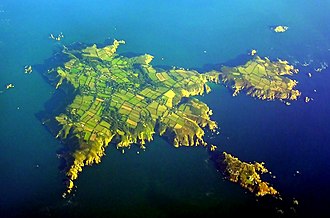 Sark during the German occupation of the Channel Islands
The island of Sark forms part of the Bailiwick of Guernsey which with the Bailiwick of Jersey form the Channel Islands. Offered the opportunity to evacuate the island in June 1940, most locally born islanders decided to stay. The 470 civilians who remained on the island would be subject to German rule for the next five years, until Sark was liberated on 10 M
-
Spain during World War II
During World War II, the Spanish State under Francisco Franco espoused neutrality as its official wartime policy. This neutrality wavered at times, and "strict neutrality" gave way to "non-belligerence" after the Fall of France in June 1940. In fact, Franco seriously contemplated joining the Axis powers in support of his allies Italy and Germany, who brought
-
 Spain during World War I
Spain remained neutral throughout World War I between 28 July 1914 and 11 November 1918, and despite domestic economic difficulties, it was considered "one of the most important neutral countries in Europe by 1915". Spain had maintained a non-aligned stance during the political difficulties of pre-war Europe, and continued its neutrality after the war until
-
 Siam in World War I
The Kingdom of Siam, now known as Thailand, was a participant in World War I on the Allied side. Siam contributed to the fight against the Central Powers in one of the critical campaigns of the war. It sent an Expeditionary Force to France to serve on the Western Front.
How this market resolves
Resolution is handled by the UMA optimistic oracle on Polygon. A proposer submits the outcome, a two-hour dispute window opens, and if no one stakes a counter-claim the payout is final. Contested outcomes escalate to UMA token-holder voting. Payouts clear in USDC to the winning side.
How to trade this market step by step
The mechanics for trading "What will be said during the IEM Atlanta 2026 Grand Finals?" are the same as any other PolyGram event contract. Each YES share resolves to $1 if the event happens, or $0 if it doesn't. The current price between 0¢ and 100¢ is the market's probability estimate, set live by the order book.
- Sign in on polygram.ink with your email — no full KYC under $1,500 lifetime trading volume.
- Deposit USDC on Polygon (lowest fees, ~$0.01 per transaction) or Ethereum. Funds credit after 12 confirmations.
- Pick a side. Buy YES if you believe the event will happen; buy NO if you think it won't. The current YES price reflects the market's collective probability.
- Size your position. If you stake 100 USDC at 50% YES, you'll receive shares that pay $200 if YES resolves true — a 100% gross return. If NO resolves, your shares are worth $0.
- Set risk controls (optional). Stop-loss, take-profit, and limit-order types all supported. Use the trade ticket's slippage box to cap your maximum entry price.
- Wait for resolution. When the event resolves on-chain via the UMA optimistic oracle, the winning side settles to 100¢ automatically and USDC hits your balance within seconds. Withdrawable to any wallet you control.
How active is this market?
$0 in lifetime turnover and $468 of resting liquidity puts this market in the below the median by volume for games contracts on PolyGram. Order-book depth is thin — large orders may need to be split across the book or executed as limit orders.
The market has been open for under a month — fresh enough that information asymmetry remains a real factor.
Higher-volume markets tend to have tighter spreads and faster price discovery — meaning the displayed YES/NO percentages are more likely to reflect the true crowd-implied probability rather than a single trader's directional view.
Key terms
- YES / NO share
- A binary outcome token that pays $1.00 if the underlying claim resolves true (YES) or false (NO), and $0 otherwise. The market price between 0¢ and 100¢ is the implied probability.
- CLOB
- Central limit order book. The matching engine that pairs YES buyers with NO buyers (effectively the same trade). Polymarket's CLOB on Polygon executes trades on-chain via the conditional-tokens framework.
- Liquidity
- USDC capital sitting in resting limit orders inside the order book. Deeper liquidity means smaller slippage on large trades and a tighter bid-ask spread.
- UMA optimistic oracle
- The on-chain dispute system that settles each Polymarket market. A proposer submits the outcome, a two-hour challenge window opens, and unchallenged proposals finalise the resolution.
- Slippage
- The difference between the displayed mid-price and your fill price. Affects market orders most; limit orders avoid slippage but may take time to fill.
- Conditional token
- ERC-1155 outcome share issued by Gnosis Conditional Tokens on Polygon. The token type that resolves to $1.00 or $0.00 at settlement.
Frequently asked questions
How does this market resolve?
Resolution is handled by the UMA optimistic oracle on Polygon. A proposer submits the outcome, a 2-hour dispute window opens, and if uncontested the payout is final. Contested outcomes escalate to UMA token holders.
When does this market close?
This prediction market is scheduled to close on 17 May 2026. After the resolving event occurs, settlement typically clears within 24 hours once the UMA optimistic oracle confirms the outcome. All payouts are in USDC on the Polygon network.
How can I trade on "What will be said during the IEM Atlanta 2026 Grand Finals?"?
To trade on this prediction market, create a free PolyGram account at polygram.ink, deposit USDC via Polygon, and place a YES or NO order on the outcome you believe in. You can learn more on our how-it-works page. Your maximum loss is limited to your stake — there is no leverage or margin.
What happens when the market resolves?
When the outcome is determined, winning YES shares pay out $1.00 each in USDC, while losing shares pay $0. Settlement is handled by the UMA optimistic oracle on Polygon — a proposer submits the result, a two-hour dispute window opens, and if uncontested, payouts are distributed automatically. You can withdraw your winnings to any Polygon wallet.
Risk and regulatory note
Prediction-market positions can lose 100% of staked capital. Outcomes are uncertain by definition — historical accuracy of crowd-implied probabilities is high in aggregate but not for any single market. PolyGram does not provide investment advice. Trade only with capital you can afford to lose.
Regulatory status varies by jurisdiction. Germany, the United States, and most EU countries treat Polymarket-style event contracts under one of three frameworks: financial derivative, gambling product, or unregulated novel asset. Consult local counsel before trading.
Related prediction markets
Explore more prediction market odds and trading opportunities on PolyGram: