Trade: State of Siege declared in Chile by June 30?
Resolution criteria on PolyGram: This market will resolve to "Yes" if a legally binding decree declaring a State of Siege (“Estado de Sitio”) in Chile enters into effect at any point between this market’s creation and June 30, 2026, 11:59 PM ET. Otherwise, this market will resolve to "No". To count toward resolution, the corresponding decree must explicitly constitute a “State of Siege” as defined by Article 40 of the Chilean Constitution, i.e., it must not be rejected by the National Congress within five days of the President submitting the declaration (after which Congressional approval is deemed granted if no decision is issued).
PolyGram is an on-chain prediction market where you trade YES or NO outcome shares with real USDC on Polygon. For this market, buy YES if you believe the event will happen, or NO if you think it won't. Your maximum loss is your stake — winning shares pay $1.00 each at resolution. Unlike sportsbooks, there is no house edge: prices are set by supply and demand from other traders and reflect the crowd's real-time probability.
- Liquidity
- $21K
- Total Volume
- $51K
- 24h Volume
- $121
- Open Interest
- $19K
Market outcomes
| State of Siege declared in Chile by June 30? | 2% YES | 98% NO |
Market context
A State of Siege declaration in Chile would represent an extraordinary constitutional measure, suspending ordinary legal guarantees and concentrating executive power during a period deemed to threaten national security or public order. Under Article 40 of the Chilean Constitution, the President may declare such a state, which becomes legally binding unless Congress explicitly rejects it within five days. The current 2% implied probability on Polymarket's order book reflects the low baseline risk of such a declaration occurring within the next eighteen months, though the mechanism itself remains available to any sitting president facing severe institutional breakdown or security crisis.
Chile's recent political history provides limited precedent for State of Siege declarations. The most recent invocation occurred in 1990, following the transition from military rule, and before that during the Pinochet era. Since democratic restoration, successive governments have managed civil unrest—including the 2019–2020 protest cycle and subsequent gang violence in prisons—without resorting to this constitutional tool. The preference for alternative emergency measures and targeted security legislation has established a norm against its use, anchoring the low probability assessment.
Traders should monitor developments in Chile's security environment, particularly gang-related violence in the penitentiary system and organised crime activity in southern regions, alongside any significant political instability or institutional crisis. Recent reporting from mid-2024 documented prison overcrowding and gang control as persistent challenges, but no credible political movement toward State of Siege declaration has emerged. Congressional composition and the incumbent administration's appetite for extraordinary measures would be critical catalysts should conditions deteriorate materially.
Wikipedia Context
-
 State of Siege: Temple Attack
State of Siege: Temple Attack is a 2021 Indian Hindi-language action thriller film directed by Ken Ghosh, starring Akshaye Khanna in the lead role. It was made as a direct-to-video film for ZEE5. It is loosely based on the 2002 Akshardham Temple attack and the subsequent operation to kill the perpetrators. It is a standalone sequel to State of Siege: 26/11.
-
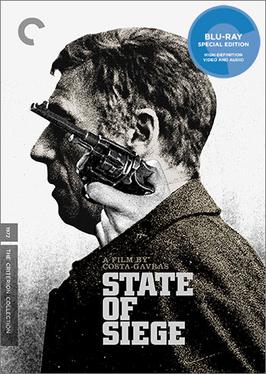 State of Siege
State of Siege is a 1972 French–Italian–West German political thriller film directed by Costa-Gavras starring Yves Montand and Renato Salvatori. The story is based on an actual incident in 1970, when U.S. official Dan Mitrione was kidnapped and later killed by an urban guerrilla group in Uruguay.
-
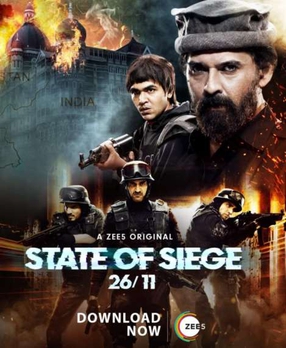 State of Siege: 26/11
State of Siege: 26/11 is an Indian Hindi-language action thriller web series on ZEE5, directed by Matthew Leutwyler and Prashant Singh and produced by Abhimanyu Singh and Roopali Singh. The series is based on journalist Sandip Unnithan's book Black Tornado: The Three Sieges of Mumbai 26/11 about the military's Operation Black Tornado during the 26/11 terrori
-
 State of emergency
A state of emergency is a situation in which a government is empowered to put through policies that it would normally not be permitted to do, for the safety and protection of its citizens. A government can declare such a state before, during, or after a natural disaster, civil unrest, armed conflict, medical pandemic or epidemic or other biosecurity risk.
How this market resolves
Resolution is handled by the UMA optimistic oracle on Polygon. A proposer submits the outcome, a two-hour dispute window opens, and if no one stakes a counter-claim the payout is final. Contested outcomes escalate to UMA token-holder voting. Payouts clear in USDC to the winning side.
How to trade this market step by step
The mechanics for trading "State of Siege declared in Chile by June 30?" are the same as any other PolyGram event contract. Each YES share resolves to $1 if the event happens, or $0 if it doesn't. The current price between 0¢ and 100¢ is the market's probability estimate, set live by the order book.
- Sign in on polygram.ink with your email — no full KYC under $1,500 lifetime trading volume.
- Deposit USDC on Polygon (lowest fees, ~$0.01 per transaction) or Ethereum. Funds credit after 12 confirmations.
- Pick a side. Buy YES if you believe the event will happen; buy NO if you think it won't. The current YES price reflects the market's collective probability.
- Size your position. If you stake 100 USDC at 2% YES, you'll receive shares that pay $5000 if YES resolves true — a 4900% gross return. If NO resolves, your shares are worth $0.
- Set risk controls (optional). Stop-loss, take-profit, and limit-order types all supported. Use the trade ticket's slippage box to cap your maximum entry price.
- Wait for resolution. When the event resolves on-chain via the UMA optimistic oracle, the winning side settles to 100¢ automatically and USDC hits your balance within seconds. Withdrawable to any wallet you control.
How active is this market?
$51K in lifetime turnover and $21K of resting liquidity puts this market in the around the median by volume for world contracts on PolyGram. Order-book depth is modest — expect a couple of cents of slippage on $1k+ trades.
Last 24 hours alone saw $121 in turnover, consistent with the market's lifetime daily-average pace.
The market has been open for 5 months — the price has had time to stabilise as new information arrived.
Higher-volume markets tend to have tighter spreads and faster price discovery — meaning the displayed YES/NO percentages are more likely to reflect the true crowd-implied probability rather than a single trader's directional view.
Key terms
- YES / NO share
- A binary outcome token that pays $1.00 if the underlying claim resolves true (YES) or false (NO), and $0 otherwise. The market price between 0¢ and 100¢ is the implied probability.
- CLOB
- Central limit order book. The matching engine that pairs YES buyers with NO buyers (effectively the same trade). Polymarket's CLOB on Polygon executes trades on-chain via the conditional-tokens framework.
- Liquidity
- USDC capital sitting in resting limit orders inside the order book. Deeper liquidity means smaller slippage on large trades and a tighter bid-ask spread.
- UMA optimistic oracle
- The on-chain dispute system that settles each Polymarket market. A proposer submits the outcome, a two-hour challenge window opens, and unchallenged proposals finalise the resolution.
- Slippage
- The difference between the displayed mid-price and your fill price. Affects market orders most; limit orders avoid slippage but may take time to fill.
- Conditional token
- ERC-1155 outcome share issued by Gnosis Conditional Tokens on Polygon. The token type that resolves to $1.00 or $0.00 at settlement.
Frequently asked questions
What is the current probability for "State of Siege declared in Chile by June 30? "?
As of today, traders on Polymarket price this outcome at 2%. The number updates continuously as the order book clears. PolyGram mirrors the same live odds with locale-aware formatting and USDC settlement.
How does this market resolve?
Resolution is handled by the UMA optimistic oracle on Polygon. A proposer submits the outcome, a 2-hour dispute window opens, and if uncontested the payout is final. Contested outcomes escalate to UMA token holders.
When does this market close?
This prediction market is scheduled to close on 30 June 2026. After the resolving event occurs, settlement typically clears within 24 hours once the UMA optimistic oracle confirms the outcome. All payouts are in USDC on the Polygon network.
How can I trade on "State of Siege declared in Chile by June 30? "?
To trade on this prediction market, create a free PolyGram account at polygram.ink, deposit USDC via Polygon, and place a YES or NO order on the outcome you believe in. You can learn more on our how-it-works page. Your maximum loss is limited to your stake — there is no leverage or margin.
What happens when the market resolves?
When the outcome is determined, winning YES shares pay out $1.00 each in USDC, while losing shares pay $0. Settlement is handled by the UMA optimistic oracle on Polygon — a proposer submits the result, a two-hour dispute window opens, and if uncontested, payouts are distributed automatically. You can withdraw your winnings to any Polygon wallet.
Risk and regulatory note
Prediction-market positions can lose 100% of staked capital. Outcomes are uncertain by definition — historical accuracy of crowd-implied probabilities is high in aggregate but not for any single market. PolyGram does not provide investment advice. Trade only with capital you can afford to lose.
Regulatory status varies by jurisdiction. Germany, the United States, and most EU countries treat Polymarket-style event contracts under one of three frameworks: financial derivative, gambling product, or unregulated novel asset. Consult local counsel before trading.
Related prediction markets
Explore more prediction market odds and trading opportunities on PolyGram: