Trade: Nothing Ever Happens: 2026
Resolution criteria on PolyGram: This market will resolve to “No” if any of the following conditions are met between market creation and December 31, 2026, 11:59 ET: - Trump out as President - China invades Taiwan - Xi Jinping out - U.S. invades Iran - Iranian regime falls - Bitcoin hits ‘↑ 1M’ or ‘↓ 10k’ - Jeffrey Epstein alive - Republican Trifecta with Supermajority in the Senate - Russia invades a NATO country - Trump acquires Greenland - 9.0 or above earthquake - Major volcano eruption (VEI ≥6) - Major meteor strike (250kt+) Otherwise, this market will resolve to “Yes”. The full rules for this market can be found here: https://polymarket-upload.s3.us-east-2.amazonaws.com/NEH+2026.pdf
PolyGram is an on-chain prediction market where you trade YES or NO outcome shares with real USDC on Polygon. For this market, buy YES if you believe the event will happen, or NO if you think it won't. Your maximum loss is your stake — winning shares pay $1.00 each at resolution. Unlike sportsbooks, there is no house edge: prices are set by supply and demand from other traders and reflect the crowd's real-time probability.
- Liquidity
- $24K
- Total Volume
- $557K
- 24h Volume
- $2K
- Open Interest
- $103K
Market outcomes
| Nothing Ever Happens: 2026 | 66% YES | 34% NO |
Market context
This market tests whether 2026 will pass without major geopolitical upheaval, regime change, extreme natural disasters, or cryptocurrency volatility. The resolution criteria span assassination or removal of sitting leaders (Trump, Xi), military escalation (Taiwan invasion, NATO conflict, Iran strikes), territorial acquisition (Greenland), and low-probability catastrophic events (9.0+ earthquakes, VEI 6+ volcanism, 250kt+ meteor impacts). The 67% implied probability on Polymarket's order book reflects substantial uncertainty about whether any single condition materialises within a 24-month window.
Historical precedent suggests such broad-based "nothing happens" markets typically price in the genuine rarity of multiple simultaneous crises. The 2020–2024 period saw no NATO-Russia direct conflict despite Ukraine escalation, no Taiwan invasion despite Chinese military posturing, and no sitting US president removed mid-term since 1974. However, the inclusion of natural disaster thresholds—particularly the 9.0+ earthquake criterion—introduces genuine tail risk; the 2004 Indian Ocean earthquake measured 9.1–9.3, and major volcanic events occur roughly once per decade globally.
Key catalysts through 2026 include Trump's second-term policy decisions on Iran and Greenland, Chinese military exercises near Taiwan, and the 2026 midterm elections' impact on Senate composition. Traders should monitor geopolitical flashpoints (South China Sea, Middle East tensions) and geological forecasts, though prediction accuracy for natural disasters remains poor. The current probability reflects that whilst individual risks remain manageable, the cumulative probability of at least one triggering event across thirteen distinct categories carries material weight.
Wikipedia Context
-
 Nothing Ever Happens
"Nothing Ever Happens" is a song by the Scottish alternative rock band Del Amitri.
-
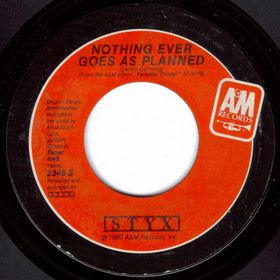 Nothing Ever Goes as Planned
"Nothing Ever Goes as Planned" is a song written by Dennis DeYoung and released by American rock band Styx on their tenth album Paradise Theatre, as well as being the 3rd single released from the album. A chart disappointment following the first two singles off the album, it peaked at No. 54 on the U.S. pop chart in late summer 1981. It also reached No. 33 o
-
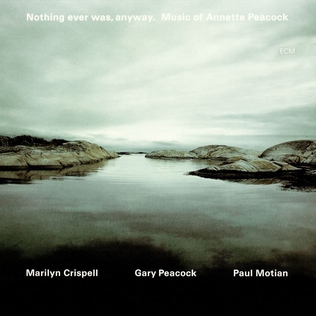 Nothing Ever Was, Anyway: Music of Annette Peacock
Nothing Ever Was, Anyway: Music of Annette Peacock is a double album by pianist Marilyn Crispell, bassist Gary Peacock, and drummer Paul Motian recorded in September 1996 and released on ECM the following year.
-
 Nothing Ever Hurt Like You
"Nothing Ever Hurt Like You" is a song written by James Morrison, teaming up with Paul Barry and Mark Taylor. The single, released in the U.S. only on 2008, is listed on his second major studio album Songs for You, Truths for Me, which has been available for U.K. purchase since 29 September via Polydor. The song enjoyed modest success in the U.S. thanks to A
How this market resolves
Resolution is handled by the UMA optimistic oracle on Polygon. A proposer submits the outcome, a two-hour dispute window opens, and if no one stakes a counter-claim the payout is final. Contested outcomes escalate to UMA token-holder voting. Payouts clear in USDC to the winning side.
How to trade this market step by step
The mechanics for trading "Nothing Ever Happens: 2026" are the same as any other PolyGram event contract. Each YES share resolves to $1 if the event happens, or $0 if it doesn't. The current price between 0¢ and 100¢ is the market's probability estimate, set live by the order book.
- Sign in on polygram.ink with your email — no full KYC under $1,500 lifetime trading volume.
- Deposit USDC on Polygon (lowest fees, ~$0.01 per transaction) or Ethereum. Funds credit after 12 confirmations.
- Pick a side. Buy YES if you believe the event will happen; buy NO if you think it won't. The current YES price reflects the market's collective probability.
- Size your position. If you stake 100 USDC at 66% YES, you'll receive shares that pay $152 if YES resolves true — a 52% gross return. If NO resolves, your shares are worth $0.
- Set risk controls (optional). Stop-loss, take-profit, and limit-order types all supported. Use the trade ticket's slippage box to cap your maximum entry price.
- Wait for resolution. When the event resolves on-chain via the UMA optimistic oracle, the winning side settles to 100¢ automatically and USDC hits your balance within seconds. Withdrawable to any wallet you control.
How active is this market?
$557K in lifetime turnover and $24K of resting liquidity puts this market in the top 2% by volume for geopolitics contracts on PolyGram. Order-book depth is modest — expect a couple of cents of slippage on $1k+ trades.
Last 24 hours alone saw $2K in turnover, consistent with the market's lifetime daily-average pace.
The market has been open for 4 months — the price has had time to stabilise as new information arrived.
Higher-volume markets tend to have tighter spreads and faster price discovery — meaning the displayed YES/NO percentages are more likely to reflect the true crowd-implied probability rather than a single trader's directional view.
Key terms
- YES / NO share
- A binary outcome token that pays $1.00 if the underlying claim resolves true (YES) or false (NO), and $0 otherwise. The market price between 0¢ and 100¢ is the implied probability.
- CLOB
- Central limit order book. The matching engine that pairs YES buyers with NO buyers (effectively the same trade). Polymarket's CLOB on Polygon executes trades on-chain via the conditional-tokens framework.
- Liquidity
- USDC capital sitting in resting limit orders inside the order book. Deeper liquidity means smaller slippage on large trades and a tighter bid-ask spread.
- UMA optimistic oracle
- The on-chain dispute system that settles each Polymarket market. A proposer submits the outcome, a two-hour challenge window opens, and unchallenged proposals finalise the resolution.
- Slippage
- The difference between the displayed mid-price and your fill price. Affects market orders most; limit orders avoid slippage but may take time to fill.
- Conditional token
- ERC-1155 outcome share issued by Gnosis Conditional Tokens on Polygon. The token type that resolves to $1.00 or $0.00 at settlement.
Frequently asked questions
What is the current probability for "Nothing Ever Happens: 2026"?
As of today, traders on Polymarket price this outcome at 66%. The number updates continuously as the order book clears. PolyGram mirrors the same live odds with locale-aware formatting and USDC settlement.
How does this market resolve?
Resolution is handled by the UMA optimistic oracle on Polygon. A proposer submits the outcome, a 2-hour dispute window opens, and if uncontested the payout is final. Contested outcomes escalate to UMA token holders.
When does this market close?
This prediction market is scheduled to close on 31 December 2026. After the resolving event occurs, settlement typically clears within 24 hours once the UMA optimistic oracle confirms the outcome. All payouts are in USDC on the Polygon network.
How can I trade on "Nothing Ever Happens: 2026"?
To trade on this prediction market, create a free PolyGram account at polygram.ink, deposit USDC via Polygon, and place a YES or NO order on the outcome you believe in. You can learn more on our how-it-works page. Your maximum loss is limited to your stake — there is no leverage or margin.
What happens when the market resolves?
When the outcome is determined, winning YES shares pay out $1.00 each in USDC, while losing shares pay $0. Settlement is handled by the UMA optimistic oracle on Polygon — a proposer submits the result, a two-hour dispute window opens, and if uncontested, payouts are distributed automatically. You can withdraw your winnings to any Polygon wallet.
Risk and regulatory note
Prediction-market positions can lose 100% of staked capital. Outcomes are uncertain by definition — historical accuracy of crowd-implied probabilities is high in aggregate but not for any single market. PolyGram does not provide investment advice. Trade only with capital you can afford to lose.
Regulatory status varies by jurisdiction. Germany, the United States, and most EU countries treat Polymarket-style event contracts under one of three frameworks: financial derivative, gambling product, or unregulated novel asset. Consult local counsel before trading.
Related prediction markets
Explore more prediction market odds and trading opportunities on PolyGram: