Trade: Where will the next US-Iran diplomatic meeting happen?
Resolution criteria on PolyGram: This market will resolve according to the country in which the next diplomatic meeting between government representatives of the United States and Iran takes place by June 30, 2026, 11:59 PM ET. A diplomatic meeting refers to a deliberate meeting between representatives of the listed countries who are acting in an official capacity and are authorized to engage in negotiation or diplomacy regarding US-Iranian relations on behalf of their governments. Meetings conducted indirectly, for example, through designated mediators, facilitators, or interlocutors acting with the knowledge and authorization of the relevant governments, will qualify.
PolyGram is an on-chain prediction market where you trade YES or NO outcome shares with real USDC on Polygon. For this market, buy YES if you believe the event will happen, or NO if you think it won't. Your maximum loss is your stake — winning shares pay $1.00 each at resolution. Unlike sportsbooks, there is no house edge: prices are set by supply and demand from other traders and reflect the crowd's real-time probability.
- Liquidity
- —
- Total Volume
- $2.6M
- 24h Volume
- —
- Open Interest
- $422K
Market outcomes
| Oman | 0% YES | 100% NO |
| UAE | 0% YES | 100% NO |
| Iran | 0% YES | 100% NO |
| Iraq | 0% YES | 100% NO |
| Other - Middle East/North Africa | 0% YES | 100% NO |
| No Meeting by June 30 | 0% YES | 100% NO |
| Saudi Arabia | 0% YES | 100% NO |
| Qatar | 0% YES | 100% NO |
Market context
US and Iranian government representatives have not held direct bilateral diplomatic talks since 2015, when the nuclear deal (JCPOA) was negotiated. The Trump administration withdrew from the agreement in 2018, and subsequent administrations have engaged only through indirect channels or multilateral forums. A direct diplomatic meeting would represent a significant shift in bilateral relations and would require both governments to signal willingness to negotiate on core disputes including nuclear policy, regional proxy activity, and sanctions architecture.
Historical precedent suggests such meetings emerge from either crisis escalation or structured diplomatic initiatives. The 2015 nuclear negotiations followed years of incremental confidence-building and involved third-party mediation. More recently, the July 2022 Vienna talks occurred through intermediaries rather than direct engagement. The current 0% implied probability on Polymarket's order book reflects the absence of announced meetings, active negotiating channels, or public statements from either government indicating imminent direct talks. The probability formation shows traders pricing in the baseline difficulty of US-Iran engagement given mutual strategic distrust and domestic political constraints in both capitals.
Traders should monitor announcements from the US State Department, Iranian Foreign Ministry, and intermediary nations (particularly Oman, which has historically facilitated back-channel communication). The Biden administration's stated preference for diplomacy on nuclear issues contrasts with Iran's demands for sanctions relief before talks commence. Any shift in regional tensions, particularly involving Israeli-Iranian escalation or changes in US administration policy, could alter the probability trajectory before the June 2026 settlement window closes.
Wikipedia Context
-
 Nexus (transport executive)
The Tyne and Wear Passenger Transport Executive, branded as Nexus, is an executive body of the North East Combined Authority and is best known for owning and operating the Tyne and Wear Metro. It replaced the Tyneside PTE on 1 April 1974.
-
 Google Nexus
Google Nexus is a discontinued line of consumer electronic mobile devices that ran a stock version of the Android operating system. Google managed the design, development, marketing, and support of these devices, but some development and all manufacturing were carried out by partnering with original equipment manufacturers (OEMs).
-
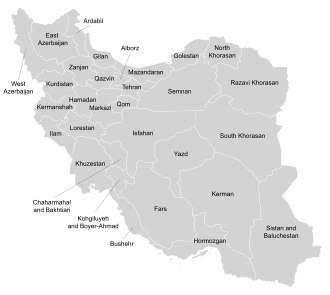 2028 Iranian presidential election
Presidential elections are scheduled to be held in the Islamic Republic of Iran in 2028, to elect the president for a term of four years. In the 2024 election, which was a snap election, incumbent Masoud Pezeshkian was elected as the President of Iran.
How this market resolves
Resolution is handled by the UMA optimistic oracle on Polygon. A proposer submits the outcome, a two-hour dispute window opens, and if no one stakes a counter-claim the payout is final. Contested outcomes escalate to UMA token-holder voting. Payouts clear in USDC to the winning side.
How to trade this market step by step
The mechanics for trading "Where will the next US-Iran diplomatic meeting happen?" are the same as any other PolyGram event contract. Each YES share resolves to $1 if the event happens, or $0 if it doesn't. The current price between 0¢ and 100¢ is the market's probability estimate, set live by the order book.
- Sign in on polygram.ink with your email — no full KYC under $1,500 lifetime trading volume.
- Deposit USDC on Polygon (lowest fees, ~$0.01 per transaction) or Ethereum. Funds credit after 12 confirmations.
- Pick a side. Buy YES if you believe the event will happen; buy NO if you think it won't. The current YES price reflects the market's collective probability.
- Size your position. If you stake 100 USDC at 50% YES, you'll receive shares that pay $200 if YES resolves true — a 100% gross return. If NO resolves, your shares are worth $0.
- Set risk controls (optional). Stop-loss, take-profit, and limit-order types all supported. Use the trade ticket's slippage box to cap your maximum entry price.
- Wait for resolution. When the event resolves on-chain via the UMA optimistic oracle, the winning side settles to 100¢ automatically and USDC hits your balance within seconds. Withdrawable to any wallet you control.
How active is this market?
$2.6M in lifetime turnover and $0 of resting liquidity puts this market in the top 2% by volume for diplomacy ceasefire contracts on PolyGram. Order-book depth is thin — large orders may need to be split across the book or executed as limit orders.
The market has been open for around a month — fresh enough that information asymmetry remains a real factor.
Higher-volume markets tend to have tighter spreads and faster price discovery — meaning the displayed YES/NO percentages are more likely to reflect the true crowd-implied probability rather than a single trader's directional view.
Key terms
- YES / NO share
- A binary outcome token that pays $1.00 if the underlying claim resolves true (YES) or false (NO), and $0 otherwise. The market price between 0¢ and 100¢ is the implied probability.
- CLOB
- Central limit order book. The matching engine that pairs YES buyers with NO buyers (effectively the same trade). Polymarket's CLOB on Polygon executes trades on-chain via the conditional-tokens framework.
- Liquidity
- USDC capital sitting in resting limit orders inside the order book. Deeper liquidity means smaller slippage on large trades and a tighter bid-ask spread.
- UMA optimistic oracle
- The on-chain dispute system that settles each Polymarket market. A proposer submits the outcome, a two-hour challenge window opens, and unchallenged proposals finalise the resolution.
- Slippage
- The difference between the displayed mid-price and your fill price. Affects market orders most; limit orders avoid slippage but may take time to fill.
- Conditional token
- ERC-1155 outcome share issued by Gnosis Conditional Tokens on Polygon. The token type that resolves to $1.00 or $0.00 at settlement.
Frequently asked questions
How does this market resolve?
Resolution is handled by the UMA optimistic oracle on Polygon. A proposer submits the outcome, a 2-hour dispute window opens, and if uncontested the payout is final. Contested outcomes escalate to UMA token holders.
When does this market close?
This prediction market is scheduled to close on 30 June 2026. After the resolving event occurs, settlement typically clears within 24 hours once the UMA optimistic oracle confirms the outcome. All payouts are in USDC on the Polygon network.
How can I trade on "Where will the next US-Iran diplomatic meeting happen?"?
To trade on this prediction market, create a free PolyGram account at polygram.ink, deposit USDC via Polygon, and place a YES or NO order on the outcome you believe in. You can learn more on our how-it-works page. Your maximum loss is limited to your stake — there is no leverage or margin.
What happens when the market resolves?
When the outcome is determined, winning YES shares pay out $1.00 each in USDC, while losing shares pay $0. Settlement is handled by the UMA optimistic oracle on Polygon — a proposer submits the result, a two-hour dispute window opens, and if uncontested, payouts are distributed automatically. You can withdraw your winnings to any Polygon wallet.
Risk and regulatory note
Prediction-market positions can lose 100% of staked capital. Outcomes are uncertain by definition — historical accuracy of crowd-implied probabilities is high in aggregate but not for any single market. PolyGram does not provide investment advice. Trade only with capital you can afford to lose.
Regulatory status varies by jurisdiction. Germany, the United States, and most EU countries treat Polymarket-style event contracts under one of three frameworks: financial derivative, gambling product, or unregulated novel asset. Consult local counsel before trading.
Related prediction markets
Explore more prediction market odds and trading opportunities on PolyGram: