Trade: Will any presidential candidate win outright in the first round of the Brazil election?
Resolution criteria on PolyGram: Presidential elections are scheduled to be held in Brazil on October 4, 2026. A second round will be held if no candidate secures more than 50% of the valid votes in the first round. This market will resolve to "Yes" if any candidate wins this election in the first round. Otherwise, this market will resolve to "No". If the result of the first round of this election isn't known by June 30, 2027, 11:59 PM ET, the market will resolve to "No". This market will resolve based on the result of the election as indicated by a consensus of credible reporting.
PolyGram is an on-chain prediction market where you trade YES or NO outcome shares with real USDC on Polygon. For this market, buy YES if you believe the event will happen, or NO if you think it won't. Your maximum loss is your stake — winning shares pay $1.00 each at resolution. Unlike sportsbooks, there is no house edge: prices are set by supply and demand from other traders and reflect the crowd's real-time probability.
- Liquidity
- $13K
- Total Volume
- $64K
- 24h Volume
- —
- Open Interest
- $20K
Market outcomes
| Will any presidential candidate win outright in the first round of the Brazil election? | 11% YES | 90% NO |
Market context
Brazil's presidential election is scheduled for 4 October 2026, with a runoff required unless a candidate secures more than 50% of valid votes in the first round. The current order book on Polymarket implies an 11% probability of an outright first-round victory, reflecting market expectations that a second round will almost certainly be necessary.
Brazilian electoral history strongly favours runoff contests. Since the return to democracy in 1985, every presidential election has proceeded to a second round. The 1989 election saw the top candidate secure 28.3% in the first round; in 2002, the eventual winner Luiz Inácio Lula da Silva garnered 48.7% before winning decisively in round two. The fragmented nature of Brazil's party system—with multiple viable candidates typically emerging—makes consensus-building across 50% of the electorate in a single round exceptionally difficult. Current polling suggests the 2026 race will follow this pattern, with the leading candidates typically polling in the 30–40% range.
Traders should monitor candidate registration deadlines, scheduled for August 2026, which will clarify the final field and potentially shift vote concentration. Polling trends in the months preceding the election will provide crucial signals about whether any candidate is consolidating support unexpectedly. Economic conditions and inflation data through mid-2026 could influence voter behaviour, particularly given Brazilians' sensitivity to purchasing power. Any significant political realignment or endorsement patterns in the six months before the election may alter the distribution of first-round support.
Wikipedia Context
-
 Michael Ruppert
Michael Craig Ruppert was an American writer and musician, Los Angeles Police Department officer, investigative journalist, political activist, and peak oil awareness advocate known for his 2004 book Crossing The Rubicon: The Decline of the American Empire at the End of the Age of Oil.
-
 Arg, Kabul
The Arg is the presidential palace of Afghanistan, located in Kabul. Since the 2021 abolition of the Afghan presidency by the Taliban, it has served as the meeting place of the Cabinet of Afghanistan. The palace sits on a 34-hectare (83-acre) site in District 2, between Deh Afghanan and the affluent neighbourhood of Wazir Akbar Khan; it has historically been
-
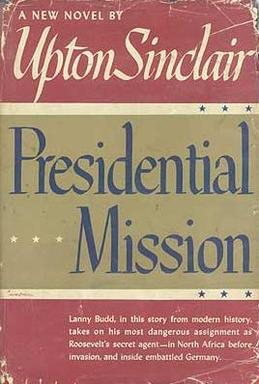 Presidential Mission
Presidential Mission is the eighth novel in Upton Sinclair's Lanny Budd series. First published by Viking Press in 1947, the story covers the period from 1942 to 1943.
How this market resolves
Resolution is handled by the UMA optimistic oracle on Polygon. A proposer submits the outcome, a two-hour dispute window opens, and if no one stakes a counter-claim the payout is final. Contested outcomes escalate to UMA token-holder voting. Payouts clear in USDC to the winning side.
How to trade this market step by step
The mechanics for trading "Will any presidential candidate win outright in the first round of the Brazil election?" are the same as any other PolyGram event contract. Each YES share resolves to $1 if the event happens, or $0 if it doesn't. The current price between 0¢ and 100¢ is the market's probability estimate, set live by the order book.
- Sign in on polygram.ink with your email — no full KYC under $1,500 lifetime trading volume.
- Deposit USDC on Polygon (lowest fees, ~$0.01 per transaction) or Ethereum. Funds credit after 12 confirmations.
- Pick a side. Buy YES if you believe the event will happen; buy NO if you think it won't. The current YES price reflects the market's collective probability.
- Size your position. If you stake 100 USDC at 11% YES, you'll receive shares that pay $909 if YES resolves true — a 809% gross return. If NO resolves, your shares are worth $0.
- Set risk controls (optional). Stop-loss, take-profit, and limit-order types all supported. Use the trade ticket's slippage box to cap your maximum entry price.
- Wait for resolution. When the event resolves on-chain via the UMA optimistic oracle, the winning side settles to 100¢ automatically and USDC hits your balance within seconds. Withdrawable to any wallet you control.
How active is this market?
$64K in lifetime turnover and $13K of resting liquidity puts this market in the above the median by volume for brazil contracts on PolyGram. Order-book depth is modest — expect a couple of cents of slippage on $1k+ trades.
The market has been open for 8 months — long enough that the order book is mature and price is well-anchored to fundamentals.
Higher-volume markets tend to have tighter spreads and faster price discovery — meaning the displayed YES/NO percentages are more likely to reflect the true crowd-implied probability rather than a single trader's directional view.
Key terms
- YES / NO share
- A binary outcome token that pays $1.00 if the underlying claim resolves true (YES) or false (NO), and $0 otherwise. The market price between 0¢ and 100¢ is the implied probability.
- CLOB
- Central limit order book. The matching engine that pairs YES buyers with NO buyers (effectively the same trade). Polymarket's CLOB on Polygon executes trades on-chain via the conditional-tokens framework.
- Liquidity
- USDC capital sitting in resting limit orders inside the order book. Deeper liquidity means smaller slippage on large trades and a tighter bid-ask spread.
- UMA optimistic oracle
- The on-chain dispute system that settles each Polymarket market. A proposer submits the outcome, a two-hour challenge window opens, and unchallenged proposals finalise the resolution.
- Slippage
- The difference between the displayed mid-price and your fill price. Affects market orders most; limit orders avoid slippage but may take time to fill.
- Conditional token
- ERC-1155 outcome share issued by Gnosis Conditional Tokens on Polygon. The token type that resolves to $1.00 or $0.00 at settlement.
Frequently asked questions
What is the current probability for "Will any presidential candidate win outright in the first round of the Brazil election?"?
As of today, traders on Polymarket price this outcome at 11%. The number updates continuously as the order book clears. PolyGram mirrors the same live odds with locale-aware formatting and USDC settlement.
How does this market resolve?
Resolution is handled by the UMA optimistic oracle on Polygon. A proposer submits the outcome, a 2-hour dispute window opens, and if uncontested the payout is final. Contested outcomes escalate to UMA token holders.
When does this market close?
This prediction market is scheduled to close on 4 October 2026. After the resolving event occurs, settlement typically clears within 24 hours once the UMA optimistic oracle confirms the outcome. All payouts are in USDC on the Polygon network.
How can I trade on "Will any presidential candidate win outright in the first round of the Brazil election?"?
To trade on this prediction market, create a free PolyGram account at polygram.ink, deposit USDC via Polygon, and place a YES or NO order on the outcome you believe in. You can learn more on our how-it-works page. Your maximum loss is limited to your stake — there is no leverage or margin.
What happens when the market resolves?
When the outcome is determined, winning YES shares pay out $1.00 each in USDC, while losing shares pay $0. Settlement is handled by the UMA optimistic oracle on Polygon — a proposer submits the result, a two-hour dispute window opens, and if uncontested, payouts are distributed automatically. You can withdraw your winnings to any Polygon wallet.
Risk and regulatory note
Prediction-market positions can lose 100% of staked capital. Outcomes are uncertain by definition — historical accuracy of crowd-implied probabilities is high in aggregate but not for any single market. PolyGram does not provide investment advice. Trade only with capital you can afford to lose.
Regulatory status varies by jurisdiction. Germany, the United States, and most EU countries treat Polymarket-style event contracts under one of three frameworks: financial derivative, gambling product, or unregulated novel asset. Consult local counsel before trading.
Related prediction markets
Explore more prediction market odds and trading opportunities on PolyGram: