Trade: AI model scores ≥ 90% on FrontierMath Benchmark before 2027?
Resolution criteria on PolyGram: This market will resolve to "Yes" if a state-of-the-art (SOTA) AI model achieves a score of 90% or greater on the FrontierMath Exam by December 31, 2026, 11:59 PM ET. Otherwise, the market will resolve to "No". The primary resolution source will be information from EpochAI however a consensus of credible reporting may also be used.
PolyGram is an on-chain prediction market where you trade YES or NO outcome shares with real USDC on Polygon. For this market, buy YES if you believe the event will happen, or NO if you think it won't. Your maximum loss is your stake — winning shares pay $1.00 each at resolution. Unlike sportsbooks, there is no house edge: prices are set by supply and demand from other traders and reflect the crowd's real-time probability.
- Liquidity
- $4K
- Total Volume
- $62K
- 24h Volume
- $5
- Open Interest
- $13K
Market outcomes
| AI model scores ≥ 90% on FrontierMath Benchmark before 2027? | 21% YES | 79% NO |
Market context
The FrontierMath Benchmark, released by Epoch AI in 2024, assesses large language models on advanced mathematics problems requiring genuine problem-solving rather than pattern matching. Achieving 90% accuracy on this benchmark represents a substantial leap in mathematical reasoning capability. The current market prices this outcome at 21% probability by end-2026, reflecting scepticism about whether frontier models can close the remaining performance gap within the timeframe.
Historical precedent suggests caution regarding aggressive timelines for benchmark breakthroughs. GPT-4 achieved approximately 88% on the MATH dataset and 90% on some standardised mathematics tests, yet FrontierMath presents materially harder problems designed to resist current scaling approaches. Previous predictions about rapid capability jumps—such as achieving human-level performance on specialised domains—have frequently extended beyond initial forecasts. The 21% implied probability on Polymarket's order book reflects this conservatism, balancing genuine uncertainty about model development trajectories against the demonstrated difficulty of the benchmark itself.
Traders should monitor announcements from major AI laboratories regarding new model releases, particularly those emphasising mathematical reasoning improvements. Scheduled benchmark evaluations and published results from Anthropic, OpenAI, and DeepSeek will serve as primary catalysts. The resolution depends on EpochAI's official reporting or credible consensus coverage, making their methodology and evaluation timing critical. Any model release claiming advanced reasoning capabilities in late 2025 or early 2026 would likely trigger significant repricing, as would negative results from major labs attempting the benchmark.
Wikipedia Context
-
AI alignment
In the field of artificial intelligence (AI), alignment aims to steer AI systems toward a person's or group's intended goals, preferences, or ethical principles. An AI system is considered aligned if it advances the intended objectives. A misaligned AI system pursues unintended objectives.
-
AI Mode
AI Mode is a search feature used within Google Search. In March 2025, Google introduced an experimental "AI Mode" within its search platform, enabling users to input complex, multi-part queries and receive comprehensive, AI-generated responses. This feature uses Google's Gemini model, which enhances the system's reasoning capabilities and supports multimodal
-
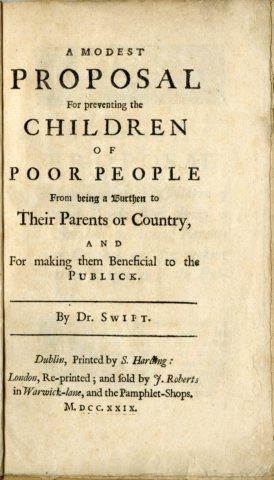 A Modest Proposal
A Modest Proposal for Preventing the Children of Poor People from Being a Burthen to Their Parents or Country, and for Making Them Beneficial to the Publick, commonly referred to simply as A Modest Proposal, is a 1729 satirical essay by the Anglo-Irish writer and clergyman Jonathan Swift. The essay, written from the perspective of a fictional narrator, sugge
-
 Art Modell
Arthur Bertram Modell was an American businessman, entrepreneur and National Football League (NFL) team owner. He owned the Cleveland Browns franchise for 35 years and established the Baltimore Ravens franchise, which he owned for eight years.
How this market resolves
Resolution is handled by the UMA optimistic oracle on Polygon. A proposer submits the outcome, a two-hour dispute window opens, and if no one stakes a counter-claim the payout is final. Contested outcomes escalate to UMA token-holder voting. Payouts clear in USDC to the winning side.
How to trade this market step by step
The mechanics for trading "AI model scores ≥ 90% on FrontierMath Benchmark before 2027?" are the same as any other PolyGram event contract. Each YES share resolves to $1 if the event happens, or $0 if it doesn't. The current price between 0¢ and 100¢ is the market's probability estimate, set live by the order book.
- Sign in on polygram.ink with your email — no full KYC under $1,500 lifetime trading volume.
- Deposit USDC on Polygon (lowest fees, ~$0.01 per transaction) or Ethereum. Funds credit after 12 confirmations.
- Pick a side. Buy YES if you believe the event will happen; buy NO if you think it won't. The current YES price reflects the market's collective probability.
- Size your position. If you stake 100 USDC at 21% YES, you'll receive shares that pay $476 if YES resolves true — a 376% gross return. If NO resolves, your shares are worth $0.
- Set risk controls (optional). Stop-loss, take-profit, and limit-order types all supported. Use the trade ticket's slippage box to cap your maximum entry price.
- Wait for resolution. When the event resolves on-chain via the UMA optimistic oracle, the winning side settles to 100¢ automatically and USDC hits your balance within seconds. Withdrawable to any wallet you control.
How active is this market?
$62K in lifetime turnover and $4K of resting liquidity puts this market in the above the median by volume for ai contracts on PolyGram. Order-book depth is thin — large orders may need to be split across the book or executed as limit orders.
Last 24 hours alone saw $5 in turnover, consistent with the market's lifetime daily-average pace.
The market has been open for 6 months — the price has had time to stabilise as new information arrived.
Higher-volume markets tend to have tighter spreads and faster price discovery — meaning the displayed YES/NO percentages are more likely to reflect the true crowd-implied probability rather than a single trader's directional view.
Key terms
- YES / NO share
- A binary outcome token that pays $1.00 if the underlying claim resolves true (YES) or false (NO), and $0 otherwise. The market price between 0¢ and 100¢ is the implied probability.
- CLOB
- Central limit order book. The matching engine that pairs YES buyers with NO buyers (effectively the same trade). Polymarket's CLOB on Polygon executes trades on-chain via the conditional-tokens framework.
- Liquidity
- USDC capital sitting in resting limit orders inside the order book. Deeper liquidity means smaller slippage on large trades and a tighter bid-ask spread.
- UMA optimistic oracle
- The on-chain dispute system that settles each Polymarket market. A proposer submits the outcome, a two-hour challenge window opens, and unchallenged proposals finalise the resolution.
- Slippage
- The difference between the displayed mid-price and your fill price. Affects market orders most; limit orders avoid slippage but may take time to fill.
- Conditional token
- ERC-1155 outcome share issued by Gnosis Conditional Tokens on Polygon. The token type that resolves to $1.00 or $0.00 at settlement.
Frequently asked questions
What is the current probability for "AI model scores ≥ 90% on FrontierMath Benchmark before 2027?"?
As of today, traders on Polymarket price this outcome at 21%. The number updates continuously as the order book clears. PolyGram mirrors the same live odds with locale-aware formatting and USDC settlement.
How does this market resolve?
Resolution is handled by the UMA optimistic oracle on Polygon. A proposer submits the outcome, a 2-hour dispute window opens, and if uncontested the payout is final. Contested outcomes escalate to UMA token holders.
When does this market close?
This prediction market is scheduled to close on 31 December 2026. After the resolving event occurs, settlement typically clears within 24 hours once the UMA optimistic oracle confirms the outcome. All payouts are in USDC on the Polygon network.
How can I trade on "AI model scores ≥ 90% on FrontierMath Benchmark before 2027?"?
To trade on this prediction market, create a free PolyGram account at polygram.ink, deposit USDC via Polygon, and place a YES or NO order on the outcome you believe in. You can learn more on our how-it-works page. Your maximum loss is limited to your stake — there is no leverage or margin.
What happens when the market resolves?
When the outcome is determined, winning YES shares pay out $1.00 each in USDC, while losing shares pay $0. Settlement is handled by the UMA optimistic oracle on Polygon — a proposer submits the result, a two-hour dispute window opens, and if uncontested, payouts are distributed automatically. You can withdraw your winnings to any Polygon wallet.
Risk and regulatory note
Prediction-market positions can lose 100% of staked capital. Outcomes are uncertain by definition — historical accuracy of crowd-implied probabilities is high in aggregate but not for any single market. PolyGram does not provide investment advice. Trade only with capital you can afford to lose.
Regulatory status varies by jurisdiction. Germany, the United States, and most EU countries treat Polymarket-style event contracts under one of three frameworks: financial derivative, gambling product, or unregulated novel asset. Consult local counsel before trading.
Related prediction markets
Explore more prediction market odds and trading opportunities on PolyGram: