Trade: Core CPI (ex food and energy) MoM - May 2026
Resolution criteria on PolyGram: This is a market about the one-month percent change in the seasonally adjusted Consumer Price Index for All Urban Consumers excluding food and energy (Core CPI-U) published by the Bureau of Labor Statistics (BLS). This market will resolve to the one-month percent change in the seasonally adjusted Consumer Price Index for All Urban Consumers excluding food and energy (Core CPI-U) in May 2026 according to the monthly BLS report. The resolution source for this market will be the BLS Consumer Price Index report released for May 2026 (https://www.bls.gov/bls/news-release/cpi.htm), currently scheduled to be released on June 10, 2026, at 8:30 AM ET.
PolyGram is an on-chain prediction market where you trade YES or NO outcome shares with real USDC on Polygon. For this market, buy YES if you believe the event will happen, or NO if you think it won't. Your maximum loss is your stake — winning shares pay $1.00 each at resolution. Unlike sportsbooks, there is no house edge: prices are set by supply and demand from other traders and reflect the crowd's real-time probability.
- Liquidity
- $6K
- Total Volume
- $959
- 24h Volume
- $20
- Open Interest
- $929
Market outcomes
| 0.1% | 43% YES | 57% NO |
| 0.2% | 56% YES | 44% NO |
| -0.2% | 27% YES | 73% NO |
| 0.0% | 43% YES | 57% NO |
| ≤-0.3% | 27% YES | 73% NO |
| -0.1% | 42% YES | 58% NO |
| 0.3% | 29% YES | 71% NO |
| 0.5% | 4% YES | 96% NO |
Market context
The Bureau of Labour Statistics will release its May 2026 Consumer Price Index report in early June, disclosing the month-on-month change in core inflation (excluding food and energy). This figure strips out volatile commodity prices to reveal underlying price pressures across shelter, goods, and services. The market currently prices a 44% probability that core CPI will rise 0.4% or higher on a seasonally adjusted basis, with the order book reflecting modest conviction either direction.
Core inflation has averaged roughly 0.3% monthly since 2023, though readings have ranged between 0.2% and 0.5% depending on shelter dynamics and goods disinflation. A 0.4% threshold sits near the upper quartile of recent experience. The Federal Reserve's policy stance and labour market conditions through April and May will heavily influence May's print; periods of tighter monetary policy have historically compressed core momentum, whilst wage growth and service-sector pricing pressures can sustain higher readings. The 44% implied probability suggests traders view a sub-0.4% outcome as slightly more probable, though the distribution remains relatively balanced.
Traders should monitor April's CPI release (scheduled for mid-May) as the immediate predecessor, which will establish momentum and market expectations. Shelter costs, which comprise roughly one-third of core CPI, remain the critical variable; rental inflation trends and owners' equivalent rent data from April will signal May's likely direction. Labour market reports through May and any Federal Reserve communications regarding rate expectations could shift positioning ahead of the June settlement window.
Wikipedia Context
-
 Core countries
In world-systems theory, core countries are the industrialized capitalist and/or imperialist countries. Core countries control and benefit the most resources from the global market. They are usually recognized as wealthy states with a wide variety of resources and are in a favorable location compared to other states. They have strong state institutions, a po
-
 CoreCivic
CoreCivic, Inc. is an American private prison operator and one of the largest for-profit prison, jail and detention contractors in the United States. It has been the target of divestment campaigns, FBI investigations and lawsuits alleging civil rights violations and forced labor at some of its owned or operated 70 state and federal correctional and detention
-
 Cork (city)
Cork is the second-largest city in the Republic of Ireland, the county town of County Cork, the largest city in the province of Munster and the third-largest on the island of Ireland. At the 2022 census, it had a population of 224,004.
-
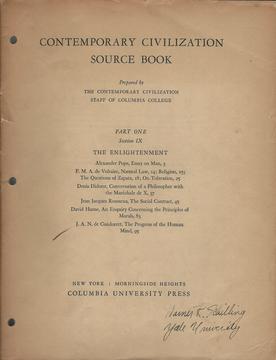 Core Curriculum (Columbia College)
The Core Curriculum was originally developed as the main curriculum used by Columbia College of Columbia University in 1919. Created in the wake of World War I, it became the framework for many similar educational models throughout the United States, and has played an influential role in the incorporation of the concept of Western civilization into the Ameri
How this market resolves
Resolution is handled by the UMA optimistic oracle on Polygon. A proposer submits the outcome, a two-hour dispute window opens, and if no one stakes a counter-claim the payout is final. Contested outcomes escalate to UMA token-holder voting. Payouts clear in USDC to the winning side.
How to trade this market step by step
The mechanics for trading "Core CPI (ex food and energy) MoM - May 2026" are the same as any other PolyGram event contract. Each YES share resolves to $1 if the event happens, or $0 if it doesn't. The current price between 0¢ and 100¢ is the market's probability estimate, set live by the order book.
- Sign in on polygram.ink with your email — no full KYC under $1,500 lifetime trading volume.
- Deposit USDC on Polygon (lowest fees, ~$0.01 per transaction) or Ethereum. Funds credit after 12 confirmations.
- Pick a side. Buy YES if you believe the event will happen; buy NO if you think it won't. The current YES price reflects the market's collective probability.
- Size your position. If you stake 100 USDC at 50% YES, you'll receive shares that pay $200 if YES resolves true — a 100% gross return. If NO resolves, your shares are worth $0.
- Set risk controls (optional). Stop-loss, take-profit, and limit-order types all supported. Use the trade ticket's slippage box to cap your maximum entry price.
- Wait for resolution. When the event resolves on-chain via the UMA optimistic oracle, the winning side settles to 100¢ automatically and USDC hits your balance within seconds. Withdrawable to any wallet you control.
How active is this market?
$959 in lifetime turnover and $6K of resting liquidity puts this market in the below the median by volume for rewards 20 4pt5 50 contracts on PolyGram. Order-book depth is thin — large orders may need to be split across the book or executed as limit orders.
Last 24 hours alone saw $20 in turnover, consistent with the market's lifetime daily-average pace.
The market has been open for under a month — fresh enough that information asymmetry remains a real factor.
Higher-volume markets tend to have tighter spreads and faster price discovery — meaning the displayed YES/NO percentages are more likely to reflect the true crowd-implied probability rather than a single trader's directional view.
Key terms
- YES / NO share
- A binary outcome token that pays $1.00 if the underlying claim resolves true (YES) or false (NO), and $0 otherwise. The market price between 0¢ and 100¢ is the implied probability.
- CLOB
- Central limit order book. The matching engine that pairs YES buyers with NO buyers (effectively the same trade). Polymarket's CLOB on Polygon executes trades on-chain via the conditional-tokens framework.
- Liquidity
- USDC capital sitting in resting limit orders inside the order book. Deeper liquidity means smaller slippage on large trades and a tighter bid-ask spread.
- UMA optimistic oracle
- The on-chain dispute system that settles each Polymarket market. A proposer submits the outcome, a two-hour challenge window opens, and unchallenged proposals finalise the resolution.
- Slippage
- The difference between the displayed mid-price and your fill price. Affects market orders most; limit orders avoid slippage but may take time to fill.
- Conditional token
- ERC-1155 outcome share issued by Gnosis Conditional Tokens on Polygon. The token type that resolves to $1.00 or $0.00 at settlement.
Frequently asked questions
How does this market resolve?
Resolution is handled by the UMA optimistic oracle on Polygon. A proposer submits the outcome, a 2-hour dispute window opens, and if uncontested the payout is final. Contested outcomes escalate to UMA token holders.
When does this market close?
This prediction market is scheduled to close on 10 June 2026. After the resolving event occurs, settlement typically clears within 24 hours once the UMA optimistic oracle confirms the outcome. All payouts are in USDC on the Polygon network.
How can I trade on "Core CPI (ex food and energy) MoM - May 2026"?
To trade on this prediction market, create a free PolyGram account at polygram.ink, deposit USDC via Polygon, and place a YES or NO order on the outcome you believe in. You can learn more on our how-it-works page. Your maximum loss is limited to your stake — there is no leverage or margin.
What happens when the market resolves?
When the outcome is determined, winning YES shares pay out $1.00 each in USDC, while losing shares pay $0. Settlement is handled by the UMA optimistic oracle on Polygon — a proposer submits the result, a two-hour dispute window opens, and if uncontested, payouts are distributed automatically. You can withdraw your winnings to any Polygon wallet.
Risk and regulatory note
Prediction-market positions can lose 100% of staked capital. Outcomes are uncertain by definition — historical accuracy of crowd-implied probabilities is high in aggregate but not for any single market. PolyGram does not provide investment advice. Trade only with capital you can afford to lose.
Regulatory status varies by jurisdiction. Germany, the United States, and most EU countries treat Polymarket-style event contracts under one of three frameworks: financial derivative, gambling product, or unregulated novel asset. Consult local counsel before trading.
Related prediction markets
Explore more prediction market odds and trading opportunities on PolyGram: