Trade: Luigi Mangione tried before 2027?
Resolution criteria on PolyGram: This market will resolve to "Yes" if trial proceedings for any case against Luigi Mangione are begun by December 31, 2026, 11:59PM ET. Otherwise, this market will resolve to "No". Once the jury is empaneled and sworn in, trial proceedings will be considered to have begun in a qualifying case. The resolution source for this market will be a consensus of credible reporting.
PolyGram is an on-chain prediction market where you trade YES or NO outcome shares with real USDC on Polygon. For this market, buy YES if you believe the event will happen, or NO if you think it won't. Your maximum loss is your stake — winning shares pay $1.00 each at resolution. Unlike sportsbooks, there is no house edge: prices are set by supply and demand from other traders and reflect the crowd's real-time probability.
- Liquidity
- $79
- Total Volume
- —
- 24h Volume
- —
- Open Interest
- $211
Market outcomes
| Luigi Mangione tried before 2027? | 82% YES | 19% NO |
Market context
Luigi Mangione was arrested in December 2024 following the fatal shooting of a healthcare executive in New York City. He faces multiple criminal charges including murder and is currently detained pending trial. The market assesses the probability that formal trial proceedings—specifically, jury empanelment and swearing-in—will occur before the end of 2026, allowing roughly two years for the case to progress through pre-trial motions, discovery, and procedural stages.
High-profile criminal cases in the United States typically move through the system at varying speeds depending on complexity, jurisdictional backlog, and defence strategy. Cases involving significant public attention and serious felony charges often see accelerated timelines, though defence teams frequently seek extensions for discovery review and expert analysis. The current 82% implied probability on Polymarket's order book reflects market confidence that standard procedural progression will occur within the settlement window, though cases have been known to stall at pre-trial stages for extended periods. Comparable high-profile New York homicide cases have reached trial within 18–24 months, providing a baseline for expectations.
Traders should monitor court filings and scheduling orders from the New York court system, which typically become public record. Key catalysts include rulings on pre-trial motions, discovery disputes, and any defence requests for continuances. Media reporting on court proceedings will signal progress toward trial commencement. The current probability reflects confidence in standard case progression, though unexpected legal challenges or systemic delays could shift outcomes materially.
Wikipedia Context
-
Luigi Mangione
Luigi Nicholas Mangione is an American man accused of killing Brian Thompson, the CEO of UnitedHealthcare.
-
 Luigi's Mansion: Dark Moon
Luigi's Mansion: Dark Moon is a 2013 action-adventure game developed by Next Level Games and published by Nintendo for the Nintendo 3DS. It is the second installment in the Luigi's Mansion series, following Luigi's Mansion (2001). The story follows Luigi as he explores Evershade Valley, capturing its corrupted ghostly inhabitants with help from Professor E.
-
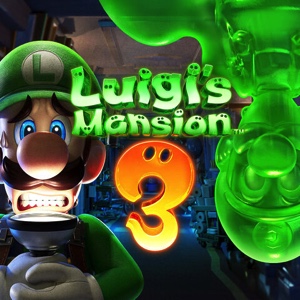 Luigi's Mansion 3
Luigi's Mansion 3 is a 2019 action-adventure game developed by Next Level Games and published by Nintendo for the Nintendo Switch. It is the third installment in the Luigi's Mansion series, following Luigi's Mansion: Dark Moon (2013). The game sees players taking on the role of Luigi who must explore a hotel run by ghosts and save Mario and the others after
-
 Luigi Mancinelli
Luigi Mancinelli was an Italian conductor, cellist and composer. His early career was in Italy, where he established a reputation in Perugia and then Bologna. After 1886 he worked mostly in other countries, as principal conductor at the Royal Opera House, Covent Garden in London and at the "Old Metropolitan" Opera House in New York, and in other appointments
How this market resolves
Resolution is handled by the UMA optimistic oracle on Polygon. A proposer submits the outcome, a two-hour dispute window opens, and if no one stakes a counter-claim the payout is final. Contested outcomes escalate to UMA token-holder voting. Payouts clear in USDC to the winning side.
How to trade this market step by step
The mechanics for trading "Luigi Mangione tried before 2027?" are the same as any other PolyGram event contract. Each YES share resolves to $1 if the event happens, or $0 if it doesn't. The current price between 0¢ and 100¢ is the market's probability estimate, set live by the order book.
- Sign in on polygram.ink with your email — no full KYC under $1,500 lifetime trading volume.
- Deposit USDC on Polygon (lowest fees, ~$0.01 per transaction) or Ethereum. Funds credit after 12 confirmations.
- Pick a side. Buy YES if you believe the event will happen; buy NO if you think it won't. The current YES price reflects the market's collective probability.
- Size your position. If you stake 100 USDC at 82% YES, you'll receive shares that pay $122 if YES resolves true — a 22% gross return. If NO resolves, your shares are worth $0.
- Set risk controls (optional). Stop-loss, take-profit, and limit-order types all supported. Use the trade ticket's slippage box to cap your maximum entry price.
- Wait for resolution. When the event resolves on-chain via the UMA optimistic oracle, the winning side settles to 100¢ automatically and USDC hits your balance within seconds. Withdrawable to any wallet you control.
How active is this market?
$0 in lifetime turnover and $79 of resting liquidity puts this market in the below the median by volume for pop culture contracts on PolyGram. Order-book depth is thin — large orders may need to be split across the book or executed as limit orders.
The market has been open for 5 months — the price has had time to stabilise as new information arrived.
Higher-volume markets tend to have tighter spreads and faster price discovery — meaning the displayed YES/NO percentages are more likely to reflect the true crowd-implied probability rather than a single trader's directional view.
Key terms
- YES / NO share
- A binary outcome token that pays $1.00 if the underlying claim resolves true (YES) or false (NO), and $0 otherwise. The market price between 0¢ and 100¢ is the implied probability.
- CLOB
- Central limit order book. The matching engine that pairs YES buyers with NO buyers (effectively the same trade). Polymarket's CLOB on Polygon executes trades on-chain via the conditional-tokens framework.
- Liquidity
- USDC capital sitting in resting limit orders inside the order book. Deeper liquidity means smaller slippage on large trades and a tighter bid-ask spread.
- UMA optimistic oracle
- The on-chain dispute system that settles each Polymarket market. A proposer submits the outcome, a two-hour challenge window opens, and unchallenged proposals finalise the resolution.
- Slippage
- The difference between the displayed mid-price and your fill price. Affects market orders most; limit orders avoid slippage but may take time to fill.
- Conditional token
- ERC-1155 outcome share issued by Gnosis Conditional Tokens on Polygon. The token type that resolves to $1.00 or $0.00 at settlement.
Frequently asked questions
What is the current probability for "Luigi Mangione tried before 2027?"?
As of today, traders on Polymarket price this outcome at 82%. The number updates continuously as the order book clears. PolyGram mirrors the same live odds with locale-aware formatting and USDC settlement.
How does this market resolve?
Resolution is handled by the UMA optimistic oracle on Polygon. A proposer submits the outcome, a 2-hour dispute window opens, and if uncontested the payout is final. Contested outcomes escalate to UMA token holders.
When does this market close?
This prediction market is scheduled to close on 31 December 2026. After the resolving event occurs, settlement typically clears within 24 hours once the UMA optimistic oracle confirms the outcome. All payouts are in USDC on the Polygon network.
How can I trade on "Luigi Mangione tried before 2027?"?
To trade on this prediction market, create a free PolyGram account at polygram.ink, deposit USDC via Polygon, and place a YES or NO order on the outcome you believe in. You can learn more on our how-it-works page. Your maximum loss is limited to your stake — there is no leverage or margin.
What happens when the market resolves?
When the outcome is determined, winning YES shares pay out $1.00 each in USDC, while losing shares pay $0. Settlement is handled by the UMA optimistic oracle on Polygon — a proposer submits the result, a two-hour dispute window opens, and if uncontested, payouts are distributed automatically. You can withdraw your winnings to any Polygon wallet.
Risk and regulatory note
Prediction-market positions can lose 100% of staked capital. Outcomes are uncertain by definition — historical accuracy of crowd-implied probabilities is high in aggregate but not for any single market. PolyGram does not provide investment advice. Trade only with capital you can afford to lose.
Regulatory status varies by jurisdiction. Germany, the United States, and most EU countries treat Polymarket-style event contracts under one of three frameworks: financial derivative, gambling product, or unregulated novel asset. Consult local counsel before trading.
Related prediction markets
Explore more prediction market odds and trading opportunities on PolyGram: