Trade: FL-03 House Election Winner
Resolution criteria on PolyGram: This market will resolve according to the party of the candidate who wins the FL-03 congressional district seat in the U.S. House of Representatives in the 2026 midterm elections. The midterm elections will take place on November 4, 2026. A candidate's party will be determined by their ballot-listed or otherwise identifiable affiliation with that party at the time all of the 2026 House elections are conclusively called by this market's resolution sources.
PolyGram is an on-chain prediction market where you trade YES or NO outcome shares with real USDC on Polygon. For this market, buy YES if you believe the event will happen, or NO if you think it won't. Your maximum loss is your stake — winning shares pay $1.00 each at resolution. Unlike sportsbooks, there is no house edge: prices are set by supply and demand from other traders and reflect the crowd's real-time probability.
- Liquidity
- $6K
- Total Volume
- $9K
- 24h Volume
- —
- Open Interest
- $1K
Market outcomes
| B | — | |
| C | — | |
| E | — | |
| A | — | |
| D | — | |
| Democratic Party | 13% YES | 88% NO |
| Other | — | |
| Republican Party | 83% YES | 17% NO |
Market context
Florida's 3rd congressional district will elect a representative to the U.S. House in the 2026 midterm elections on 4 November 2026. The seat is currently held by Republican Ander Crenshaw, though redistricting and demographic shifts since the 2022 cycle may alter the district's composition and competitiveness. The market will resolve based on the party affiliation of the winning candidate as listed on the ballot or otherwise identifiable at the time all House races are conclusively called.
FL-03 has historically leaned Republican, though the district's partisan lean has fluctuated with successive redistricting cycles. In 2022, the Republican candidate won with approximately 61% of the vote in the newly drawn district. Comparable suburban Florida seats have shown modest Democratic gains in recent cycles, particularly in areas with growing professional and college-educated populations, though Republican performance in the state's congressional races has remained relatively robust compared to national trends. The current absence of live pricing on Polymarket's order book reflects the early stage of the 2026 cycle, with meaningful probability formation typically accelerating once candidates formally declare and early polling emerges.
Key catalysts for traders include candidate announcements expected in late 2025 and early 2026, primary election schedules in Florida, and any redistricting changes that might be implemented before the election. National political conditions, campaign funding disclosures, and polling data released through 2026 will shape the implied probability as the election approaches. Local demographic and economic developments in the Jacksonville-area district may also influence competitive dynamics.
Wikipedia Context
-
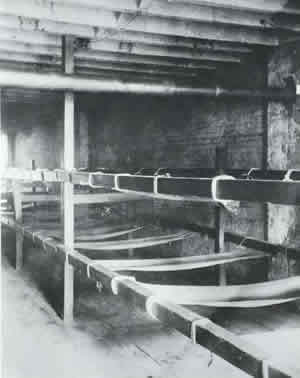 Flophouse
A flophouse or doss-house is a place that has very low-cost lodging, providing space to sleep and minimal amenities.
-
 Flip This House
Flip This House is an American television series that aired on the A&E and Bio television networks from 2005 to 2009. Each episode spotlighted the purchase and renovation of a single unit. All episodes included listing the price of the purchase, the cost of renovation, and the market value of the "flipped" property.
-
 Flag House & Star-Spangled Banner Museum
The Star-Spangled Banner Flag House, formerly the Flag House & Star-Spangled Banner Museum, is a museum located in the Jonestown/Old Town and adjacent to Little Italy neighborhoods of eastern downtown Baltimore, Maryland, United States.
-
The Flag House
"The Flag House" is the tenth episode of the sixth season of the American television drama series Homeland, and the 70th episode overall. It premiered on Showtime on March 26, 2017.
How this market resolves
Resolution is handled by the UMA optimistic oracle on Polygon. A proposer submits the outcome, a two-hour dispute window opens, and if no one stakes a counter-claim the payout is final. Contested outcomes escalate to UMA token-holder voting. Payouts clear in USDC to the winning side.
How to trade this market step by step
The mechanics for trading "FL-03 House Election Winner" are the same as any other PolyGram event contract. Each YES share resolves to $1 if the event happens, or $0 if it doesn't. The current price between 0¢ and 100¢ is the market's probability estimate, set live by the order book.
- Sign in on polygram.ink with your email — no full KYC under $1,500 lifetime trading volume.
- Deposit USDC on Polygon (lowest fees, ~$0.01 per transaction) or Ethereum. Funds credit after 12 confirmations.
- Pick a side. Buy YES if you believe the event will happen; buy NO if you think it won't. The current YES price reflects the market's collective probability.
- Size your position. If you stake 100 USDC at 50% YES, you'll receive shares that pay $200 if YES resolves true — a 100% gross return. If NO resolves, your shares are worth $0.
- Set risk controls (optional). Stop-loss, take-profit, and limit-order types all supported. Use the trade ticket's slippage box to cap your maximum entry price.
- Wait for resolution. When the event resolves on-chain via the UMA optimistic oracle, the winning side settles to 100¢ automatically and USDC hits your balance within seconds. Withdrawable to any wallet you control.
How active is this market?
$9K in lifetime turnover and $6K of resting liquidity puts this market in the below the median by volume for nov 4 elections contracts on PolyGram. Order-book depth is thin — large orders may need to be split across the book or executed as limit orders.
The market has been open for 3 months — the price has had time to stabilise as new information arrived.
Higher-volume markets tend to have tighter spreads and faster price discovery — meaning the displayed YES/NO percentages are more likely to reflect the true crowd-implied probability rather than a single trader's directional view.
Key terms
- YES / NO share
- A binary outcome token that pays $1.00 if the underlying claim resolves true (YES) or false (NO), and $0 otherwise. The market price between 0¢ and 100¢ is the implied probability.
- CLOB
- Central limit order book. The matching engine that pairs YES buyers with NO buyers (effectively the same trade). Polymarket's CLOB on Polygon executes trades on-chain via the conditional-tokens framework.
- Liquidity
- USDC capital sitting in resting limit orders inside the order book. Deeper liquidity means smaller slippage on large trades and a tighter bid-ask spread.
- UMA optimistic oracle
- The on-chain dispute system that settles each Polymarket market. A proposer submits the outcome, a two-hour challenge window opens, and unchallenged proposals finalise the resolution.
- Slippage
- The difference between the displayed mid-price and your fill price. Affects market orders most; limit orders avoid slippage but may take time to fill.
- Conditional token
- ERC-1155 outcome share issued by Gnosis Conditional Tokens on Polygon. The token type that resolves to $1.00 or $0.00 at settlement.
Frequently asked questions
How does this market resolve?
Resolution is handled by the UMA optimistic oracle on Polygon. A proposer submits the outcome, a 2-hour dispute window opens, and if uncontested the payout is final. Contested outcomes escalate to UMA token holders.
When does this market close?
This prediction market is scheduled to close on 3 November 2026. After the resolving event occurs, settlement typically clears within 24 hours once the UMA optimistic oracle confirms the outcome. All payouts are in USDC on the Polygon network.
How can I trade on "FL-03 House Election Winner"?
To trade on this prediction market, create a free PolyGram account at polygram.ink, deposit USDC via Polygon, and place a YES or NO order on the outcome you believe in. You can learn more on our how-it-works page. Your maximum loss is limited to your stake — there is no leverage or margin.
What happens when the market resolves?
When the outcome is determined, winning YES shares pay out $1.00 each in USDC, while losing shares pay $0. Settlement is handled by the UMA optimistic oracle on Polygon — a proposer submits the result, a two-hour dispute window opens, and if uncontested, payouts are distributed automatically. You can withdraw your winnings to any Polygon wallet.
Risk and regulatory note
Prediction-market positions can lose 100% of staked capital. Outcomes are uncertain by definition — historical accuracy of crowd-implied probabilities is high in aggregate but not for any single market. PolyGram does not provide investment advice. Trade only with capital you can afford to lose.
Regulatory status varies by jurisdiction. Germany, the United States, and most EU countries treat Polymarket-style event contracts under one of three frameworks: financial derivative, gambling product, or unregulated novel asset. Consult local counsel before trading.
Related prediction markets
Explore more prediction market odds and trading opportunities on PolyGram: