Trade: Will Workday (WDAY) beat quarterly earnings?
Resolution criteria on PolyGram: As of market creation, Workday is estimated to release earnings on May 21, 2026. The Street consensus estimate for Workday’s non-GAAP EPS for the relevant quarter is $2.52 as of market creation. This market will resolve to "Yes" if Workday reports non-GAAP EPS greater than $2.52 for the relevant quarter in its next quarterly earnings release. Otherwise, it will resolve to "No." The resolution source will be the non-GAAP EPS listed in the company’s official earnings documents. If Workday releases earnings without non-GAAP EPS, then the market will resolve according to the non-GAAP EPS figure reported by SeekingAlpha.
PolyGram is an on-chain prediction market where you trade YES or NO outcome shares with real USDC on Polygon. For this market, buy YES if you believe the event will happen, or NO if you think it won't. Your maximum loss is your stake — winning shares pay $1.00 each at resolution. Unlike sportsbooks, there is no house edge: prices are set by supply and demand from other traders and reflect the crowd's real-time probability.
- Liquidity
- $68
- Total Volume
- —
- 24h Volume
- —
- Open Interest
- —
Market outcomes
| Will Workday (WDAY) beat quarterly earnings? | 89% YES | 12% NO |
Market context
Workday will report its quarterly earnings on 21 May 2026, with the Street consensus for non-GAAP EPS set at $2.52. The market resolves to "Yes" if the enterprise software company reports EPS above this threshold, "No" otherwise. The current order book on Polymarket prices this outcome at 89% implied probability, reflecting substantial confidence in a beat relative to consensus estimates.
Workday has historically beaten earnings expectations in recent quarters, which anchors the elevated probability seen today. The company's track record of delivering upside on both revenue and profitability metrics—particularly as its subscription-based model matures and operating leverage improves—provides empirical support for the crowd's positioning. However, consensus estimates themselves have tended to drift upward ahead of earnings releases, meaning the bar of $2.52 may already incorporate some expectation of outperformance rather than representing a conservative floor.
Key catalysts to monitor include any guidance revisions or product announcements in the weeks before earnings, as well as broader enterprise software spending trends and macro sentiment shifts affecting software-as-a-service valuations. Recent earnings from comparable vendors like ServiceNow and Salesforce will provide context for investor appetite and margin expectations in the sector. Currency headwinds and customer churn metrics in Workday's largest verticals—particularly financial services and healthcare—could influence actual results relative to the consensus figure.
Wikipedia Context
-
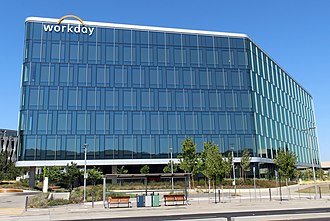 Workday, Inc.
Workday, Inc., is an American on‑demand (cloud-based) financial management, human capital management, and student information system software vendor. Workday was founded by David Duffield, founder and former CEO of ERP company PeopleSoft, along with former PeopleSoft chief strategist Aneel Bhusri, following Oracle's acquisition of PeopleSoft in 2005.
Resolution source
This market settles from the official outcome published at https://seekingalpha.com/. A proposer submits the final result to the UMA optimistic oracle on Polygon; the two-hour dispute window closes and payouts clear in USDC.
How to trade this market step by step
The mechanics for trading "Will Workday (WDAY) beat quarterly earnings?" are the same as any other PolyGram event contract. Each YES share resolves to $1 if the event happens, or $0 if it doesn't. The current price between 0¢ and 100¢ is the market's probability estimate, set live by the order book.
- Sign in on polygram.ink with your email — no full KYC under $1,500 lifetime trading volume.
- Deposit USDC on Polygon (lowest fees, ~$0.01 per transaction) or Ethereum. Funds credit after 12 confirmations.
- Pick a side. Buy YES if you believe the event will happen; buy NO if you think it won't. The current YES price reflects the market's collective probability.
- Size your position. If you stake 100 USDC at 89% YES, you'll receive shares that pay $112 if YES resolves true — a 12% gross return. If NO resolves, your shares are worth $0.
- Set risk controls (optional). Stop-loss, take-profit, and limit-order types all supported. Use the trade ticket's slippage box to cap your maximum entry price.
- Wait for resolution. When the event resolves on-chain via the UMA optimistic oracle, the winning side settles to 100¢ automatically and USDC hits your balance within seconds. Withdrawable to any wallet you control.
How active is this market?
$0 in lifetime turnover and $68 of resting liquidity puts this market in the below the median by volume for hide from new contracts on PolyGram. Order-book depth is thin — large orders may need to be split across the book or executed as limit orders.
The market has been open for under a month — fresh enough that information asymmetry remains a real factor.
Higher-volume markets tend to have tighter spreads and faster price discovery — meaning the displayed YES/NO percentages are more likely to reflect the true crowd-implied probability rather than a single trader's directional view.
Key terms
- YES / NO share
- A binary outcome token that pays $1.00 if the underlying claim resolves true (YES) or false (NO), and $0 otherwise. The market price between 0¢ and 100¢ is the implied probability.
- CLOB
- Central limit order book. The matching engine that pairs YES buyers with NO buyers (effectively the same trade). Polymarket's CLOB on Polygon executes trades on-chain via the conditional-tokens framework.
- Liquidity
- USDC capital sitting in resting limit orders inside the order book. Deeper liquidity means smaller slippage on large trades and a tighter bid-ask spread.
- UMA optimistic oracle
- The on-chain dispute system that settles each Polymarket market. A proposer submits the outcome, a two-hour challenge window opens, and unchallenged proposals finalise the resolution.
- Slippage
- The difference between the displayed mid-price and your fill price. Affects market orders most; limit orders avoid slippage but may take time to fill.
- Conditional token
- ERC-1155 outcome share issued by Gnosis Conditional Tokens on Polygon. The token type that resolves to $1.00 or $0.00 at settlement.
Frequently asked questions
What is the current probability for "Will Workday (WDAY) beat quarterly earnings?"?
As of today, traders on Polymarket price this outcome at 89%. The number updates continuously as the order book clears. PolyGram mirrors the same live odds with locale-aware formatting and USDC settlement.
How does this market resolve?
Resolution is sourced from https://seekingalpha.com/. Settlement is executed by the UMA optimistic oracle on Polygon, with a 2-hour dispute window before payouts clear.
When does this market close?
This prediction market is scheduled to close on 21 May 2026. After the resolving event occurs, settlement typically clears within 24 hours once the UMA optimistic oracle confirms the outcome. All payouts are in USDC on the Polygon network.
How can I trade on "Will Workday (WDAY) beat quarterly earnings?"?
To trade on this prediction market, create a free PolyGram account at polygram.ink, deposit USDC via Polygon, and place a YES or NO order on the outcome you believe in. You can learn more on our how-it-works page. Your maximum loss is limited to your stake — there is no leverage or margin.
What happens when the market resolves?
When the outcome is determined, winning YES shares pay out $1.00 each in USDC, while losing shares pay $0. Settlement is handled by the UMA optimistic oracle on Polygon — a proposer submits the result, a two-hour dispute window opens, and if uncontested, payouts are distributed automatically. You can withdraw your winnings to any Polygon wallet.
Risk and regulatory note
Prediction-market positions can lose 100% of staked capital. Outcomes are uncertain by definition — historical accuracy of crowd-implied probabilities is high in aggregate but not for any single market. PolyGram does not provide investment advice. Trade only with capital you can afford to lose.
Regulatory status varies by jurisdiction. Germany, the United States, and most EU countries treat Polymarket-style event contracts under one of three frameworks: financial derivative, gambling product, or unregulated novel asset. Consult local counsel before trading.
Related prediction markets
Explore more prediction market odds and trading opportunities on PolyGram: