Trade: Sol Raffle public sale total commitments?
Resolution criteria on PolyGram: This market will resolve to “Yes” if total commitments for the Sol Raffle raise on SagaPad exceeds the number specified in the title before the raise closes. Otherwise, it will resolve to “No.” The resolution source is the official raise page available at https://sagapad.com/project/sol-raffle If the final commitment amount cannot be verified by December 31, 2026, 11:59 PM ET, or if relevant information becomes permanently unavailable within the market timeframe, this market will resolve to “No.”
PolyGram is an on-chain prediction market where you trade YES or NO outcome shares with real USDC on Polygon. For this market, buy YES if you believe the event will happen, or NO if you think it won't. Your maximum loss is your stake — winning shares pay $1.00 each at resolution. Unlike sportsbooks, there is no house edge: prices are set by supply and demand from other traders and reflect the crowd's real-time probability.
- Liquidity
- —
- Total Volume
- $117K
- 24h Volume
- —
- Open Interest
- $0
Market outcomes
| >$500k | 0% YES | 100% NO |
| >$1M | 0% YES | 100% NO |
| >$2M | 0% YES | 100% NO |
| >$3M | 0% YES | 100% NO |
| >$4M | 0% YES | 100% NO |
| >$5M | 0% YES | 100% NO |
Market context
Sol Raffle is conducting a public fundraising round via SagaPad, a launchpad platform within the Solana ecosystem. The market will resolve affirmatively if total commitments exceed a specified threshold before the raise concludes. Current pricing on Polymarket's order book reflects 0% implied probability, suggesting traders assess either an extremely low likelihood of the raise meeting its target or substantial uncertainty about verification mechanics and data availability through the December 2026 deadline.
Comparable Solana launchpad raises offer limited precedent for calibrating expectations. SagaPad itself has hosted multiple projects with varying uptake; some raises have filled quickly whilst others struggled to reach targets. The 0% probability pricing likely reflects either minimal trader conviction about Sol Raffle's appeal to the SagaPad audience or concerns about the market's resolution dependency on external data sources remaining accessible and verifiable. Without public disclosure of the specific commitment threshold referenced in the title, traders lack concrete benchmarks for assessing feasibility.
Key catalysts include the official announcement of Sol Raffle's raise parameters on SagaPad, which will establish the target figure and timeline. Traders should monitor Solana ecosystem sentiment and competing launchpad activity during the raise window, as capital flows between projects can materially affect individual raise performance. The market's reliance on data availability through end-2026 introduces execution risk; any platform changes or data removal by SagaPad could trigger "No" resolution regardless of actual raise performance.
Wikipedia Context
-
 Lew Soloff
Lewis Michael Soloff was an American jazz trumpeter, composer, and actor. He was a founding member of the band Blood, Sweat & Tears.
-
 Stamford Raffles
Sir Thomas Stamford Bingley Raffles was a British colonial official who served as the governor of the Dutch East Indies between 1811 and 1816 and lieutenant-governor of Bencoolen between 1818 and 1824. Raffles was involved in the capture of the Indonesian island of Java from the Dutch during the Napoleonic Wars. It was returned under the Anglo–Dutch Treaty o
-
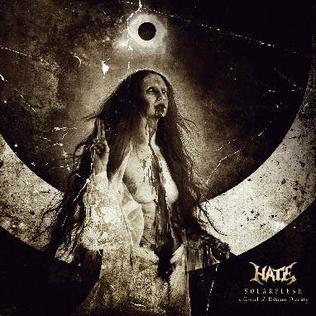 Solarflesh – A Gospel of Radiant Divinity
Solarflesh – A Gospel of Radiant Divinity is the eighth studio album by the Polish death metal band Hate. The follow-up to 2010's "Erebos" was recorded at Sound Division Studio in Warsaw with Filip "Heinrich" Hałucha and Arek "Malta" Malczewski. The CD was mixed at Hertz Studio in Bialystok, Poland with producers Wiesławscy Brothers.
-
 List of ibuprofen brand names
Ibuprofen, an analgesic and non-steroidal anti-inflammatory drug (NSAID), is sold under many brand names around the world. The most common are Brufen, Advil, Motrin, and Nurofen.
How this market resolves
Resolution is handled by the UMA optimistic oracle on Polygon. A proposer submits the outcome, a two-hour dispute window opens, and if no one stakes a counter-claim the payout is final. Contested outcomes escalate to UMA token-holder voting. Payouts clear in USDC to the winning side.
How to trade this market step by step
The mechanics for trading "Sol Raffle public sale total commitments?" are the same as any other PolyGram crypto-price event contract. Each YES share resolves to $1 if the event happens, or $0 if it doesn't. The current price between 0¢ and 100¢ is the market's probability estimate, set live by the order book.
- Sign in on polygram.ink with your email — no full KYC under $1,500 lifetime trading volume.
- Deposit USDC on Polygon (lowest fees, ~$0.01 per transaction) or Ethereum. Funds credit after 12 confirmations.
- Pick a side. Buy YES if you believe the event will happen; buy NO if you think it won't. The current YES price reflects the market's collective probability.
- Size your position. If you stake 100 USDC at 50% YES, you'll receive shares that pay $200 if YES resolves true — a 100% gross return. If NO resolves, your shares are worth $0.
- Set risk controls (optional). Stop-loss, take-profit, and limit-order types all supported. Use the trade ticket's slippage box to cap your maximum entry price.
- Wait for resolution. When the event resolves on-chain via the UMA optimistic oracle, the winning side settles to 100¢ automatically and USDC hits your balance within seconds. Withdrawable to any wallet you control.
How active is this market?
$117K in lifetime turnover and $0 of resting liquidity puts this market in the above the median by volume for crypto contracts on PolyGram. Order-book depth is thin — large orders may need to be split across the book or executed as limit orders.
The market has been open for 4 months — the price has had time to stabilise as new information arrived.
Higher-volume markets tend to have tighter spreads and faster price discovery — meaning the displayed YES/NO percentages are more likely to reflect the true crowd-implied probability rather than a single trader's directional view.
Key terms
- YES / NO share
- A binary outcome token that pays $1.00 if the underlying claim resolves true (YES) or false (NO), and $0 otherwise. The market price between 0¢ and 100¢ is the implied probability.
- CLOB
- Central limit order book. The matching engine that pairs YES buyers with NO buyers (effectively the same trade). Polymarket's CLOB on Polygon executes trades on-chain via the conditional-tokens framework.
- Liquidity
- USDC capital sitting in resting limit orders inside the order book. Deeper liquidity means smaller slippage on large trades and a tighter bid-ask spread.
- UMA optimistic oracle
- The on-chain dispute system that settles each Polymarket market. A proposer submits the outcome, a two-hour challenge window opens, and unchallenged proposals finalise the resolution.
- Slippage
- The difference between the displayed mid-price and your fill price. Affects market orders most; limit orders avoid slippage but may take time to fill.
- Conditional token
- ERC-1155 outcome share issued by Gnosis Conditional Tokens on Polygon. The token type that resolves to $1.00 or $0.00 at settlement.
Frequently asked questions
How does this market resolve?
Resolution is handled by the UMA optimistic oracle on Polygon. A proposer submits the outcome, a 2-hour dispute window opens, and if uncontested the payout is final. Contested outcomes escalate to UMA token holders.
When does this market close?
This prediction market is scheduled to close on 1 January 2027. After the resolving event occurs, settlement typically clears within 24 hours once the UMA optimistic oracle confirms the outcome. All payouts are in USDC on the Polygon network.
How can I trade on "Sol Raffle public sale total commitments?"?
To trade on this prediction market, create a free PolyGram account at polygram.ink, deposit USDC via Polygon, and place a YES or NO order on the outcome you believe in. You can learn more on our how-it-works page. Your maximum loss is limited to your stake — there is no leverage or margin.
What happens when the market resolves?
When the outcome is determined, winning YES shares pay out $1.00 each in USDC, while losing shares pay $0. Settlement is handled by the UMA optimistic oracle on Polygon — a proposer submits the result, a two-hour dispute window opens, and if uncontested, payouts are distributed automatically. You can withdraw your winnings to any Polygon wallet.
Risk and regulatory note
Prediction-market positions can lose 100% of staked capital. Outcomes are uncertain by definition — historical accuracy of crowd-implied probabilities is high in aggregate but not for any single market. PolyGram does not provide investment advice. Trade only with capital you can afford to lose.
Regulatory status varies by jurisdiction. Germany, the United States, and most EU countries treat Polymarket-style event contracts under one of three frameworks: financial derivative, gambling product, or unregulated novel asset. Consult local counsel before trading.
Related prediction markets
Explore more prediction market odds and trading opportunities on PolyGram: