Trade: Will a top 10 VRS team lose to a team ranked 11th or lower at BLAST Rivals Fort Worth 2026?
Resolution criteria on PolyGram: This market will resolve to "Yes" if any team ranked in the top 10 of the Valve Regional Standings (VRS) at the start of the group stage of BLAST Rivals Fort Worth 2026, scheduled to take place from April 29 to May 3, 2026, loses a match (best-of series) to a team ranked 11th or lower. Otherwise, it will resolve to "No." Rankings are based on the official Valve Regional Standings as published at the start of the group stage of the tournament. Only completed match series count (not individual maps within a series).
PolyGram is an on-chain prediction market where you trade YES or NO outcome shares with real USDC on Polygon. For this market, buy YES if you believe the event will happen, or NO if you think it won't. Your maximum loss is your stake — winning shares pay $1.00 each at resolution. Unlike sportsbooks, there is no house edge: prices are set by supply and demand from other traders and reflect the crowd's real-time probability.
- Liquidity
- —
- Total Volume
- $598
- 24h Volume
- —
- Open Interest
- $565
Market outcomes
| Will a top 10 VRS team lose to a team ranked 11th or lower at BLAST Rivals Fort Worth 2026? | 100% YES | 0% NO |
Market context
BLAST Rivals Fort Worth 2026 runs from 29 April to 3 May, bringing together Counter-Strike 2's strongest regional teams in a group-stage format. The market examines whether any team ranked in the top 10 of the Valve Regional Standings at the tournament's start will lose a best-of series to an 11th-ranked or lower opponent. The current order book on Polymarket reflects a 100% implied probability for "Yes," indicating traders assess an upset loss as virtually certain across the tournament's duration.
Historical precedent suggests upsets in regional-level tournaments occur with measurable frequency. At comparable BLAST events and regional qualifiers, lower-ranked teams have periodically taken series from top-10 sides, particularly when seeding reflects recent form rather than established hierarchy. The VRS itself creates volatility by rewarding consistent regional performance, meaning a team ranked 11th may possess comparable firepower to lower top-10 entries. This structural feature supports the market's current assessment that at least one upset is probable across multiple group-stage matches.
Traders should monitor the official VRS standings publication at the tournament's start, which determines eligibility for this resolution. Fixture announcements and group assignments—typically released days before competition begins—will clarify matchup likelihood. Recent BLAST scheduling patterns suggest balanced groups designed to maximise competitive matches, increasing the probability of cross-seeding encounters. Any last-minute roster changes or withdrawals affecting top-10 team composition could shift competitive balance, though such disruptions remain uncommon at established BLAST events.
Wikipedia Context
-
 Top 100 Contractors of the U.S. federal government
The Top 100 Contractors Report is a list developed annually by the General Services Administration as part of its tracking of U.S. federal government procurement. It features the "Top 100" contractors with the U.S. government.
-
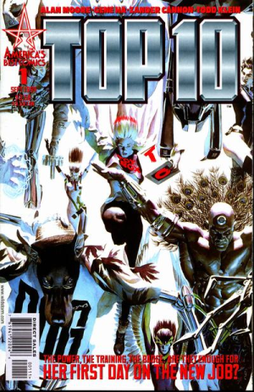 Top 10 (comics)
Top 10 is a superhero comic book limited series published by the America's Best Comics imprint of WildStorm, itself an imprint of DC Comics. Written by Alan Moore and illustrated by Gene Ha and Zander Cannon, the series details the lives and work of the police force of Neopolis, a city in which almost everyone, from the police and criminals to civilians, chi
-
 Top 10 Hits of the End of the World
Top 10 Hits of the End of the World is a studio album by psychedelic dance duo Prince Rama consisting of sisters Taraka and Nimai Larson. Produced by Scott Colburn, it is a "retrospective requiem of all pop albums ever made" where Prince Rama revives the spirits of ten fictional musical acts who died during the apocalypse to perform hits: Arabian group Guns
-
Top 10 Athletes of Ukraine
Top 10 Athletes of Ukraine is an annual survey conducted by the Association of Sports Journalists of Ukraine (ASJU). While originally, the survey was done by Ukraine's sports newpaper Sportyvna Hazeta, it has been done by ASJU since 2000, following the discontinuation of said newspaper.
How this market resolves
Resolution is handled by the UMA optimistic oracle on Polygon. A proposer submits the outcome, a two-hour dispute window opens, and if no one stakes a counter-claim the payout is final. Contested outcomes escalate to UMA token-holder voting. Payouts clear in USDC to the winning side.
How to trade this market step by step
The mechanics for trading "Will a top 10 VRS team lose to a team ranked 11th or lower at BLAST Rivals Fort Worth 2026?" are the same as any other PolyGram event contract. Each YES share resolves to $1 if the event happens, or $0 if it doesn't. The current price between 0¢ and 100¢ is the market's probability estimate, set live by the order book.
- Sign in on polygram.ink with your email — no full KYC under $1,500 lifetime trading volume.
- Deposit USDC on Polygon (lowest fees, ~$0.01 per transaction) or Ethereum. Funds credit after 12 confirmations.
- Pick a side. Buy YES if you believe the event will happen; buy NO if you think it won't. The current YES price reflects the market's collective probability.
- Size your position. If you stake 100 USDC at 100% YES, you'll receive shares that pay $100 if YES resolves true — a 0% gross return. If NO resolves, your shares are worth $0.
- Set risk controls (optional). Stop-loss, take-profit, and limit-order types all supported. Use the trade ticket's slippage box to cap your maximum entry price.
- Wait for resolution. When the event resolves on-chain via the UMA optimistic oracle, the winning side settles to 100¢ automatically and USDC hits your balance within seconds. Withdrawable to any wallet you control.
How active is this market?
$598 in lifetime turnover and $0 of resting liquidity puts this market in the below the median by volume for counter strike 2 contracts on PolyGram. Order-book depth is thin — large orders may need to be split across the book or executed as limit orders.
The market has been open for under a month — fresh enough that information asymmetry remains a real factor.
Higher-volume markets tend to have tighter spreads and faster price discovery — meaning the displayed YES/NO percentages are more likely to reflect the true crowd-implied probability rather than a single trader's directional view.
Key terms
- YES / NO share
- A binary outcome token that pays $1.00 if the underlying claim resolves true (YES) or false (NO), and $0 otherwise. The market price between 0¢ and 100¢ is the implied probability.
- CLOB
- Central limit order book. The matching engine that pairs YES buyers with NO buyers (effectively the same trade). Polymarket's CLOB on Polygon executes trades on-chain via the conditional-tokens framework.
- Liquidity
- USDC capital sitting in resting limit orders inside the order book. Deeper liquidity means smaller slippage on large trades and a tighter bid-ask spread.
- UMA optimistic oracle
- The on-chain dispute system that settles each Polymarket market. A proposer submits the outcome, a two-hour challenge window opens, and unchallenged proposals finalise the resolution.
- Slippage
- The difference between the displayed mid-price and your fill price. Affects market orders most; limit orders avoid slippage but may take time to fill.
- Conditional token
- ERC-1155 outcome share issued by Gnosis Conditional Tokens on Polygon. The token type that resolves to $1.00 or $0.00 at settlement.
Frequently asked questions
What is the current probability for "Will a top 10 VRS team lose to a team ranked 11th or lower at BLAST Rivals Fort Worth 2026?"?
As of today, traders on Polymarket price this outcome at 100%. The number updates continuously as the order book clears. PolyGram mirrors the same live odds with locale-aware formatting and USDC settlement.
How does this market resolve?
Resolution is handled by the UMA optimistic oracle on Polygon. A proposer submits the outcome, a 2-hour dispute window opens, and if uncontested the payout is final. Contested outcomes escalate to UMA token holders.
When does this market close?
This prediction market is scheduled to close on 3 May 2026. After the resolving event occurs, settlement typically clears within 24 hours once the UMA optimistic oracle confirms the outcome. All payouts are in USDC on the Polygon network.
How can I trade on "Will a top 10 VRS team lose to a team ranked 11th or lower at BLAST Rivals Fort Worth 2026?"?
To trade on this prediction market, create a free PolyGram account at polygram.ink, deposit USDC via Polygon, and place a YES or NO order on the outcome you believe in. You can learn more on our how-it-works page. Your maximum loss is limited to your stake — there is no leverage or margin.
What happens when the market resolves?
When the outcome is determined, winning YES shares pay out $1.00 each in USDC, while losing shares pay $0. Settlement is handled by the UMA optimistic oracle on Polygon — a proposer submits the result, a two-hour dispute window opens, and if uncontested, payouts are distributed automatically. You can withdraw your winnings to any Polygon wallet.
Risk and regulatory note
Prediction-market positions can lose 100% of staked capital. Outcomes are uncertain by definition — historical accuracy of crowd-implied probabilities is high in aggregate but not for any single market. PolyGram does not provide investment advice. Trade only with capital you can afford to lose.
Regulatory status varies by jurisdiction. Germany, the United States, and most EU countries treat Polymarket-style event contracts under one of three frameworks: financial derivative, gambling product, or unregulated novel asset. Consult local counsel before trading.
Related prediction markets
Explore more prediction market odds and trading opportunities on PolyGram: